

Macedonia, Kingdom of Tetradrachm - Demetrius Poliorcetes (In the name of Alexander III; Miletos)
Description:
Tetradrachm Tetradrachm - Demetrius Poliorcetes (In the name of Alexander III; Miletos) coin from Macedonia, Kingdom of. Design, history & value.
[SEO TITLE]: Tetradrachm from Macedonia: Demetrius Poliorcetes Coin Analysis [SEO DESCRIPTION]: Explore the rich history and design of the Macedonian Tetradrachm. [KEYWORDS]: Tetradrachm, Macedonia, Demetrius Poliorcetes, Alexander III, silver coin
Introduction
The Tetradrachm from Macedonia, specifically issued during the reign of Demetrius Poliorcetes, stands out as a captivating piece of numismatic history. This silver coin, inscribed in the name of Alexander III, not only embodies the rich cultural and historical legacy of the Macedonian Kingdom but also showcases the intricate artistry of ancient coinage. Collectors and historians alike treasure this coin for its historical relevance and artistic merit, making it a prized specimen in any collection.
Historical Background
The Tetradrachm was issued under the authority of the Kingdom of Macedonia, a region renowned for its pivotal role in ancient history. Demetrius Poliorcetes, a significant figure during the Hellenistic period, is often remembered for his military campaigns and his contributions to Macedonian dominance in the Mediterranean. Although this particular Tetradrachm is issued in the name of Alexander III, it reflects the continuity of Alexander's legacy well into the era of his successors. Miletos, the minting city, was a crucial hub for trade and culture, further enhancing the coin's historical importance.
Coin Images
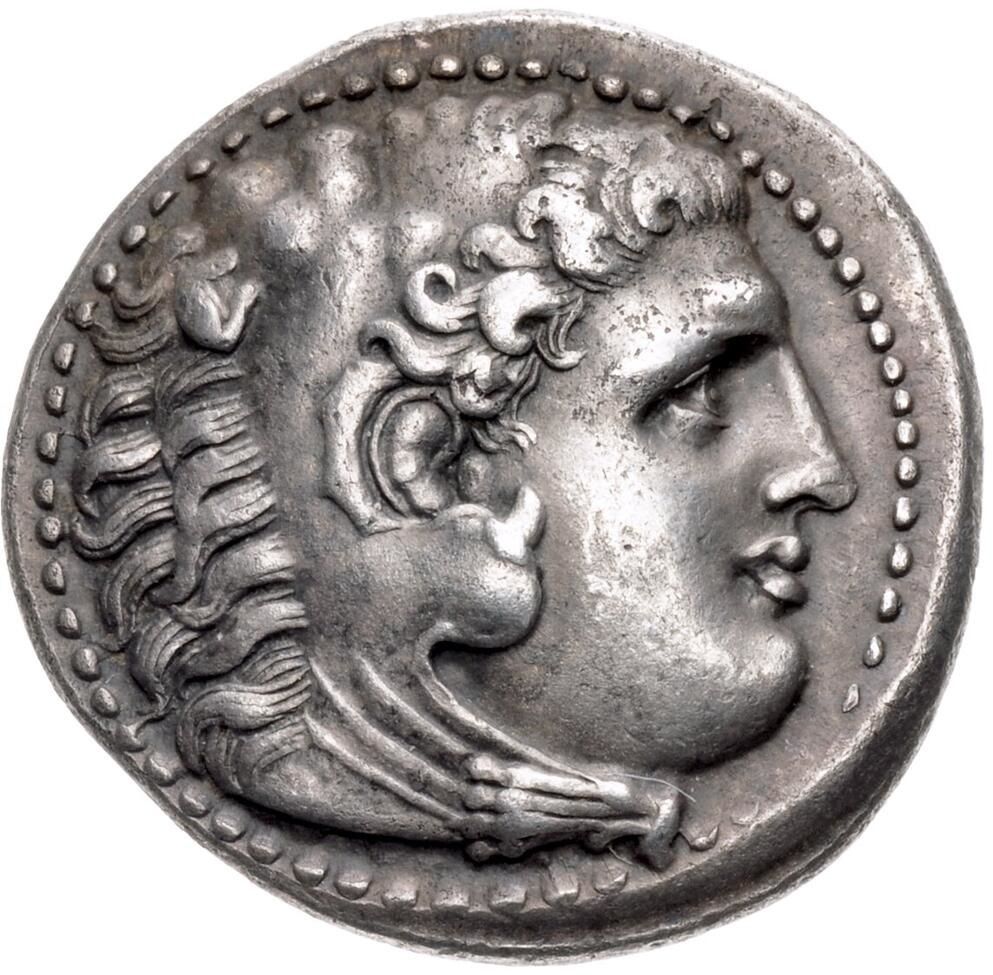 Obverse
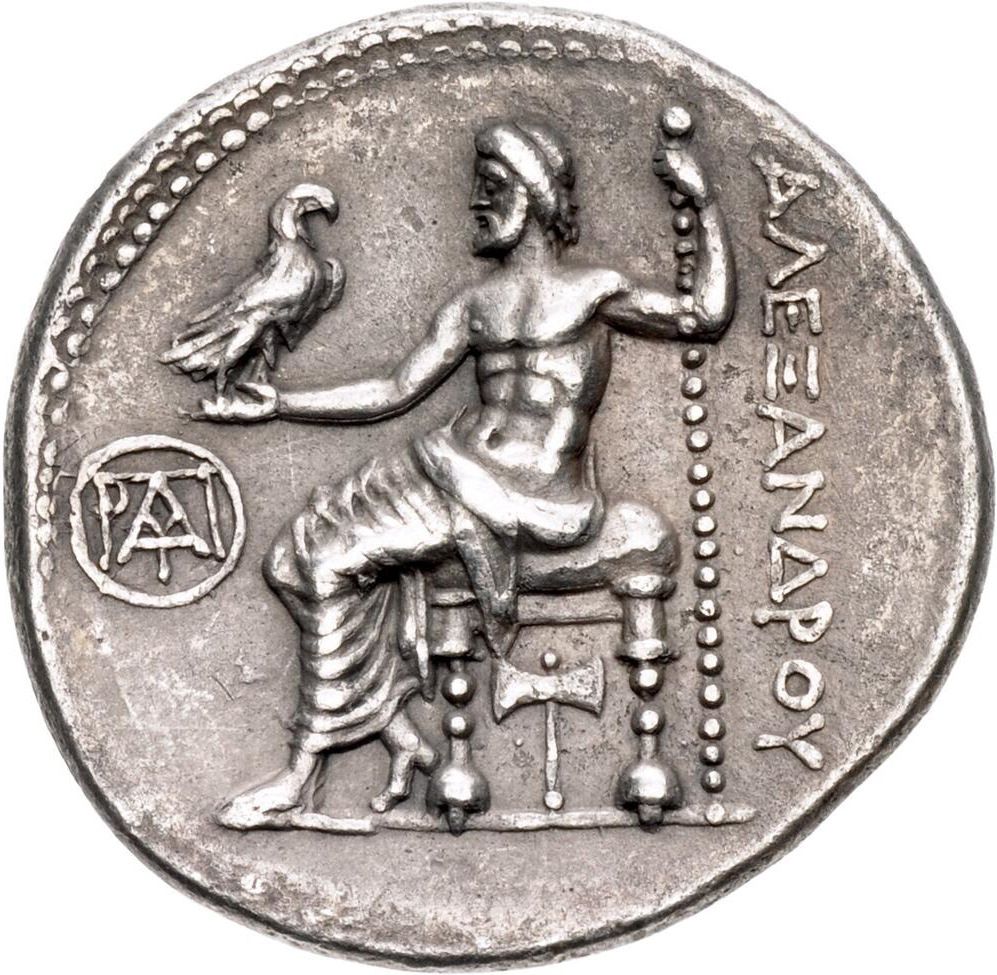 Reverse
Design Features
Obverse Design: The obverse of the Tetradrachm features the beardless head of Heracles, depicted in profile facing right. Heracles is adorned with a lion skin headdress, a symbol of strength and heroism. This representation is emblematic of the divine hero's legendary conquests and ties to the Macedonian royal lineage, a motif frequently used during Alexander's reign to emphasize divine favor. Reverse Design: On the reverse, the coin illustrates Zeus, the king of the gods, seated on a stool-throne facing left. In his outstretched right hand, he holds an eagle, a symbol of his divine authority, while a sceptre rests in his left hand, signifying power. The inclusion of a monogram in the left field and a bipennis below the throne adds to the coin's intricacy, serving as identifiers of the mint and possibly the specific batch or workshop.
Technical Specifications
The Tetradrachm is composed of silver, weighing approximately 16.95 grams and measuring 29.00 millimeters in diameter. These specifications align with the typical standards of Hellenistic coinage, emphasizing both the coin's substantial presence and its durability. The precision in weight and size reflects the advanced metallurgical and minting techniques of the period.
Collectible Value
The Macedonian Tetradrachm, particularly those issued under Demetrius Poliorcetes, holds considerable value for collectors. Its connection to Alexander the Great and the subsequent Hellenistic era enhances its desirability. The coin's rarity and well-preserved condition significantly influence its market value, with prices varying based on historical significance, provenance, and physical state. As a piece of ancient art and history, it appeals to both seasoned numismatists and those new to coin collecting.
Conclusion
The Tetradrachm from Macedonia, issued in the name of Alexander III and circulating during the reign of Demetrius Poliorcetes, is more than just a piece of currency; it is a testament to a transformative period in ancient history. Its exquisite design, combined with its historical and cultural significance, makes it an invaluable asset for collectors and historians alike. This coin not only offers a glimpse into the past but also serves as a symbol of the enduring legacy of the Macedonian Empire.

ScanMyCoin: AI Coin Recognition
Professional AI coin recognition and collection management platform. Identify, learn, and track your coin collection with advanced AI technology and a vast.