

Macedonia, Kingdom of Tetradrachm - Alexander III (Sardis)
Description:
Tetradrachm Tetradrachm - Alexander III (Sardis) coin from Macedonia, Kingdom of. Design, history & value.
[SEO TITLE]: Discover the Tetradrachm of Alexander III from Macedonia [SEO DESCRIPTION]: Explore the historical Tetradrachm of Alexander III [KEYWORDS]: Tetradrachm, Alexander III, Macedonia coin, silver coin, ancient currency
Introduction
The Tetradrachm of Alexander III, minted in the ancient city of Sardis, stands as a remarkable piece of numismatic history. This ancient coin, issued by the Kingdom of Macedonia, is not only a testament to the rich cultural heritage of the era but also an icon of Alexander the Great's vast influence. With its intricate designs and historical significance, the Tetradrachm offers a fascinating glimpse into a bygone world, making it a coveted item among collectors and historians alike.
Historical Background
The Tetradrachm was issued during the reign of Alexander III, also known as Alexander the Great, one of history's most legendary conquerors. Following his numerous military victories and the expansion of his empire, Alexander's influence spread across a vast territory from Greece to Egypt and as far east as India. The coin was minted in Sardis, an ancient city in Lydia, which was part of Alexander's empire after his conquest of the Persian Empire. The Tetradrachm, therefore, not only served as a medium of exchange but also as a symbol of Alexander's power and the unity of his realm.
Coin Images
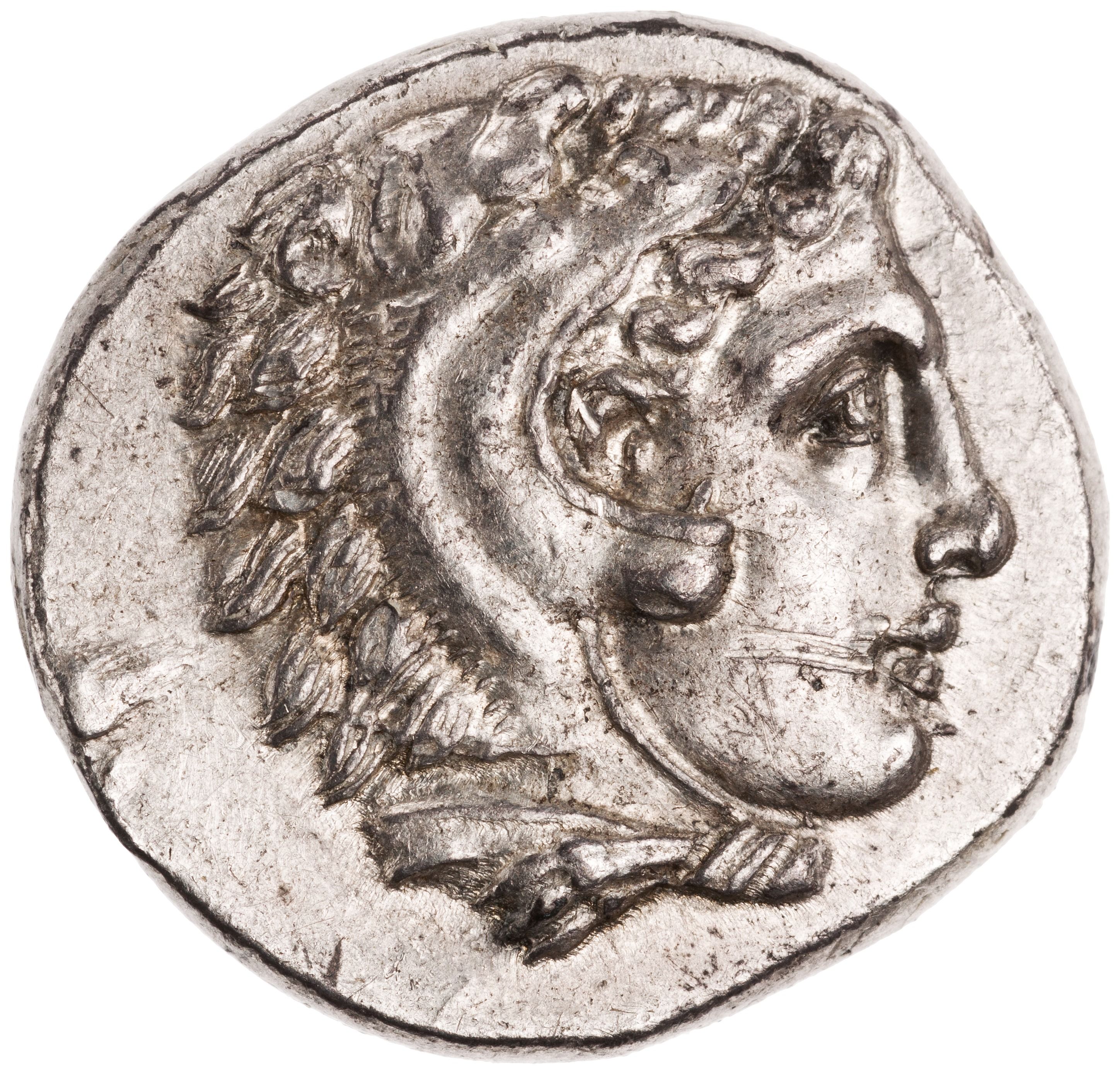 Obverse
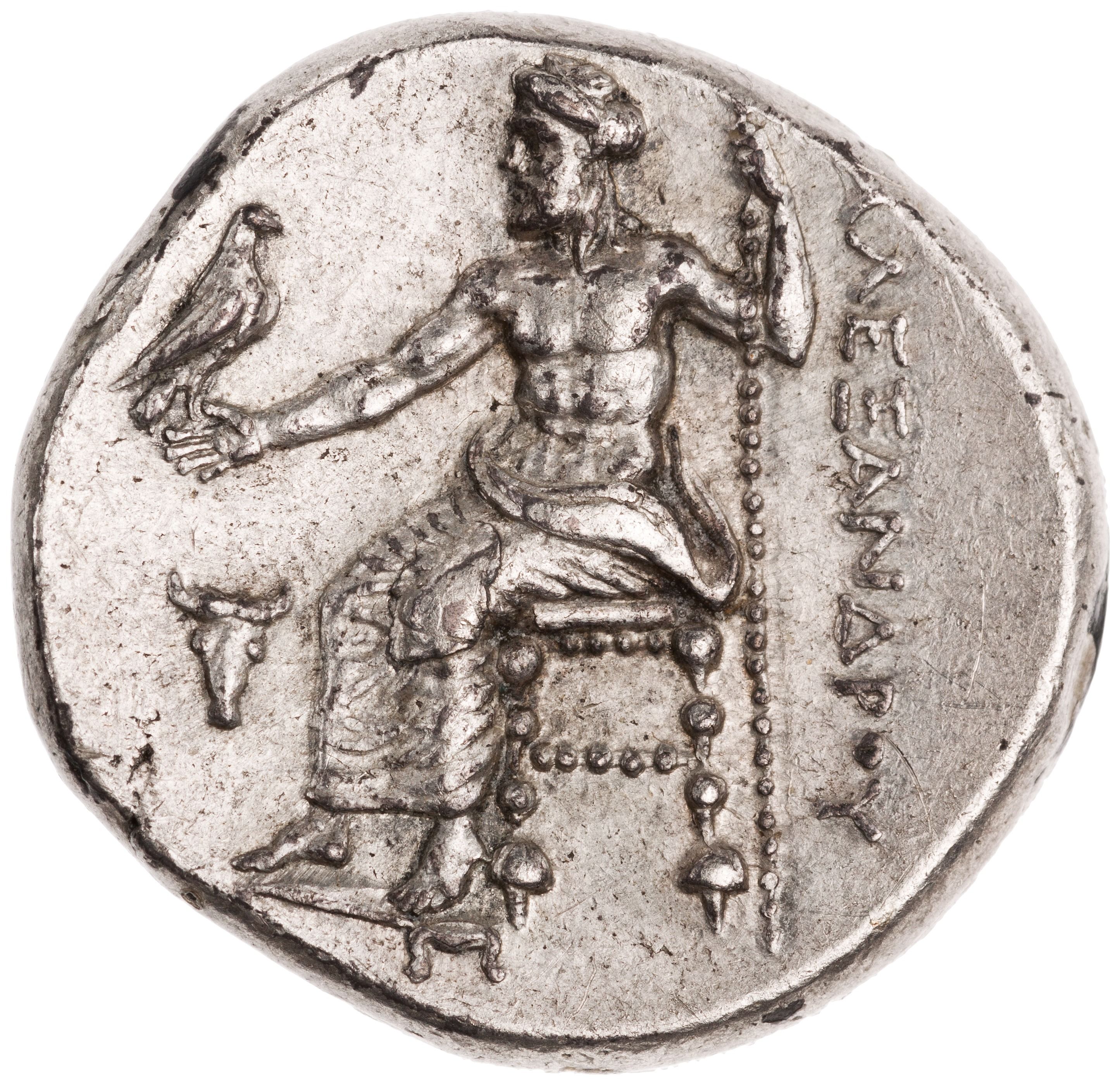 Reverse
Design Features
Obverse Design: The obverse of the Tetradrachm features the head of a beardless Heracles (Hercules in Roman mythology) facing right, adorned with a lion skin headdress. This imagery is rich in symbolism, often associated with strength and valor. Heracles, a divine hero in Greek mythology, was considered a forebear of the Macedonian royal family, linking Alexander's lineage to divine ancestry. Reverse Design: On the reverse, the coin depicts Zeus, the king of the Greek gods, seated on a stool-throne facing left. Zeus holds an eagle in his outstretched right hand and a sceptre in his left, representing authority and kingship. The inclusion of Zeus signifies divine favor and legitimizes Alexander's rule. Additionally, the left field features a bull's head facing forward, a likely reference to local cults or the abundant strength attributed to the bull.
Technical Specifications
The Tetradrachm is crafted from silver, a precious metal that was highly valued in ancient times. It weighs approximately 17.20 grams and measures 26.00 millimeters in diameter. This robust construction not only made it durable for circulation but also a substantial store of value. The use of fine silver further accentuates its desirability among collectors and historians.
Collectible Value
The Tetradrachm of Alexander III is highly prized in the numismatic community due to its historical significance and intricate design. Its value varies based on factors such as condition, rarity, and provenance. Coins in exceptional condition or those with unique mint marks may command higher prices at auctions. Additionally, the coin's connection to one of history's greatest conquerors adds a layer of intrigue and prestige, making it a centerpiece for any ancient coin collection.
Conclusion
The Tetradrachm from Sardis is more than just an ancient coin; it is a relic of a transformative period in world history. It encapsulates the might and cultural richness of Alexander the Great's empire, offering insights into the era's economic and artistic achievements. For collectors and historians, this coin is a tangible link to the past, embodying the legacy of a ruler whose influence still resonates today. Whether as a piece of history or a work of art, the Tetradrachm of Alexander III holds a timeless allure that continues to captivate and inspire.

ScanMyCoin: AI Coin Recognition
Professional AI coin recognition and collection management platform. Identify, learn, and track your coin collection with advanced AI technology and a vast.