
Hohenlohe-Ingelfingen, County of 1 Thaler - Frederick Louis
Description:
1 Thaler 1 Thaler - Frederick Louis coin from Hohenlohe-Ingelfingen, County of. Design, history & value.
[SEO TITLE]: Discover the Unique 1 Thaler Coin from Hohenlohe-Ingelfingen, 1796 [SEO DESCRIPTION]: Explore the rich history of the 1796 Hohenlohe-Ingelfingen 1 Thaler. [KEYWORDS]: 1 Thaler, Hohenlohe-Ingelfingen, Frederick Louis, 1796 coin, silver thaler, collectible coin, numismatics
Introduction
The 1 Thaler coin from Hohenlohe-Ingelfingen, minted in 1796, is a captivating piece of numismatic history that offers a glimpse into the rich cultural and economic tapestry of late 18th-century Europe. As a silver coin issued by the County of Hohenlohe-Ingelfingen, this thaler represents not only a form of currency but also an artifact of historical significance. Collectors and historians alike find this coin to be an intriguing subject due to its unique features and the historical context in which it was created.
Historical Background
The County of Hohenlohe-Ingelfingen was a small principality in what is now modern-day Germany. During the late 18th century, Europe was a continent of shifting alliances and political upheaval, and the issuance of currency played a crucial role in asserting regional autonomy and economic stability. The 1 Thaler coin minted under the authority of Frederick Louis in 1796 reflects the economic ambitions of the County during a time of significant change. Frederick Louis was a member of the prominent Hohenlohe family, known for their influence and contributions to the cultural landscape of the region. The issuance of this thaler coincided with a period of economic development and modernization, as the County sought to solidify its economic footing amidst the broader political dynamics of the Holy Roman Empire.
Coin Images
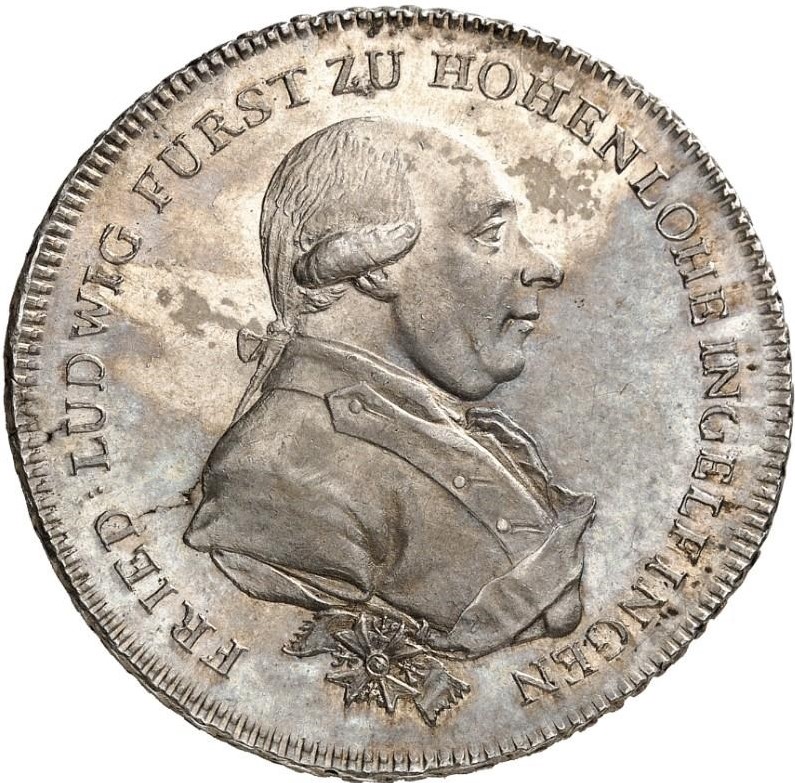 Obverse
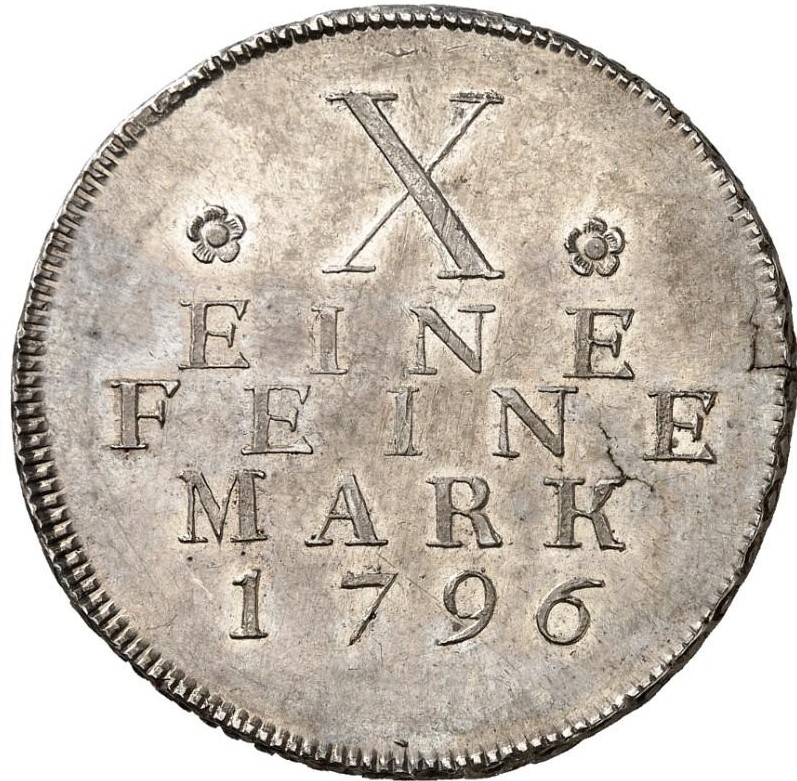 Reverse
Design Features
The artistry of the 1 Thaler coin is a testament to the craftsmanship of the period. On the obverse, the coin features a detailed bust of Frederick Louis, facing right. This portrait not only captures the likeness of the issuer but also serves as a symbol of authority and governance. The fine details in the hair and clothing highlight the skill of the engravers of the time. The reverse of the coin is equally significant, displaying the denomination '1 Thaler' prominently above the date '1796'. This side of the coin emphasizes its function as a unit of currency while also marking its place in the historical timeline. The simplicity and clarity of the reverse design underscore the primary purpose of the coin as a medium of exchange.
Technical Specifications
The 1 Thaler coin is composed of silver, weighing 28.03 grams. This substantial weight not only adds to its tangible value but also reflects the standards of the time for silver currency. The coin's diameter and thickness would have been designed to facilitate its use in everyday transactions, while the purity of the silver ensured its acceptance as a reliable form of money. The choice of silver as the material highlights the coin's status as a significant denomination, often used in larger transactions and savings. The metallic composition also contributes to the coin's durability and its enduring appeal to collectors.
Collectible Value
As a piece of history, the 1 Thaler from Hohenlohe-Ingelfingen is highly sought after by collectors. Its rarity and historical significance drive its value in the numismatic market. Coins from small principalities like Hohenlohe-Ingelfingen are particularly prized due to their limited mintage and the unique stories they tell about the era in which they were produced. The market value of this coin can vary significantly based on its condition, provenance, and market demand. Well-preserved examples with clear details on both the obverse and reverse are especially valued by collectors. As with many historical coins, provenance and documented history can add to the allure and value of the piece.
Conclusion
The 1 Thaler coin of 1796 from the County of Hohenlohe-Ingelfingen is more than just a piece of silver; it is a testament to the economic aspirations and historical narrative of a bygone era. Its intricate design, historical context, and collectible value make it a fascinating subject for both seasoned numismatists and history enthusiasts. As a relic of the past, this coin continues to capture the imagination and interest of those who seek to understand the complex tapestry of European history through its currency.

ScanMyCoin: AI Coin Recognition
Professional AI coin recognition and collection management platform. Identify, learn, and track your coin collection with advanced AI technology and a vast.