
Hohenlohe-Kirchberg, County of ½ Thaler - Christian Frederick Charles
Description:
½ Thaler ½ Thaler - Christian Frederick Charles coin from Hohenlohe-Kirchberg, County of. Design, history & value.
Introduction
The ½ Thaler coin from Hohenlohe-Kirchberg, minted in 1786, is a fascinating piece of numismatic history. This silver coin is not only a testament to the economic practices of its era but also offers a glimpse into the artistic and cultural expressions of the time. With its intricate design and historical significance, the ½ Thaler is a coveted item among collectors and history enthusiasts alike. This article delves into the rich history, design intricacies, and collectible value of this remarkable coin, making it an essential read for anyone interested in numismatics.
Historical Background
The ½ Thaler coin was issued by the County of Hohenlohe-Kirchberg under the governance of Christian Frederick Charles in 1786. This period was marked by numerous geopolitical changes and the Hohenlohe territories, like many other small principalities within the Holy Roman Empire, were striving to maintain their autonomy and economic stability. The issuance of coins such as the ½ Thaler was a reflection of both economic necessity and political assertion. These coins circulated not just within the county but also served as a medium of exchange that interacted with the broader European market.
Coin Images
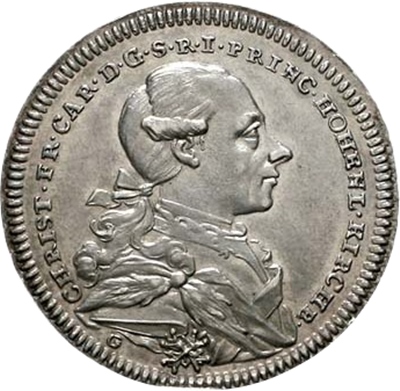 Obverse
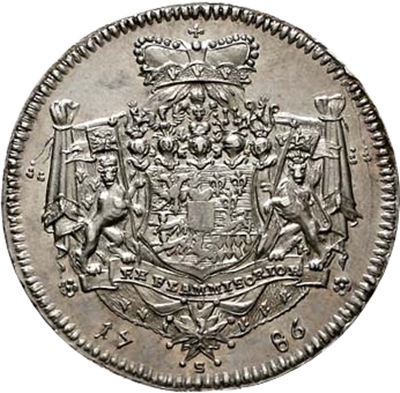 Reverse
Design Features
Obverse Design: The obverse of the ½ Thaler features an armored bust facing right, representing Christian Frederick Charles himself. This portrait is emblematic of the regal and authoritative imagery often employed in coinage of the period. The detailed armor signifies the strength and protection offered by the ruler, while the finely crafted facial features highlight the artistic capabilities of the engravers of the era. Reverse Design: The reverse side of the coin showcases the arms within a crowned mantle. This design is rich with symbolism, reflecting the noble lineage and heraldic traditions of the Hohenlohe family. The crowned mantle signifies nobility and sovereignty, underscoring the coin's role as a representation of power and prestige.
Technical Specifications
The ½ Thaler of 1786 is composed of high-quality silver, typical of the coins from this period. While specific dimensions such as diameter and weight are critical for collectors, they often vary slightly due to the minting processes of the time. Generally, Thalers are known for their substantial size and weight, contributing to their popularity and perceived value.
Collectible Value
The ½ Thaler of Hohenlohe-Kirchberg holds significant value in the numismatic community. Its rarity is primarily due to the limited mintage and the historical context of its issuance. Collectors prize these coins for their detailed artistry and the glimpse they provide into the socio-political landscape of late 18th-century Germany. The market value of these coins can vary, often reaching high sums at auctions, depending on their condition and provenance. Coins in mint or near-mint condition are especially sought after, further enhancing their collectible status.
Conclusion
In summary, the ½ Thaler coin from 1786 is more than just a piece of currency; it is a historical artifact that encapsulates the essence of a bygone era. Its intricate design and rich historical background make it a unique collectible for numismatists and history aficionados alike. Whether you are a seasoned collector or a curious newcomer to the world of coins, the ½ Thaler offers a tangible connection to the past and a valuable addition to any collection.

ScanMyCoin: AI Coin Recognition
Professional AI coin recognition and collection management platform. Identify, learn, and track your coin collection with advanced AI technology and a vast.