

Hohenlohe-Kirchberg, County of ½ Thaler - Christian Frederick Charles
Description:
½ Thaler ½ Thaler - Christian Frederick Charles coin from Hohenlohe-Kirchberg, County of. Design, history & value.
[SEO TITLE]: Hohenlohe-Kirchberg ½ Thaler Coin: Christian Frederick Charles 1804 [SEO DESCRIPTION]: Explore the rare Hohenlohe-Kirchberg ½ Thaler coin from 1804. [KEYWORDS]: Hohenlohe-Kirchberg coin, ½ Thaler, Christian Frederick Charles, 1804, rare silver coin
Hohenlohe-Kirchberg ½ Thaler Coin: Christian Frederick Charles 1804
The ½ Thaler coin issued by the County of Hohenlohe-Kirchberg in 1804 is a fascinating piece of numismatic history. Known for its limited mintage and intricate design, this coin represents a unique period in German coinage. Collectors and historians alike treasure this coin for its historical significance and its detailed craftsmanship.
Historical Background
The ½ Thaler coin from 1804 was minted under the auspices of the County of Hohenlohe-Kirchberg, a small principality in the Holy Roman Empire. During the early 19th century, the Empire was a patchwork of principalities, each with its own coinage. This coin stands out as a representation of the political and economic conditions of the time. Christian Frederick Charles, the ruling count, sought to assert his authority and economic independence through the issuance of this coin. The year 1804 was pivotal, as it marked a period of significant change in the region, with the looming dissolution of the Holy Roman Empire just two years later.
Coin Images
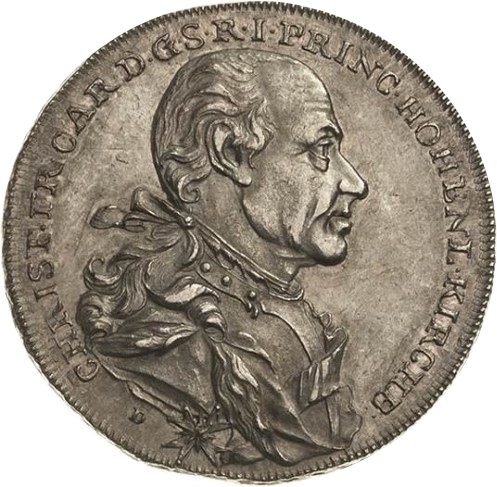 Obverse
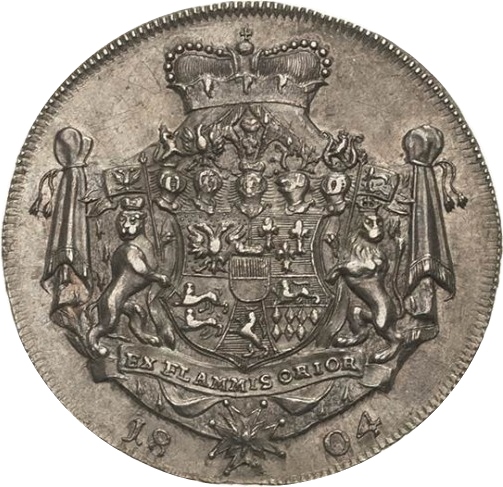 Reverse
Design Features
Obverse Design: The obverse of the ½ Thaler coin features a detailed armored bust of Christian Frederick Charles facing right. The artistry captures the count's regal demeanor and military prowess, reflecting the martial values of the era. The intricacy of the armor and the realistic depiction of the count's features demonstrate the high level of craftsmanship involved in its creation. Reverse Design: On the reverse, the coin showcases a heraldic design with helmeted arms, supported by figures within a crowned mantle. This emblematic representation not only signifies the count's noble lineage but also his sovereignty and the protection of his realm. The use of supporters and the ornate mantle crown provide a sense of grandeur and authority, typical of aristocratic heraldry.
Technical Specifications
The 1804 ½ Thaler coin is composed of silver, which was a standard for high-value coins of the time. While specific size and weight details are not universally documented, coins of this denomination typically weigh around 14 grams and have a diameter of approximately 33-35 mm. The use of silver not only provided intrinsic value but also ensured the coin's durability and appeal.
Collectible Value
In the world of numismatics, the ½ Thaler coin from Hohenlohe-Kirchberg is considered a rare and valuable collectible. Its limited issuance in 1804, combined with its rich historical context, makes it a sought-after piece. Coins in excellent condition, with well-preserved details of the obverse and reverse designs, can command high prices at auctions. The rarity and age of the coin contribute significantly to its market value, making it a prized possession for collectors of German states' coinage.
Conclusion
The 1804 ½ Thaler coin from the County of Hohenlohe-Kirchberg stands as a testament to the intricate artistry and historical significance of early 19th-century German coinage. Its unique design and the historical context of its issuance make it a captivating subject for coin collectors and historians alike. As both a cultural artifact and a piece of monetary history, it continues to hold a special place in the world of numismatics. Whether you are a seasoned collector or a history enthusiast, this coin offers a tangible connection to the past and an enduring symbol of a bygone era.

ScanMyCoin: AI Coin Recognition
Professional AI coin recognition and collection management platform. Identify, learn, and track your coin collection with advanced AI technology and a vast.