
Osnabrück, City of 1 Thaler - Gustav II Adolphus (Death; Swedish occupation)
Description:
1 Thaler 1 Thaler - Gustav II Adolphus (Death; Swedish occupation) coin from Osnabrück, City of. Design, history & value.
[SEO TITLE]: Discover the 1 Thaler Coin from Osnabrück - Gustav II Adolphus, 1633 [SEO DESCRIPTION]: Explore the historic 1 Thaler from Osnabrück, 1633, featuring Gustav II Adolphus. [KEYWORDS]: 1 Thaler, Gustav II Adolphus, Osnabrück coin, 1633 Thaler, Swedish occupation coin, silver coin, numismatic value
Introduction
The 1 Thaler coin from Osnabrück, minted in 1633, is a fascinating piece of numismatic history. This coin holds great significance due to its issuance during the Swedish occupation under the reign of Gustav II Adolphus, a pivotal figure in European history. The 1 Thaler is not just a testament to the economic exchanges of that era but also a reflection of the geopolitical dynamics that shaped the early 17th century. Collectors and historians alike find this coin intriguing due to its historical context, distinctive design, and the unique story it tells.
Historical Background
The year 1633 places this coin at the heart of the Thirty Years' War, a period marked by religious conflicts and power struggles across Europe. Osnabrück, a city with strategic importance, found itself under Swedish occupation. This occupation was part of King Gustav II Adolphus's broader military campaigns. Known as the "Lion of the North," Gustav II Adolphus was a key Protestant leader whose military prowess and reforms left a lasting impact on European warfare. The issuance of the 1 Thaler during this time was not merely an economic necessity but also a symbol of Swedish influence and control in the region.
Coin Images
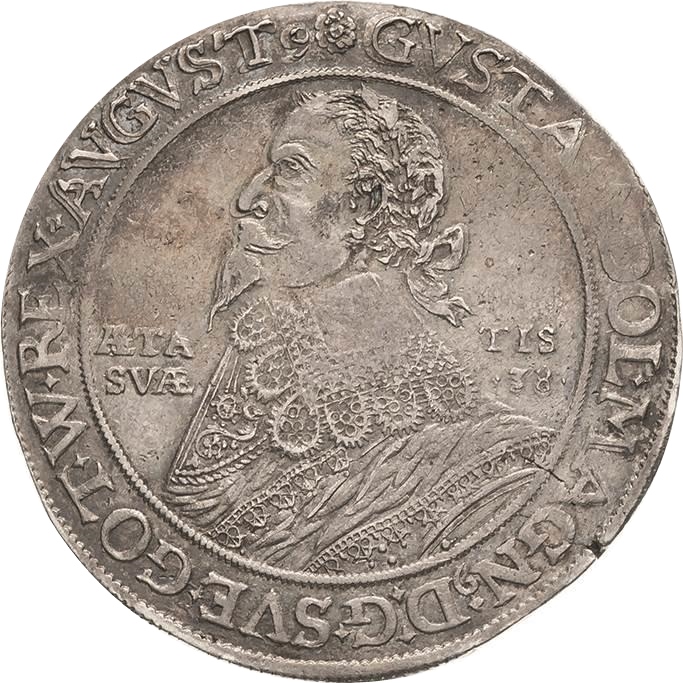 Obverse
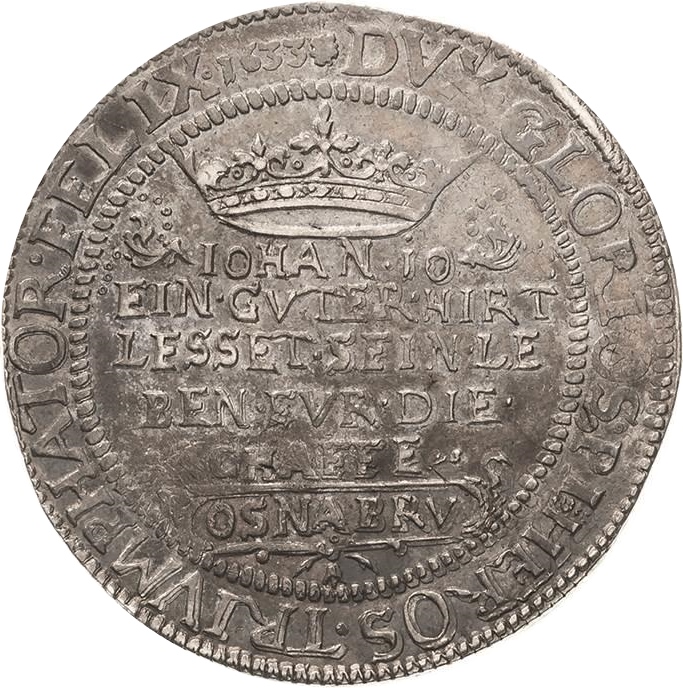 Reverse
Design Features
The 1 Thaler's design is a blend of artistic craftsmanship and political symbolism.
Obverse Design
The obverse features a detailed bust of King Gustav II Adolphus facing left. This portrayal is a testament to the coin's Swedish roots and pays homage to a ruler who was both revered and feared. The bust is intricately engraved, capturing the king's regal demeanor and the characteristic fashion of the time.
Reverse Design
The reverse of the coin presents a 6-line inscription, crowned at the top, with the date prominently displayed in the surrounding legend. The crown symbolizes the monarchy and the authority under which the coin was issued. The inscription itself provides insights into the political assertions of the Swedish regime over Osnabrück during its occupation.
Technical Specifications
This silver coin is a classic example of the currency used in the early 17th century. Although specific dimensions and weight can vary slightly due to minting practices of the time, the 1 Thaler typically features:
- Composition: Silver
- Diameter: Approximately 40 mm
- Weight: Around 28.5 grams The high silver content not only underscores its economic value but also its appeal to collectors seeking coins with significant precious metal content.
Collectible Value
The 1 Thaler from Osnabrück is a prized piece among collectors, not only for its historical pedigree but also for its relative rarity. Coins from this era, especially those linked to significant historical figures and events, are highly sought after. The condition of the coin greatly affects its market value, with well-preserved pieces fetching higher prices. Its rarity, combined with the allure of its design and historical background, makes it a valuable addition to any numismatic collection.
Conclusion
In summary, the 1 Thaler coin of 1633 from Osnabrück stands as a remarkable artifact of European history. Its issuance during the Swedish occupation under Gustav II Adolphus adds layers of historical and political significance. For collectors, this coin offers not just a glimpse into the past but a tangible connection to the intricate tapestry of European history. Whether you are a seasoned numismatist or a history enthusiast, the 1 Thaler is a compelling piece that enriches our understanding of the period and adds considerable value to any collection.

ScanMyCoin: AI Coin Recognition
Professional AI coin recognition and collection management platform. Identify, learn, and track your coin collection with advanced AI technology and a vast.