

Metapontion Nomos
Description:
Nomos Nomos coin from Metapontion. Design, history & value.
Introduction
The Metapontion Nomos is a captivating piece of ancient numismatic art, revered for its intricate design and historical significance. This silver coin, hailing from the Greek city-state of Metapontion, showcases the rich cultural heritage and economic strength of the region during its peak. Collectors and historians alike cherish the Metapontion Nomos for its artistic depiction of Demeter and its embodiment of ancient Greek civilization's agricultural prowess.
Historical Background
The city of Metapontion, located in what is now modern-day Southern Italy, was a prominent Greek colony founded around the 7th century BCE. Known for its fertile plains, the city thrived on agriculture, particularly the cultivation of barley, which became a symbol of its prosperity. The issuance of the Metapontion Nomos was not only a testament to the city's economic vitality but also a tribute to Demeter, the goddess of agriculture and harvest, reflecting the community's deep connection to the land. The Nomos coins were circulated during a period when Greek city-states were experimenting with coinage as a means of facilitating trade and asserting political influence. Metapontion's decision to feature Demeter on the obverse of their coin highlights the deity's importance to the city's identity, while the reverse design of a barley ear emphasizes the agricultural foundation of their economy.
Coin Images
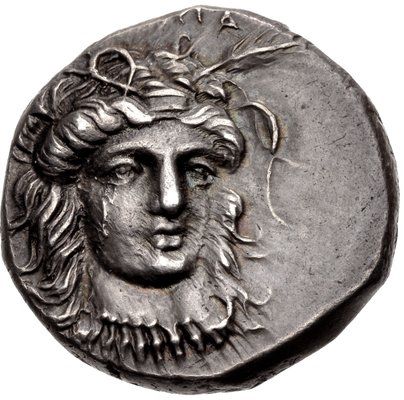 Obverse
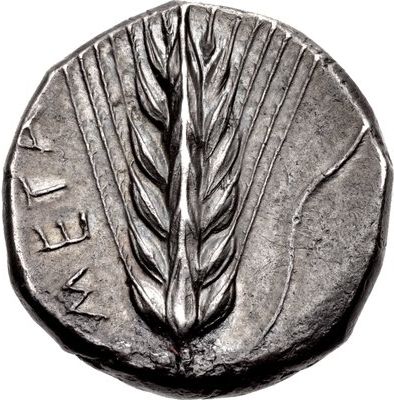 Reverse
Design Features
Obverse Design: The obverse of the Metapontion Nomos features a stunning portrayal of Demeter, the revered Greek goddess associated with agriculture, fertility, and the harvest. Demeter's head is elegantly turned slightly to the right, adorned with a wreath of grain ears, symbolizing the abundant grain fields of Metapontion. Her pearl necklace adds a touch of divine elegance to the depiction, making it a symbol of beauty and grace. Reverse Design: On the reverse side, a meticulously detailed barley ear, accompanied by a leaf to the right, represents the city's agrarian wealth. This design choice not only highlights the economic significance of barley to Metapontion but also serves as a visual reminder of the city's reliance on agriculture for sustenance and prosperity.
Technical Specifications
The Metapontion Nomos is crafted from silver, which was a common material for coinage in ancient Greek times due to its durability and intrinsic value. This coin weighs approximately 7.37 grams and has a diameter of 20.00mm, making it a substantial piece for its era. The choice of silver and the coin's dimensions reflect the standard practices of Greek minting, aimed at producing coins that were both practical for circulation and collectible for their artistry.
Collectible Value
The Metapontion Nomos holds significant value for collectors, not only for its historical and artistic merits but also for its rarity. Coins from ancient Greek city-states like Metapontion are highly sought after in the numismatic community, often commanding premium prices at auctions. The coin's condition, rarity, and historical context contribute to its market value, with well-preserved pieces being particularly prized. Collectors value the Nomos for its connection to ancient Greek culture and its representation of the early use of coinage as a tool for economic and cultural expression.
Conclusion
The Metapontion Nomos is more than just a piece of metal; it is a window into the past, offering insights into the economic, cultural, and artistic achievements of an ancient society. The coin's exquisite design featuring Demeter and a barley ear encapsulates the essence of Metapontion's identity and its reliance on agriculture. For collectors and historians, the Metapontion Nomos is a cherished artifact that embodies the ingenuity and beauty of ancient Greek coinage. Its enduring appeal lies in its ability to connect us to a bygone era where art, economy, and mythology intertwined to shape the world we know today.

ScanMyCoin: AI Coin Recognition
Professional AI coin recognition and collection management platform. Identify, learn, and track your coin collection with advanced AI technology and a vast.