
Macedonia, Kingdom of Tetradrachm - Demetrius I Poliorcetes (Amphipolis)
Description:
Tetradrachm Tetradrachm - Demetrius I Poliorcetes (Amphipolis) coin from Macedonia, Kingdom of. Design, history & value.
[SEO TITLE]: Macedonia Tetradrachm - Demetrius I Poliorcetes Silver Coin [SEO DESCRIPTION]: Discover the rare silver Tetradrachm of Demetrius I Poliorcetes. [KEYWORDS]: Macedonia, Tetradrachm, Demetrius I Poliorcetes, silver coin, Amphipolis
Introduction
The Tetradrachm of Demetrius I Poliorcetes is a remarkable artifact from the ancient Kingdom of Macedonia. This silver coin not only reflects the rich history and culture of its era but also showcases the artistic and technical prowess of ancient minting practices. Collectors and historians value this coin for its exquisite design and its connection to a pivotal period in Macedonian history.
Historical Background
The Tetradrachm was issued under the authority of the Kingdom of Macedonia, specifically during the reign of Demetrius I Poliorcetes. Demetrius I, known as "The Besieger," was a prominent figure in the Hellenistic period, ruling from 294 to 288 BC. He was the son of Antigonus I Monophthalmus and played a crucial role in the Wars of the Successors, which followed the death of Alexander the Great. This coin was minted in Amphipolis, a significant city in ancient Macedonia, known for its strategic and economic importance.
Coin Images
 Obverse
 Reverse
Design Features
Obverse Design
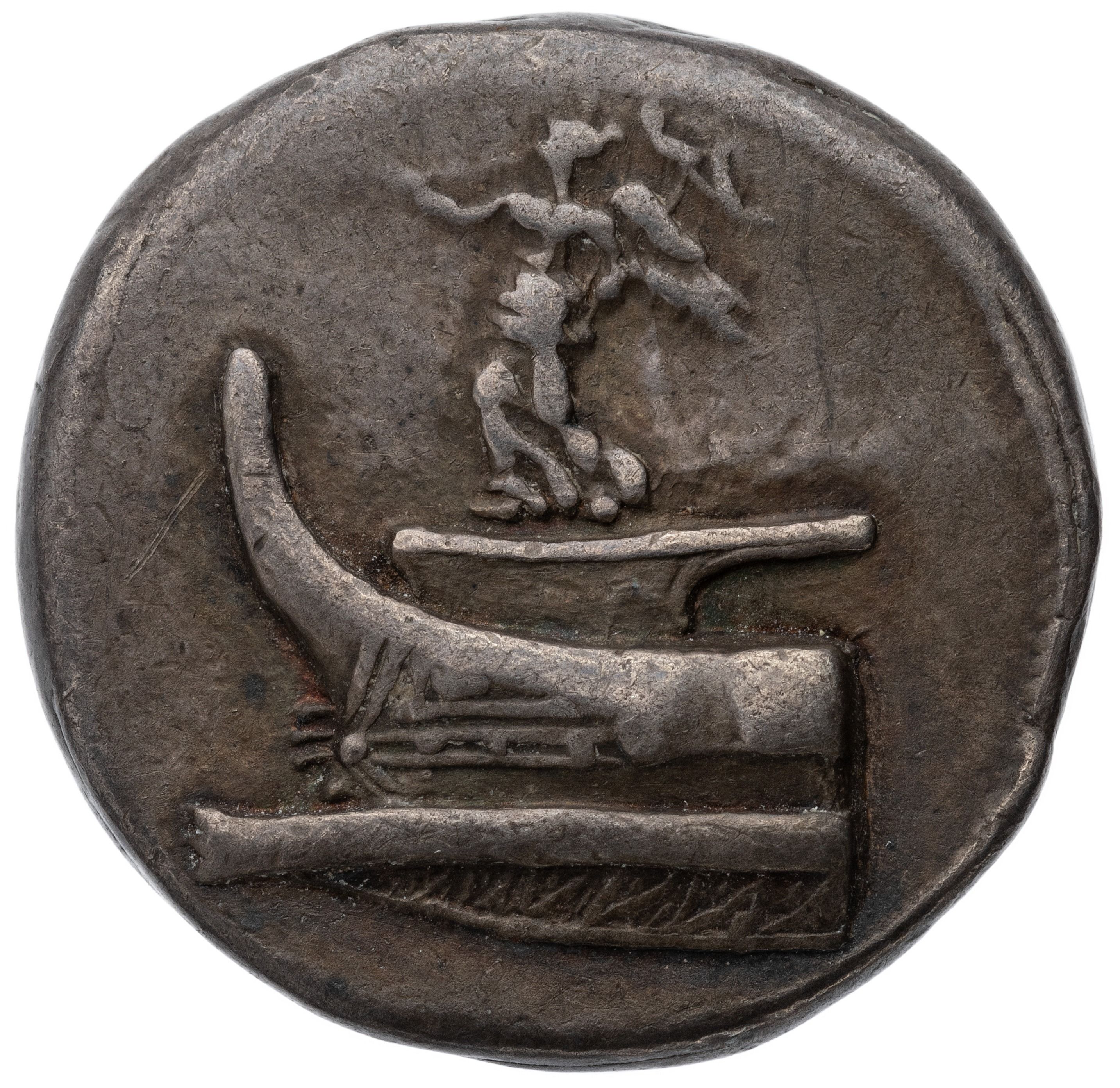
The obverse of the Tetradrachm features Nike, the Greek goddess of victory, gracefully positioned to the left. She holds a trumpet and a stylis while landing on the prow of a ship. This imagery is symbolic of naval prowess and triumph, reflecting Demetrius I's naval victories and his epithet "Poliorcetes," meaning "The Besieger."
Reverse Design
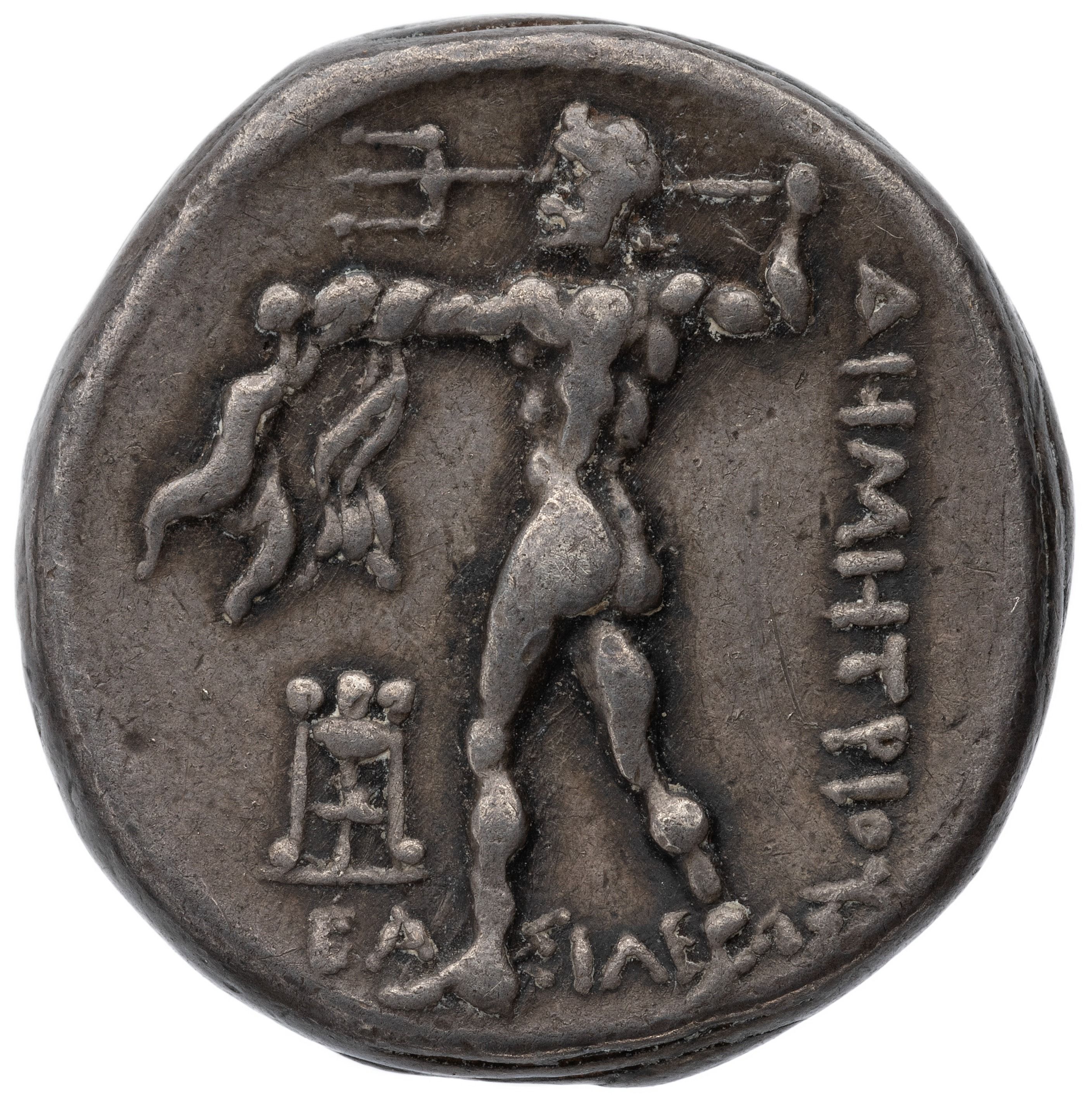
On the reverse side, Poseidon, the god of the sea, is depicted striding to the right, holding a chlamys (a short cloak) and brandishing a trident. The presence of Poseidon highlights the maritime strength and ambition of Demetrius I's reign. Additionally, a tripod is visible in the left field, further enhancing the coin's rich symbolic narrative.
Technical Specifications
The Tetradrachm is composed of silver, a common and valuable material in ancient coinage. It has a weight of approximately 17.08 grams and a diameter of 26.00 millimeters. These specifications reflect the standard for Tetradrachms during this period, making it a substantial coin both in size and weight.
Collectible Value
This coin holds significant value in the numismatic community due to its historical importance, artistic design, and rarity. The Tetradrachm of Demetrius I Poliorcetes is not just a piece of currency; it is a tangible connection to the Hellenistic world. Its market value is influenced by factors such as condition, provenance, and historical context. Rarer pieces in excellent condition can command high prices at auctions and among collectors.
Conclusion
The Tetradrachm of Demetrius I Poliorcetes is a fascinating relic from ancient Macedonia, offering insights into the political, cultural, and artistic achievements of its time. Its intricate designs and historical significance make it a prized possession for collectors and historians alike. As a testament to the legacy of Demetrius I and the Kingdom of Macedonia, this coin remains an enduring symbol of an era marked by conquest and creativity.

ScanMyCoin: AI Coin Recognition
Professional AI coin recognition and collection management platform. Identify, learn, and track your coin collection with advanced AI technology and a vast.