

Hohenlohe-Neuenstein-Öhringen, County of 2-½ Kreuzers - Louis Frederick Charles
Description:
2-½ Kreuzers 2-½ Kreuzers - Louis Frederick Charles coin from Hohenlohe-Neuenstein-Öhringen, County of. Design, history & value.
Introduction
The 2-½ Kreuzers coin issued by the County of Hohenlohe-Neuenstein-Öhringen in 1774 stands as a remarkable artifact from a bygone era. This coin is not only a testament to the region's rich numismatic history but also an intriguing piece for collectors due to its unique denomination and intricate design. Crafted in billon, a low-grade silver alloy, the 2-½ Kreuzers coin encapsulates the economic and artistic inclinations of its time. It offers a fascinating glimpse into the monetary practices of 18th-century Germany, making it a cherished piece among numismatists and history enthusiasts alike.
Historical Background
The County of Hohenlohe-Neuenstein-Öhringen, located in what is now modern-day Germany, was an independent territory with its own governing systems and currency. During the 18th century, the issuance of coins was not only a practical matter but also a symbol of sovereignty and local pride. The 2-½ Kreuzers coin, minted exclusively in 1774, represents the economic aspirations and regional identity of Hohenlohe-Neuenstein-Öhringen. Under the rule of Louis Frederick Charles, this coin was part of a broader effort to standardize currency and facilitate trade within the county and beyond. The coin's limited issue makes it a significant piece of the region's numismatic history.
Coin Images
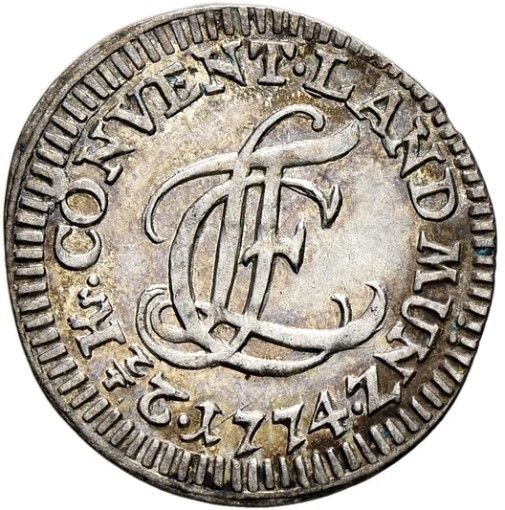 Obverse
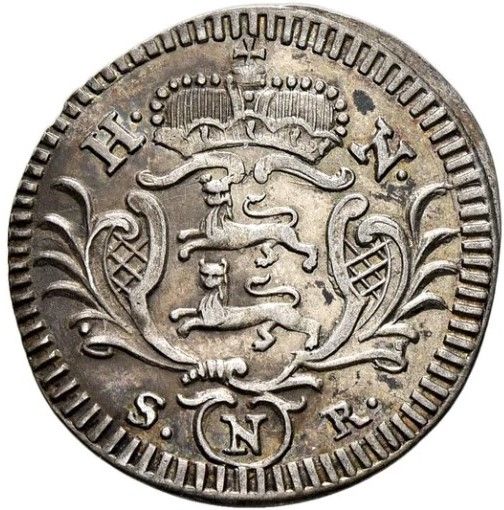 Reverse
Design Features
Obverse Design: The obverse of the 2-½ Kreuzers coin features a distinguished monogram, encapsulating the initials of the ruling authority, with the minting date of 1774 elegantly positioned below. This design choice reflects both a personal touch of the issuing authority and a timestamp that roots the coin in its historical context. Reverse Design: The reverse side of the coin proudly displays the crowned arms, a symbol of noble heritage and authority, flanked by palm branches. The intricate detailing of the crown and arms signifies the importance of lineage and governance. Additionally, the mintmark is strategically placed, dividing the initials of mint officials, which adds another layer of authentication and historical relevance to the coin.
Technical Specifications
The 2-½ Kreuzers coin is composed of billon, an alloy commonly used in coinage during the period due to its affordability and reasonable durability. Although specific dimensions and weight can vary slightly due to minting processes, typical measurements for coins of this type include a diameter of approximately 20 mm and a weight of around 2 grams. The use of billon, which consists of a small percentage of silver, gives the coin a subtle sheen that differentiates it from copper or bronze coins of the same era.
Collectible Value
From a collector's perspective, the 2-½ Kreuzers coin is particularly desirable due to its limited mintage and historical significance. Coins from the County of Hohenlohe-Neuenstein-Öhringen are relatively rare, and the unique denomination of 2-½ Kreuzers adds to its allure. In the numismatic market, the value of this coin can vary based on its condition, provenance, and demand among collectors specializing in German states' coinage. Coins in excellent condition with clear markings and minimal wear can fetch a premium price, reflecting their rarity and the craftsmanship of the era.
Conclusion
The 1774 2-½ Kreuzers coin from Hohenlohe-Neuenstein-Öhringen is a captivating piece of numismatic history. Its unique design, historical context, and limited issuance make it a valuable asset for any coin collection. Whether you are a seasoned collector or a history buff intrigued by the stories coins can tell, this coin offers a tangible connection to the past, encapsulating the economic, artistic, and cultural narratives of its time. As you delve into the world of numismatics, the 2-½ Kreuzers coin stands out as a testament to the intricate artistry and historical significance of 18th-century German coinage.

ScanMyCoin: AI Coin Recognition
Professional AI coin recognition and collection management platform. Identify, learn, and track your coin collection with advanced AI technology and a vast.