
Hohenlohe-Neuenstein-Öhringen, County of 10 Kreuzers - Louis Frederick Charles
Description:
10 Kreuzers 10 Kreuzers - Louis Frederick Charles coin from Hohenlohe-Neuenstein-Öhringen, County of. Design, history & value.
[SEO TITLE]: Discover the 10 Kreuzers Coin of Hohenlohe-Neuenstein-Öhringen, 1785 [SEO DESCRIPTION]: Uncover the historical allure of the 1785 10 Kreuzers coin. [KEYWORDS]: 10 Kreuzers, Hohenlohe-Neuenstein-Öhringen, 1785 coin, silver coin, numismatics
Introduction
The 10 Kreuzers coin from Hohenlohe-Neuenstein-Öhringen, minted in 1785, is a remarkable piece for both numismatists and history enthusiasts. This exquisite silver coin not only represents the economic landscape of its era but also serves as a testament to the intricate art and craftsmanship of the 18th century. Its unique design elements and historical context make it a coveted item among collectors worldwide.
Historical Background
The county of Hohenlohe-Neuenstein-Öhringen, a principality within the Holy Roman Empire, was a significant player in the regional politics of the late 18th century. Under the leadership of Louis Frederick Charles, the county issued the 10 Kreuzers coin in 1785, a period marked by significant political and economic transformations in Europe. This coin reflects the broader economic strategies employed by smaller German states to assert their influence and stabilize their economies during a time of fluctuation and change. The issuance of this coin occurred at a time when regional currencies played a crucial role in facilitating trade and asserting local power. The 10 Kreuzers coin was a practical currency for daily transactions, yet it was also a symbol of the county's sovereignty and the ruling family's prestige. Understanding the context of its issuance offers insight into the localized monetary practices and the broader economic conditions of the period.
Coin Images
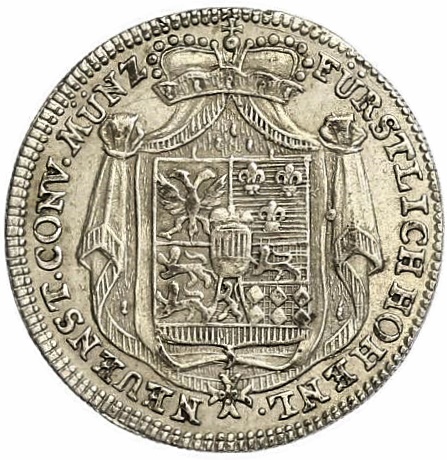 Obverse
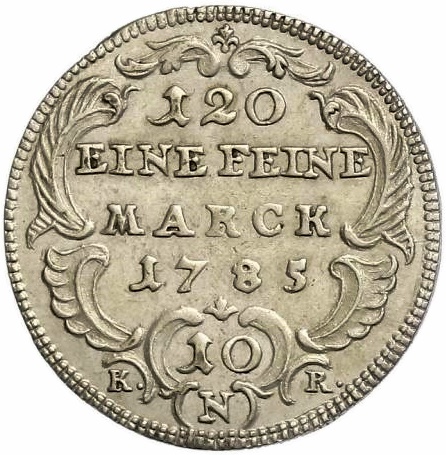 Reverse
Design Features
Obverse Design
The obverse of the 10 Kreuzers coin is a work of art, featuring an ornate shield adorned with multiple arms, all encompassed within a richly detailed crowned mantle. This design symbolizes the noble lineage and territorial claims of the Hohenlohe family. The intricate heraldic symbols provide a glimpse into the alliances and historical claims associated with the ruling house, reflecting their noble status and historical significance.
Reverse Design
On the reverse side, the coin presents the denomination and year '1785' elegantly positioned within an ornate frame. The number '10' is prominently placed in a cartouche below, while the mintmark is strategically positioned at the sides and below the date, outside the cartouche. This careful arrangement highlights the importance of the coin's value and offers a clear indication of its origin. The craftsmanship evident in this design demonstrates the skillful artistry involved in coin minting during this era.
Technical Specifications
The 10 Kreuzers coin boasts a diameter of 24.00mm, crafted from fine silver, reflecting the precious metal's prominence in coinage of the time. While the exact weight is not specified, coins of this denomination typically adhered to standards that ensured their acceptance in trade and commerce. The composition and size of the coin were deliberately chosen to ensure its durability and utility as a medium of exchange.
Collectible Value
As a piece of numismatic interest, the 10 Kreuzers coin holds significant value for collectors. Its rarity and historical context enhance its desirability, with well-preserved specimens commanding higher prices in the market. The coin's detailed heraldic designs and limited mintage make it an attractive addition to any collection focused on 18th-century European coinage, particularly those with an emphasis on the Holy Roman Empire and its constituent states. Collectors often seek this coin for its historical significance, as it encapsulates a unique period in European history where regional powers sought to assert their influence through distinct monetary systems. The coin is not only a testament to the artistry of the time but also a reflection of the economic conditions that shaped the region's history.
Conclusion
The 1785 10 Kreuzers coin from Hohenlohe-Neuenstein-Öhringen is more than a mere currency piece; it is a window into the past, offering insights into the political, economic, and artistic landscape of the 18th century. Its intricate design, historical significance, and collectible appeal make it a prized possession for numismatists and history buffs alike. As a representation of the era's craftsmanship and regional influence, it remains a valuable artifact that continues to captivate and inspire.

ScanMyCoin: AI Coin Recognition
Professional AI coin recognition and collection management platform. Identify, learn, and track your coin collection with advanced AI technology and a vast.