
Hohenlohe-Neuenstein, County of 1 Ducat - Wolfgang Julius
Description:
1 Ducat 1 Ducat - Wolfgang Julius coin from Hohenlohe-Neuenstein, County of. Design, history & value.
Introduction
The 1 Ducat - Wolfgang Julius coin from Hohenlohe-Neuenstein is a remarkable piece of numismatic history that captures the essence of late 17th-century European minting. Minted in 1697, this gold coin is not only a testament to the intricate skill of its creators but also a valuable artifact from a period marked by political and economic transformations. With a composition of .986 fine gold, this coin is a sought-after treasure for collectors and historians alike, offering a glimpse into the artistic and economic milieu of its time.
Historical Background
The County of Hohenlohe-Neuenstein, a region in what is today Germany, was a significant player in the Holy Roman Empire's complex network of territories. The 1 Ducat coin issued under the authority of Wolfgang Julius, a nobleman of the Hohenlohe-Neuenstein line, reflects the county's wealth and its ruler's ambition to demonstrate economic stability and influence. The year 1697 was a pivotal time in European history, marked by the conclusion of the Nine Years' War and the beginning of a period of relative peace and prosperity. Coins like the 1 Ducat were essential for trade and symbolized the region's participation in a broader European economy.
Coin Images
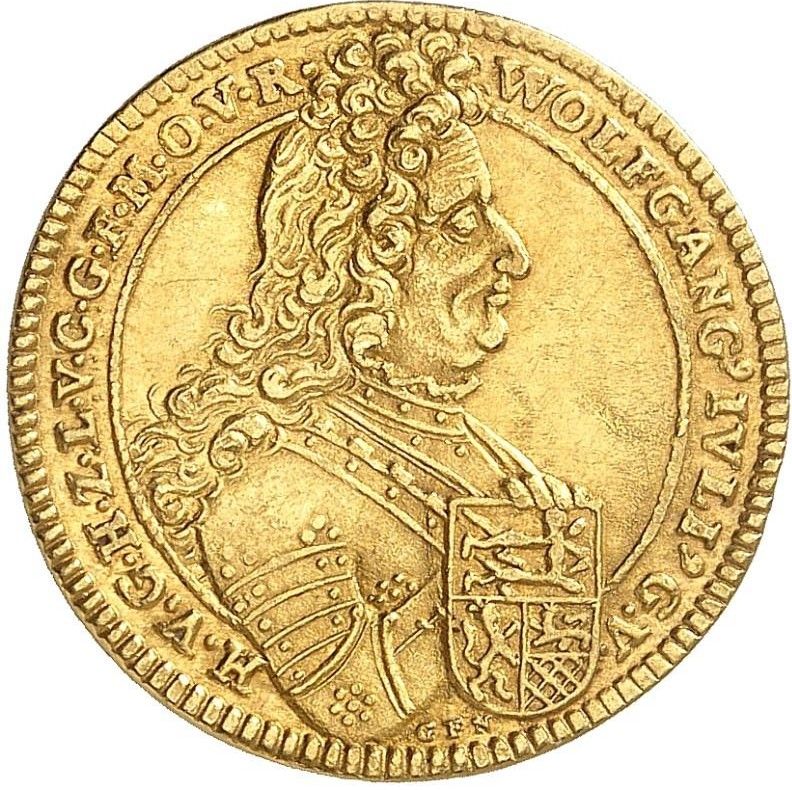 Obverse
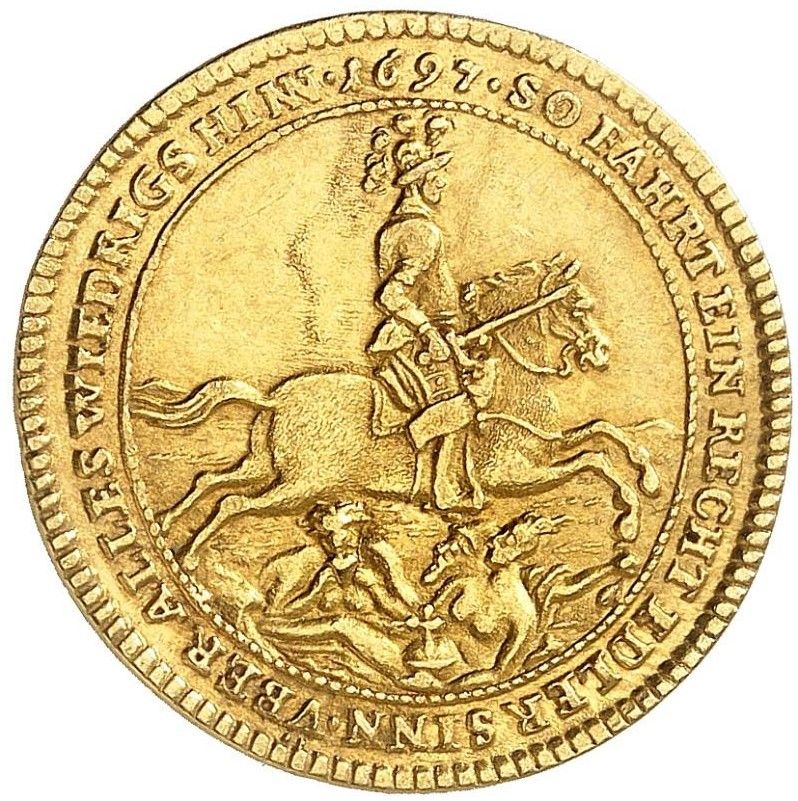 Reverse
Design Features
The design of the 1 Ducat - Wolfgang Julius is a masterpiece of numismatic art. The obverse side features a detailed bust of Wolfgang Julius facing right. This portrait is an exquisite representation of the noble's visage, capturing the fashion and demeanor of the era. The reverse side of the coin depicts an iconic image of a horse rider facing right. This imagery not only signifies the power and mobility of the ruling class but also symbolizes the military prowess and strategic importance of Hohenlohe-Neuenstein during this period.
Technical Specifications
The 1 Ducat coin weighs 3.50 grams and is composed of .986 fine gold, making it a highly valued piece for both its material and historical worth. The high gold content reflects the coin's role as a stable and reliable medium of exchange. Although the exact diameter and thickness are not specified here, the coin's weight and gold purity align with typical standards of Ducats issued in the late 17th century.
Collectible Value
The 1 Ducat - Wolfgang Julius is considered a rare and valuable item among collectors. Its limited minting in 1697, combined with its high gold content and rich historical context, contribute to its desirability. Coins of this nature often command significant prices at auction, with value fluctuating based on condition, provenance, and market demand. For numismatists, this coin represents not just a financial investment but a tangible link to the past, offering insights into the economic and political landscape of the time.
Conclusion
In conclusion, the 1 Ducat - Wolfgang Julius from Hohenlohe-Neuenstein is more than just a coin; it is a piece of history that encapsulates the artistry, economy, and politics of the late 17th century. Its exquisite design, high gold content, and historical significance make it a prized possession for collectors and historians. Whether you are a seasoned numismatist or a casual history enthusiast, the 1 Ducat coin offers a fascinating journey into the rich tapestry of European heritage.

ScanMyCoin: AI Coin Recognition
Professional AI coin recognition and collection management platform. Identify, learn, and track your coin collection with advanced AI technology and a vast.