
Hohenlohe-Waldenburg-Schilingfürst, County of 2½ Kreuzer - Charles Albert
Description:
2½ Kreuzer 2½ Kreuzer - Charles Albert coin from Hohenlohe-Waldenburg-Schilingfürst, County of. Design, history & value.
Introduction
The 2½ Kreuzer coin from the County of Hohenlohe-Waldenburg-Schilingfürst, issued in 1770, stands as a fascinating piece of numismatic history. Struck during the brief rule of Charles Albert, this coin is a testament to the rich cultural and economic fabric of 18th-century Germany. This article explores the historical and collectible significance of this rare billon coin, making it a prized possession for avid collectors.
Historical Background
The issuance of the 2½ Kreuzer coin is deeply rooted in the historical context of the Hohenlohe-Waldenburg-Schilingfürst region. During the 18th century, the Holy Roman Empire was a tapestry of various principalities and counties, each minting its own currency. The County of Hohenlohe-Waldenburg-Schilingfürst, under the leadership of Charles Albert, played its part in this economic mosaic. The 2½ Kreuzer served not only as a medium of exchange but also as a reflection of the county's sovereignty and economic aspirations during a period of significant political and social change in Europe.
Coin Images
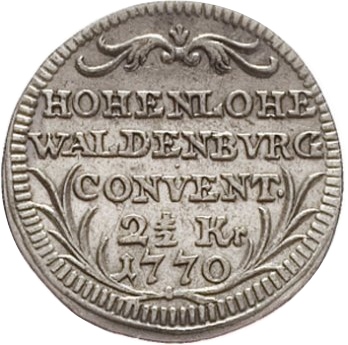 Obverse
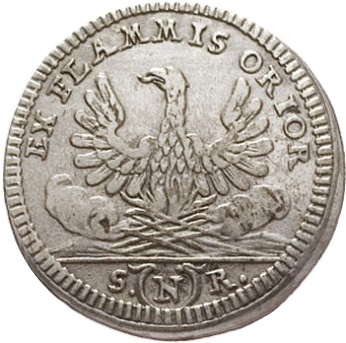 Reverse
Design Features
The 2½ Kreuzer coin boasts an intriguing design that captures both the artistry and symbolism of its time. On the obverse, a five-line inscription is elegantly framed by palm branches, symbolizing peace and victory. This intricate design highlights the craftsmanship of the period and the importance placed on aesthetic value in coinage. The reverse of the coin features a phoenix rising from the ashes, an emblem of rebirth and renewal. This powerful symbol likely reflects the aspirations for prosperity and resilience within the county. The choice of a phoenix is particularly significant, suggesting a narrative of overcoming adversity and heralding a new era for the region.
Technical Specifications
The 2½ Kreuzer coin is composed of billon, an alloy of silver and a base metal, commonly used in lower denomination coins of the time. Although exact dimensions and weight can vary slightly due to minting practices of the era, these coins typically have a diameter of around 20mm and weigh approximately 1.5 grams. The use of billon not only made the coin more accessible for everyday transactions but also reflected the economic realities and resource limitations of smaller principalities.
Collectible Value
As a collectible, the 1770 2½ Kreuzer holds significant allure for numismatists. Its rarity, coupled with the historical context of its issue, makes it a sought-after item. Coins from smaller issuers like Hohenlohe-Waldenburg-Schilingfürst are often more valuable due to their limited mintage and regional specificity. While market values can fluctuate, the unique design and historical significance of this coin typically result in a higher premium among collectors, particularly those specializing in European or Germanic numismatics.
Conclusion
In conclusion, the 2½ Kreuzer coin from Hohenlohe-Waldenburg-Schilingfürst is more than just a piece of metal; it is a tangible link to the past, embodying the rich history and cultural identity of its time. For collectors and historians alike, it offers a window into the economic and artistic achievements of 18th-century Germany. Its rare and unique design, combined with its historical backdrop, ensures that this coin remains a treasured piece for anyone fortunate enough to add it to their collection.

ScanMyCoin: AI Coin Recognition
Professional AI coin recognition and collection management platform. Identify, learn, and track your coin collection with advanced AI technology and a vast.