
Barke Tetradrachm - Akesios
Description:
Tetradrachm Tetradrachm - Akesios coin from Barke. Design, history & value.
Introduction
The Tetradrachm of Barke stands as a testament to the rich history and artistry of ancient coins. This silver coin, notable for its striking imagery and historical significance, offers a fascinating glimpse into the ancient world. Collectors and historians alike regard it as a valuable piece due to its unique features and the story it tells about the era of its issuance. The Tetradrachm of Barke, with its intricate designs and robust composition, continues to captivate numismatists and antique enthusiasts around the globe.
Historical Background
The Tetradrachm was issued by Barke, an ancient city known for its pivotal role in trade and culture. This coin not only served as currency but also as a symbol of the city's prosperity and artistic prowess. The issuance of this coin reflects a period when Barke was flourishing as a center of commerce, particularly renowned for its production and trade of silphium, a plant depicted on the coin itself. The Tetradrachm of Barke encapsulates the economic and cultural vitality of the city during its peak, providing invaluable insights into its historical landscape.
Coin Images
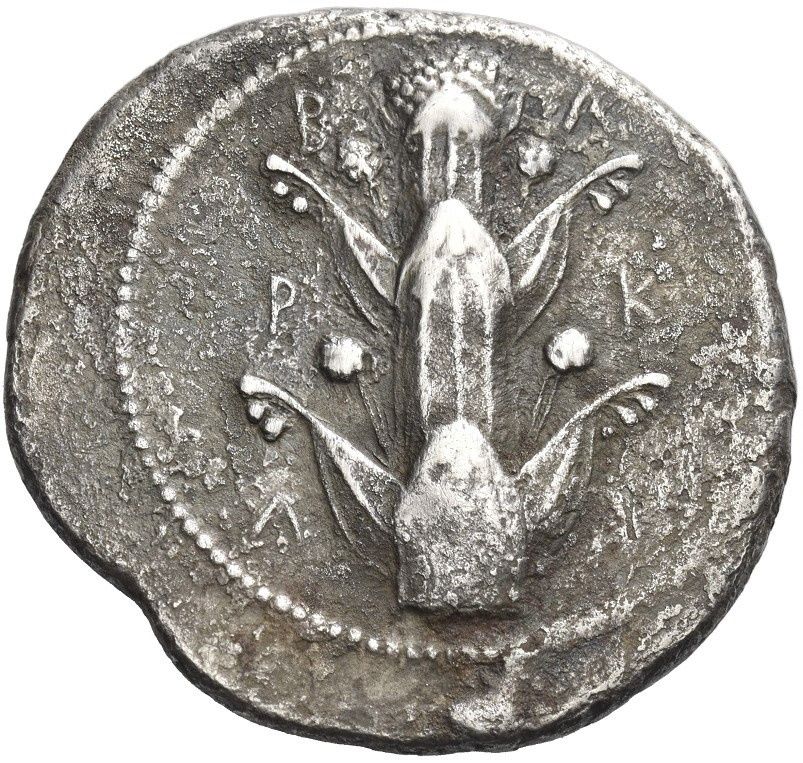 Obverse
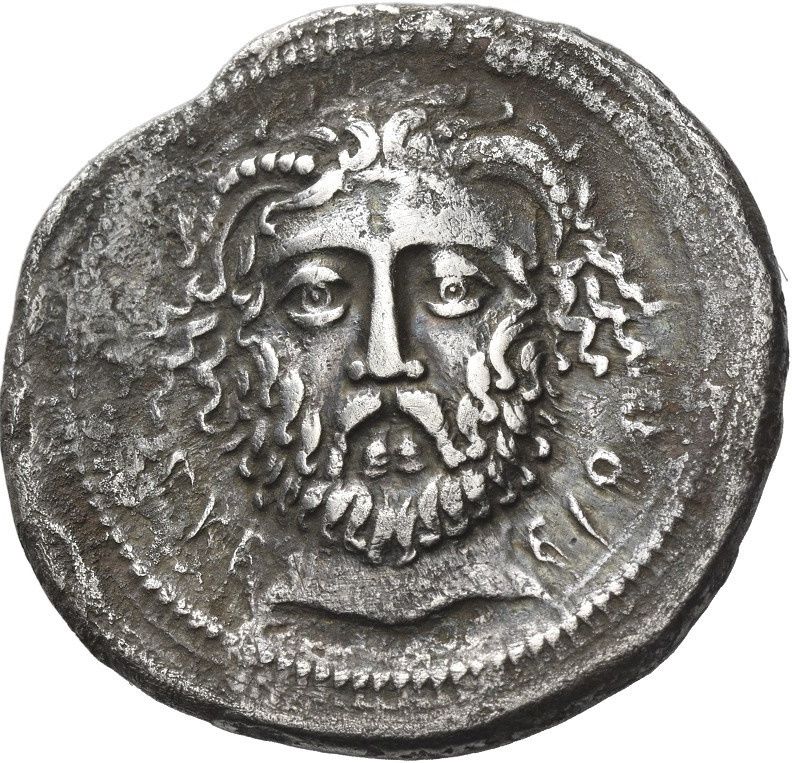 Reverse
Design Features
The Tetradrachm of Barke is celebrated for its exquisite design, a hallmark of ancient craftsmanship. Obverse Design: The obverse of the coin features the silphium plant, an emblematic representation of Barke's economic strength. Silphium was a highly sought-after commodity in ancient times, prized for its medicinal properties and culinary uses. The depiction of the plant on the coin underscores its significance to the city's economy and identity. Reverse Design: On the reverse, the coin showcases the facing head of Zeus Ammon, a syncretic deity combining aspects of the Greek god Zeus and the Egyptian god Amun. This portrayal, with Zeus Ammon's eyes wide open and his hair flowing majestically behind him, symbolizes divine authority and protection. The artistic rendering of Zeus Ammon not only highlights the cultural exchanges between Greek and Egyptian civilizations but also exemplifies the high level of artistry achieved by ancient engravers.
Technical Specifications
The Tetradrachm of Barke is crafted from silver, weighing approximately 13.16 grams. The use of high-quality silver not only ensured the coin's durability but also its appeal as a valuable trading commodity. The coin's dimensions and weight are characteristic of the tetradrachm denomination, a standard in ancient Greek currency that facilitated trade across various regions. The precise measurements and composition reflect the meticulous standards of ancient minting processes.
Collectible Value
In the world of numismatics, the Tetradrachm of Barke is highly valued for its rarity and historical relevance. Its market value can vary significantly based on factors such as condition, provenance, and historical documentation. Coins in excellent condition or with verified historical significance can fetch substantial prices at auction. The combination of its artistic merit and historical context makes this coin a sought-after piece for collectors. The Tetradrachm's connection to the ancient trade of silphium adds another layer of intrigue, enhancing its collectible appeal.
Conclusion
The Tetradrachm of Barke is more than just an ancient coin; it is a piece of history that embodies the economic, cultural, and artistic achievements of its time. Its detailed designs and robust silver composition make it a standout example of ancient minting artistry. For collectors and historians, this coin offers a tangible connection to the past, providing insights into the rich tapestry of ancient civilizations. The Tetradrachm of Barke remains a prized artifact, celebrated for its beauty, historical significance, and enduring legacy in the world of numismatics.

ScanMyCoin: AI Coin Recognition
Professional AI coin recognition and collection management platform. Identify, learn, and track your coin collection with advanced AI technology and a vast.