

Austrian Empire 20 Kreuzers - Ferdinand I
Description:
20 Kreuzers 20 Kreuzers - Ferdinand I coin from Austrian Empire. Design, history & value.
[SEO TITLE]: Discover the 20 Kreuzers Coin of the Austrian Empire Featuring Ferdinand I [SEO DESCRIPTION]: Explore the 1835-1836 20 Kreuzers coin from the Austrian Empire. [KEYWORDS]: 20 Kreuzers, Austrian Empire coin, Ferdinand I, silver coin, collectible coin, numismatics, imperial eagle
Introduction
The 20 Kreuzers coin of the Austrian Empire, minted during the brief reign of Emperor Ferdinand I, stands as a significant piece of numismatic history. Struck between 1835 and 1836, this silver coin not only reflects the intricate artistry of its time but also serves as a tangible connection to the era's socio-political climate. Collectors and historians alike treasure this coin for its historical resonance and aesthetic appeal.
Historical Background
The Austrian Empire, under the rule of Ferdinand I, was a period marked by considerable political and social changes. Ferdinand I, also known as Ferdinand the Benign, ascended to the throne in 1835. Despite his limited involvement in the administration due to health issues, his reign was a pivotal point in the empire's history. The 20 Kreuzers coin, issued during this time, encapsulates the transition between eras and the enduring legacy of the Habsburg-Lorraine dynasty. It represents not only the economic conditions of the time but also the artistic trends that influenced coinage design across Europe.
Coin Images
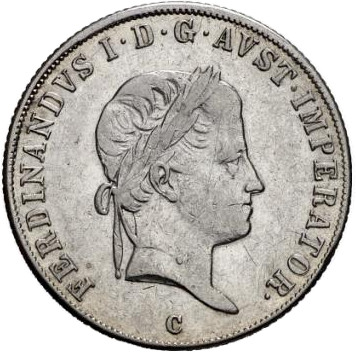 Obverse
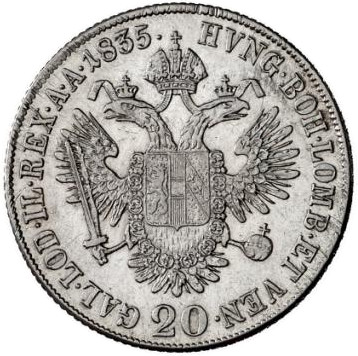 Reverse
Design Features
Obverse Design
The obverse of the 20 Kreuzers coin features a striking portrait of Emperor Ferdinand I, depicted in a laureate profile facing right. This design choice was common in the period, symbolizing leadership and continuity. The fine details of the laurel wreath convey a sense of dignity and authority, encapsulating the emperor's stature and the artistic craftsmanship of the mint.
Reverse Design
On the reverse, the coin boasts the majestic imperial eagle, a powerful symbol of the Habsburg-Lorraine dynasty and the Austrian Empire's sovereignty. The eagle is adorned with the Habsburg-Lorraine and Austrian arms, intricately interwoven, reflecting the empire's rich heritage and dominance. This emblematic design not only served as a marker of legitimacy and power but also as a piece of imperial propaganda, reinforcing the unity and strength of the empire.
Technical Specifications
The 20 Kreuzers coin is composed of .583 silver, giving it a notable heft and sheen that collectors find appealing. With a weight of 6.60 grams and a diameter of 27.00 mm, the coin is substantial, providing a tactile reminder of its era's monetary practices. These specifications underscore the coin's durability and its role in everyday transactions during Ferdinand I's reign.
Collectible Value
The 20 Kreuzers coin from 1835-1836 holds significant value for collectors due to its historical context and limited mintage period. As a silver coin from a prominent European empire, it is highly sought after in numismatic circles. Its rarity and condition largely determine its market value, with well-preserved specimens fetching higher prices at auctions. The coin's connection to the Habsburg lineage and its artistic merits further enhance its desirability, making it a prized addition to any collection focusing on European or imperial coinage.
Conclusion
The 20 Kreuzers coin of the Austrian Empire is more than just a piece of currency; it is a reflection of a bygone era's artistry, economy, and politics. Its intricate design and historical significance offer a window into the past, making it a valuable asset for collectors and historians alike. Whether you are a seasoned numismatist or a casual enthusiast, the 20 Kreuzers coin presents an opportunity to own a piece of history, capturing the essence of the Austrian Empire under Ferdinand I.

ScanMyCoin: AI Coin Recognition
Professional AI coin recognition and collection management platform. Identify, learn, and track your coin collection with advanced AI technology and a vast.