

Württemberg Württemberg 1 thaler, 1762-1763
Description:
1 thaler Württemberg 1 thaler, 1762-1763 coin from Württemberg. Design, history & value.
Introduction
The Württemberg 1 Thaler coin minted between 1762 and 1763 holds a significant place in numismatic history due to its association with the Duchy of Württemberg. This silver coin not only reflects the economic and political landscape of that era but also showcases exquisite craftsmanship that appeals to collectors worldwide.
Historical Background
Issued by the Duchy of Württemberg, the 1 Thaler coin served as a symbol of economic prosperity and sovereignty during the 18th century. The reign of Duke Charles Eugene of Württemberg marked a period of notable numismatic activity, with coins like the 1 Thaler bearing witness to the duchy's flourishing economy.
Coin Images
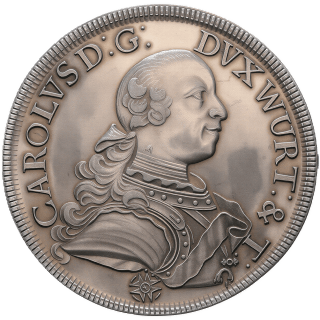 Obverse
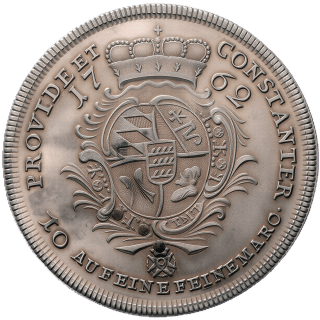 Reverse
Design Features
The obverse of the coin features the inscription "CAROLVS D G DVX WURT & T," highlighting the authority of Charles Eugene, Duke of Württemberg. On the reverse, the phrase "10 AUF EINE FEINE MARC / PROVIDE ET CONSTANTER" emphasizes the monetary value and stability promoted by the duchy.
Technical Specifications
Crafted from silver, the Württemberg 1 Thaler weighs 27.82g and measures 40.00mm in diameter. The precision in size and composition of this coin exemplifies the attention to detail and quality standards maintained by the mint.
Collectible Value
The Württemberg 1 Thaler 1762-1763 holds both historical and collectible value in the numismatic community. Its limited mintage, coupled with the intricate designs and ties to the Duchy of Württemberg, contribute to its desirability among coin collectors. The coin's market value reflects its rarity and demand, making it a prized possession for numismatists.
Conclusion
In conclusion, the Württemberg 1 Thaler 1762-1763 silver coin stands as a testament to the rich history and artistic prowess of the Duchy of Württemberg. Its distinctive designs, historical significance, and collectible value make it a cherished piece for both seasoned collectors and enthusiasts exploring the world of numismatics. Acquiring this coin not only adds a valuable asset to a collection but also unlocks a gateway to the past, where each detail tells a story of economic prosperity and cultural heritage.

ScanMyCoin: AI Coin Recognition
Professional AI coin recognition and collection management platform. Identify, learn, and track your coin collection with advanced AI technology and a vast.