

United States 5 Cents \"1866 Nickel Without Rays\" Pattern; copper
Description:
5 Cents \"1866 Nickel Without Rays\" Pattern; copper 5 Cents \"1866 Nickel Without Rays\" Pattern; copper coin from United States. Design, history & value.
Introduction
The United States 5 Cents 1866 Nickel Without Rays Pattern coin holds a special place in numismatic history due to its unique design and limited mintage. This copper coin is a prized possession for collectors and enthusiasts seeking rare and historically significant pieces.
Historical Background
Issued by the United States Mint in 1866, this coin was part of an experimental pattern series exploring new designs for circulating coinage. The absence of rays on the reverse distinguishes it from its regular-issue counterpart, making it a sought-after piece among collectors.
Coin Images
 Obverse
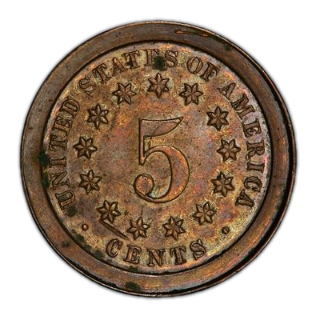 Reverse
Design Features
The obverse of the coin features a classic Liberty head facing left, surrounded by the inscription "UNITED STATES OF AMERICA" and the year "1866." The reverse showcases a large Roman numeral "V" encircled by a laurel wreath, with the absence of rays setting it apart from the standard nickel of the era.
Technical Specifications
This 5 Cents 1866 Nickel Without Rays Pattern coin measures [insert size], weighs [insert weight], and is composed of pure copper. With a smooth edge and intricate detailing, this coin exemplifies the craftsmanship of the United States Mint during the mid-19th century.
Collectible Value
Due to its limited mintage and unique design, the 1866 Nickel Without Rays Pattern coin holds significant value in the numismatic world. Collectors are willing to pay a premium for well-preserved specimens, especially those with sharp details and minimal wear. Its rarity and historical significance make it a prized addition to any coin collection.
Conclusion
In conclusion, the United States 5 Cents 1866 Nickel Without Rays Pattern coin represents a fascinating chapter in American coinage history. Its distinctive design, limited availability, and collectible value make it a must-have for serious numismatists and coin enthusiasts. Owning this piece not only adds diversity to a collection but also preserves a piece of the past for future generations to appreciate.

ScanMyCoin: AI Coin Recognition
Professional AI coin recognition and collection management platform. Identify, learn, and track your coin collection with advanced AI technology and a vast.