

Saxony Saxony 1 thaler, 1850-1854
Description:
1 thaler Saxony 1 thaler, 1850-1854 coin from Saxony. Design, history & value.
Introduction
The Saxony 1 thaler coin, minted in the years 1850 to 1854, stands as a numismatic marvel from the Kingdom of Saxony. This silver coin holds historical significance and exquisite design features that captivate both collectors and enthusiasts.
Historical Background
During the mid-19th century, Saxony, a prominent German state, issued the 1 thaler coin portraying Friedrich August, the King of Saxony. The coinage of thalers was a common practice in Europe during this period, serving as a significant unit of currency for trade and commerce.
Coin Images
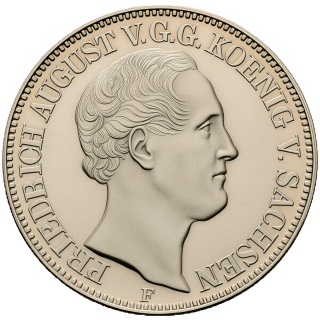 Obverse
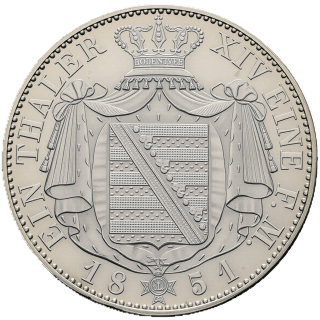 Reverse
Design Features
The obverse of the Saxony 1 thaler coin showcases the inscription "FRIEDRICH AUGUST V.G.G. KOENIG V. SACHSEN," depicting the regal profile of King Friedrich August. On the reverse side, the coin features the inscription "EIN THALER / XIV EINE F. M.," emphasizing its denomination and value.
Technical Specifications
Crafted from 0.750 silver, the Saxony 1 thaler coin weighs 22.27 grams with a diameter of 34.30mm. These dimensions highlight the substantial nature of this coin and its significant presence in the realm of numismatics.
Collectible Value
The Saxony 1 thaler coin holds both historical and collectible value in the numismatic world. Due to its limited mintage and connection to the Kingdom of Saxony, this coin is sought after by collectors for its rarity and historical significance. The market value of this coin can vary based on its condition, year of minting, and overall demand within the numismatic community.
Conclusion
In conclusion, the Saxony 1 thaler silver coin from 1850-1854 represents a tangible piece of history from the Kingdom of Saxony. With its intricate designs, historical context, and collectible allure, this coin serves as a symbol of numismatic excellence. Embrace the opportunity to own a piece of Saxony's rich numismatic heritage through this remarkable 1 thaler coin. This SEO-optimized article provides a comprehensive overview of the Saxony 1 thaler coin, highlighting its historical significance, design intricacies, and collectible value within the numismatic realm.

ScanMyCoin: AI Coin Recognition
Professional AI coin recognition and collection management platform. Identify, learn, and track your coin collection with advanced AI technology and a vast.