

Roman Empire (27 BC - 395 AD) Aureus - Tiberius and Augustus (DIVOS AVGVST DIVI F)
Description:
1 Aureus Aureus - Tiberius and Augustus (DIVOS AVGVST DIVI F) coin from Roman Empire (27 BC - 395 AD). Design, history & value.
Introduction
The Aureus coin featuring Tiberius and Augustus is a remarkable artifact from the Roman Empire, a civilization known for its profound influence on history and culture. Minted between 14 and 37 AD, this gold coin not only served as a medium of exchange but also as a symbol of imperial authority and legacy. Its striking design and rich historical context make it a coveted piece among collectors and historians alike.
Historical Background
The Roman Empire, spanning from 27 BC to 395 AD, was a period marked by significant expansion and consolidation. The Aureus coin in question was issued during the reign of Tiberius, the second Roman Emperor, who ruled from 14 to 37 AD. The coin commemorates the deified Augustus, Tiberius's predecessor and adoptive father, reflecting the tradition of posthumous reverence for emperors. Tiberius's reign was characterized by relative peace and stability, known as the Pax Romana. The issuance of the Aureus served to reinforce his legitimacy and connection to Augustus, the founder of the Roman Empire. By featuring both Tiberius and Augustus on the coin, it aimed to convey a message of continuity and divine favor, critical for maintaining imperial power and stability.
Coin Images
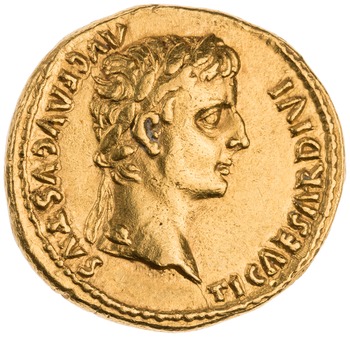 Obverse
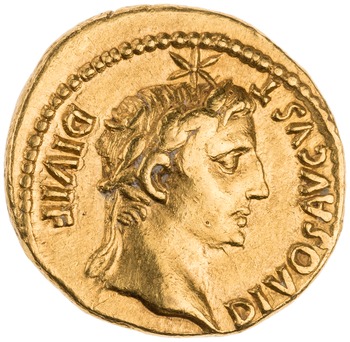 Reverse
Design Features
Obverse Design: The obverse of the Aureus coin presents a laureate head of Tiberius facing right. The laureate wreath, a symbol of triumph and divinity, underscores his status as a ruler backed by the gods. The craftsmanship and detail in the depiction reflect the high level of artistry achieved by Roman mint workers. Reverse Design: On the reverse, the laureate head of Augustus is depicted, also facing right. Above Augustus's head is a star, symbolizing his deification and eternal presence among the Roman pantheon. This imagery served not only to honor Augustus but also to legitimize Tiberius's reign by associating him closely with the beloved first emperor.
Technical Specifications
The Aureus coin is crafted from gold, a precious metal that signifies wealth and stability. It weighs approximately 7.80 grams and measures 19.00 mm in diameter. These specifications are typical of the Aureus coins of the era, intended for significant transactions and as a store of value. The gold composition also ensured the coin's durability and attractiveness, making it an enduring piece of the Roman economic system.
Collectible Value
As a piece of ancient history, the Aureus featuring Tiberius and Augustus holds immense value for collectors and historians. Its rarity, due to the limited minting period and the passage of time, enhances its desirability. Coins in good condition can fetch high prices at auctions, often reaching tens of thousands of dollars depending on their state and provenance. The coin's significance extends beyond its material value, serving as a tangible link to a pivotal era in world history. Collectors prize it for both its historical importance and its aesthetic appeal, making it a centerpiece in any collection of ancient coins.
Conclusion
The Aureus coin depicting Tiberius and Augustus is a testament to the enduring legacy of the Roman Empire. Its intricate design and historical context offer a window into the past, highlighting the power dynamics and cultural values of ancient Rome. For collectors and enthusiasts, possessing such a coin is not just about owning a piece of history; it's about connecting with a civilization that shaped the world as we know it today. This coin remains a shining example of the Roman Empire's artistry and influence, making it an invaluable addition to any numismatic collection.

ScanMyCoin: AI Coin Recognition
Professional AI coin recognition and collection management platform. Identify, learn, and track your coin collection with advanced AI technology and a vast.