

Poland Poland ½ grosz, 1786
Description:
½ grosz Poland ½ grosz, 1786 coin from Poland. Design, history & value.
Introduction
The Poland ½ grosz, minted in 1786 during the reign of King Stanisław August Poniatowski, holds a significant place in numismatic history. This copper coin not only reflects the economic and political landscape of its era but also showcases the artistic prowess of the time.
Historical Background
Issued under the authority of Poland, the ½ grosz coin was part of the monetary system during the reign of Stanisław August Poniatowski from 1764 to 1795. This period marked a crucial time in Polish history, characterized by political reforms and cultural developments.
Coin Images
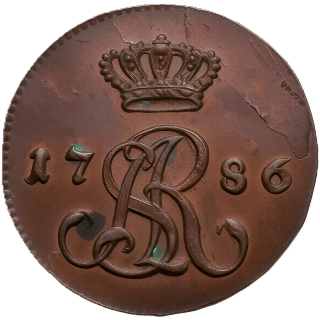 Obverse
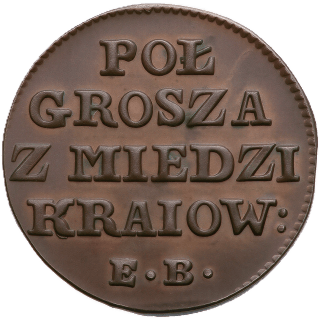 Reverse
Design Features
The obverse of the coin features the monogram "SAP" representing Stanisław August Poniatowski, surrounded by ornate detailing typical of the era. On the reverse, the inscription "POŁ GROSZA Z MIEDZI KRAIOW" denotes the denomination and material of the coin, with a wreath encircling the text.
Technical Specifications
This ½ grosz coin has a weight of 1.95g and a diameter of 17.00mm, making it a small yet significant piece of Polish currency history. Crafted from copper, the coin exhibits a level of detail and craftsmanship that is characteristic of coins from this period.
Collectible Value
Due to its historical significance and limited mintage, the Poland ½ grosz 1786 coin holds considerable value among collectors. Its rarity and connection to Stanisław August Poniatowski make it a sought-after piece in numismatic circles. The market value of this coin can vary based on its condition and historical demand.
Conclusion
In conclusion, the Poland ½ grosz 1786 copper coin stands as a testament to the rich history and cultural heritage of Poland during the late 18th century. Its intricate design, historical significance, and collectible value make it a prized possession for numismatists and history enthusiasts alike. Owning this coin provides a tangible connection to a pivotal era in Polish history, making it a valuable addition to any collection.

ScanMyCoin: AI Coin Recognition
Professional AI coin recognition and collection management platform. Identify, learn, and track your coin collection with advanced AI technology and a vast.