
Nuremberg, Free imperial city of 1 Thaler - Gustav Adolph II
Description:
1 Thaler 1 Thaler - Gustav Adolph II coin from Nuremberg, Free imperial city of. Design, history & value.
[SEO TITLE]: Nuremberg 1 Thaler Gustav Adolph II Coin - A 1632 Silver Treasure [SEO DESCRIPTION]: Explore the 1632 Nuremberg 1 Thaler's history and unique features. [KEYWORDS]: Nuremberg Thaler, Gustav Adolph II coin, 1 Thaler 1632, Silver coin, numismatic coin
Introduction
The 1 Thaler coin of Gustav Adolph II is a fascinating piece of numismatic history, originating from the Free Imperial City of Nuremberg in 1632. This coin is a testament to the intricate artistry and craftsmanship of the era, reflecting the political and economic significance of Nuremberg during the early 17th century. This silver coin not only represents a medium of exchange but also serves as a historical artifact that offers insights into the reign of one of the most notable figures of the Thirty Years' War, King Gustav II Adolph of Sweden.
Historical Background
The issuance of the 1 Thaler coin in 1632 coincides with a tumultuous period in European history, marked by the Thirty Years' War (1618-1648). Nuremberg, as a Free Imperial City, had the autonomy to mint its own coins. The city played a pivotal role during this period due to its strategic location and economic influence. King Gustav II Adolph, often revered as a military genius, was instrumental in the Protestant cause against the Catholic Habsburgs. This coin, therefore, not only served a monetary function but also symbolized political alliances and power dynamics of the era.
Coin Images
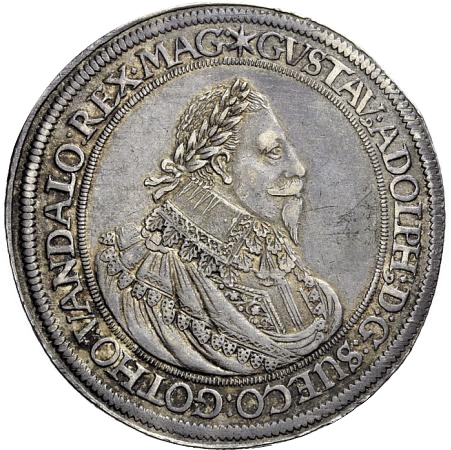 Obverse
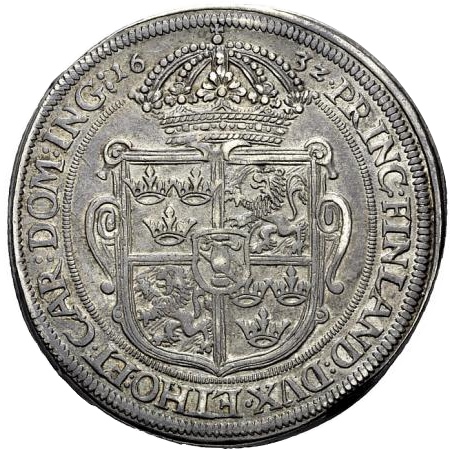 Reverse
Design Features
Obverse Design
The obverse of the 1 Thaler coin features a striking laureate bust of King Gustav II Adolph facing right. The attention to detail in the portrait captures the regal essence and commanding presence of the King, who was often hailed as the "Lion of the North." Surrounding the bust is a meticulously inscribed legend starting from the top right, which adds to the coin's intricate design and historical authenticity.
Reverse Design
On the reverse side, the coin showcases the crowned arms, a symbol of authority and sovereignty, effectively separating the minting date at the top. The design is complemented by another legend that begins at the top right, framing the central motif gracefully. This blend of heraldic imagery and precise lettering exemplifies the artistic standards of the period and the coin's role as a symbol of civic pride and political allegiance.
Technical Specifications
The 1 Thaler coin is composed of high-quality silver, a common choice for coins of significant value during the 17th century. Although specific dimensions such as diameter and weight can vary slightly due to minting processes, the Thaler typically measures around 40 mm in diameter and weighs approximately 28 grams. The silver composition not only adds to the coin's intrinsic value but also contributes to its durability and aesthetic appeal.
Collectible Value
For numismatists and collectors, the 1 Thaler of Gustav Adolph II holds considerable value due to its historical significance and rarity. Coins from the Free Imperial City of Nuremberg are highly sought after, and this particular piece is a gem for those interested in the interplay of European political history and numismatics. Market values can vary significantly based on the coin's condition, provenance, and demand, with well-preserved examples fetching premium prices at auctions.
Conclusion
The 1 Thaler coin of Gustav Adolph II is more than just a piece of currency; it is a window into the past that offers a glimpse into the complexities of 17th-century Europe. Its artistic design, historical context, and numismatic significance make it a prized addition to any collection. Whether you are a seasoned collector or a history enthusiast, the allure of this coin lies in its ability to tell a story that transcends time, connecting us with the legacy of one of history's most influential leaders.

ScanMyCoin: AI Coin Recognition
Professional AI coin recognition and collection management platform. Identify, learn, and track your coin collection with advanced AI technology and a vast.