
Mylasa Tetradrachm
Description:
Tetradrachm Tetradrachm coin from Mylasa. Design, history & value.
[SEO TITLE]: Discover the Mylasa Tetradrachm: A Rare Ancient Greek Silver Coin [SEO DESCRIPTION]: Explore the Mylasa Tetradrachm, a valuable ancient Greek silver coin. [KEYWORDS]: Mylasa, Tetradrachm, ancient Greek coin, silver coin, Zeus coin, collectible coin, numismatics
Introduction
The Mylasa Tetradrachm stands as a testament to the rich cultural and historical legacy of ancient Greece. Struck in the city of Mylasa, this silver coin not only reflects the artistry of its time but also embodies the profound influence of Greek mythology and religion. Known for its exquisite craftsmanship, the Mylasa Tetradrachm is a treasured piece among collectors and historians alike, offering insights into the ancient world's economy and society.
Historical Background
The city of Mylasa, located in the region of Caria in Asia Minor, was a significant center of ancient Greek civilization. It thrived from the early classical period and was known for its temple dedicated to Zeus Osogoa. The issuance of the Tetradrachm by Mylasa underscores the city's economic and cultural importance during its peak. These coins were likely used for large transactions and trade, highlighting Mylasa's connectivity within the broader Hellenic world. The Tetradrachm also reflects the political and religious devotion of its citizens, particularly to Zeus, the king of the Greek gods.
Coin Images
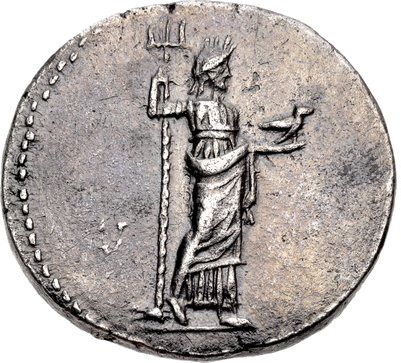 Obverse
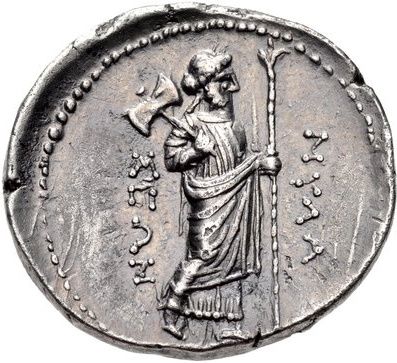 Reverse
Design Features
Obverse Design
The obverse of the Mylasa Tetradrachm is a stunning representation of Zeus Osogoa, depicted walking to the right. He is adorned in a chiton and himation, traditional garments that convey a sense of majesty and divinity. In his right hand, Zeus holds a trident, symbolizing his power over the sea, while an eagle perches in his left hand, a symbol of his dominion over the skies. Below the trident, a small crab is depicted, possibly an emblematic representation of Mylasa itself. The coin's border is dotted, adding a refined touch to the overall design.
Reverse Design
On the reverse, Zeus Labraundos is illustrated, also walking right. This image portrays Zeus in a more martial aspect, with a double axe (labrys) resting on his right shoulder, a powerful symbol of authority and strength, and a spear in his left hand. The dotted border continues on this side, maintaining the coin's elegant symmetry and design continuity. This imagery not only highlights the deity's multifaceted nature but also reflects the spiritual and cultural values of Mylasa.
Technical Specifications
The Mylasa Tetradrachm is crafted from high-quality silver, weighing approximately 13.30 grams. It has a diameter of 25.00 mm, making it a substantial coin that conveys both intrinsic and aesthetic value. The use of silver in its composition denotes the coin's role in significant economic transactions and its status symbol among the ancients.
Collectible Value
In the numismatic community, the Mylasa Tetradrachm is highly regarded for its historical significance and artistic merit. Its rarity and the condition of individual specimens greatly influence its market value, which can range significantly depending on these factors. Coins featuring clear and well-preserved designs are particularly sought after, fetching higher prices at auction. The Tetradrachm's connection to Zeus and its origin from Mylasa add another layer of allure for collectors interested in ancient Greek coins.
Conclusion
The Mylasa Tetradrachm is more than just a piece of currency; it is a window into the past, offering a glimpse into the religious, cultural, and economic life of ancient Mylasa. Its exquisite design and historical significance make it a prized possession for collectors and historians, preserving the legacy of a civilization that laid the foundations for much of Western culture. Whether appreciated for its artistic beauty or its historical context, the Mylasa Tetradrachm remains a captivating artifact of ancient Greece.

ScanMyCoin: AI Coin Recognition
Professional AI coin recognition and collection management platform. Identify, learn, and track your coin collection with advanced AI technology and a vast.