

Mecklenburg-Schwerin Mecklenburg-Schwerin ⅔ thaler, 1839-1841
Description:
⅔ thaler Mecklenburg-Schwerin ⅔ thaler, 1839-1841 coin from Mecklenburg-Schwerin. Design, history & value.
Introduction
The Mecklenburg-Schwerin ⅔ thaler coin minted from 1839 to 1841 holds a special place in numismatic history. As a representation of the Grand Duchy of Mecklenburg-Schwerin, this silver coin showcases exquisite craftsmanship and historical significance.
Historical Background
The Grand Duchy of Mecklenburg-Schwerin, located in northern Germany, issued this unique ⅔ thaler coin during the period of 1839-1841. With a composition of 0.986 silver, this coin was a symbol of the economic and political landscape of the time.
Coin Images
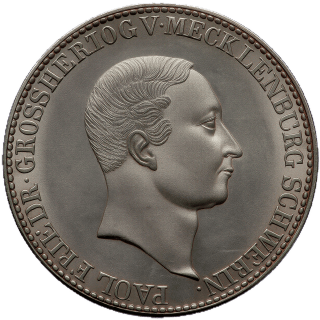 Obverse
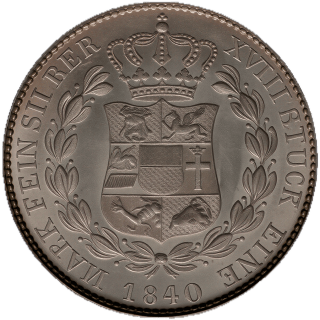 Reverse
Design Features
The obverse of the coin features the inscription "PAUL FRIEDR.GROSSHERZOG V.MECKLENBURG SCHWERIN," highlighting the reigning Grand Duke of Mecklenburg-Schwerin during that era. On the reverse side, the coin displays "XVIII STUCK EINE MARK FEIN SILBER," denoting its denomination and silver content.
Technical Specifications
- Composition: Silver 0.986
- Weight: 13.17g
- Diameter: 32.10mm This coin's precise specifications add to its appeal among collectors and enthusiasts alike.
Collectible Value
The Mecklenburg-Schwerin ⅔ thaler coin is highly sought after by collectors due to its historical significance and limited mintage period. Its rarity and unique design contribute to its increasing market value, making it a prized addition to any numismatic collection.
Conclusion
In conclusion, the Mecklenburg-Schwerin ⅔ thaler coin from 1839-1841 is not just a piece of currency but a tangible link to the rich history of the Grand Duchy of Mecklenburg-Schwerin. Its intricate design, historical context, and collectible value make it a treasure for numismatists and history enthusiasts alike. This detailed article has shed light on the significance and allure of the Mecklenburg-Schwerin ⅔ thaler coin, inviting readers to delve deeper into the world of numismatics and appreciate the artistry and history encapsulated within this remarkable piece of currency.

ScanMyCoin: AI Coin Recognition
Professional AI coin recognition and collection management platform. Identify, learn, and track your coin collection with advanced AI technology and a vast.