
Mainz, Archbishopric of 1 Ducat - Gustavus Adolphus II
Description:
1 Ducat 1 Ducat - Gustavus Adolphus II coin from Mainz, Archbishopric of. Design, history & value.
[SEO TITLE]: Discover the Rare 1 Ducat Coin of Mainz - Gustavus Adolphus II [SEO DESCRIPTION]: Explore the 1 Ducat coin from Mainz, featuring Gustavus Adolphus II. [KEYWORDS]: 1 Ducat, Gustavus Adolphus II, Mainz coin, gold coin, Archbishopric of Mainz
Introduction
The 1 Ducat coin from the Archbishopric of Mainz, minted in 1631, is a fascinating piece of numismatic history. This gold coin, featuring Gustavus Adolphus II, offers a glimpse into the intricate web of European politics and economics during the early 17th century. Its rarity and historical significance make it a coveted piece for collectors and history enthusiasts alike.
Historical Background
The year 1631 stands as a pivotal moment in European history, marked by the Thirty Years' War—a series of conflicts primarily fought in the Holy Roman Empire. The Archbishopric of Mainz, a crucial ecclesiastical territory, played a significant role during this tumultuous period. Gustavus Adolphus II of Sweden, known as the "Lion of the North," was a key Protestant figure in the war, renowned for his military prowess and strategic acumen. The issuance of the 1 Ducat coin in Mainz during this year reflects the complex political alliances and financial necessities of the time. Coins bearing the image of Gustavus Adolphus II were not merely currency but also served as tools of propaganda, reinforcing his influence and the Protestant cause across Europe.
Coin Images
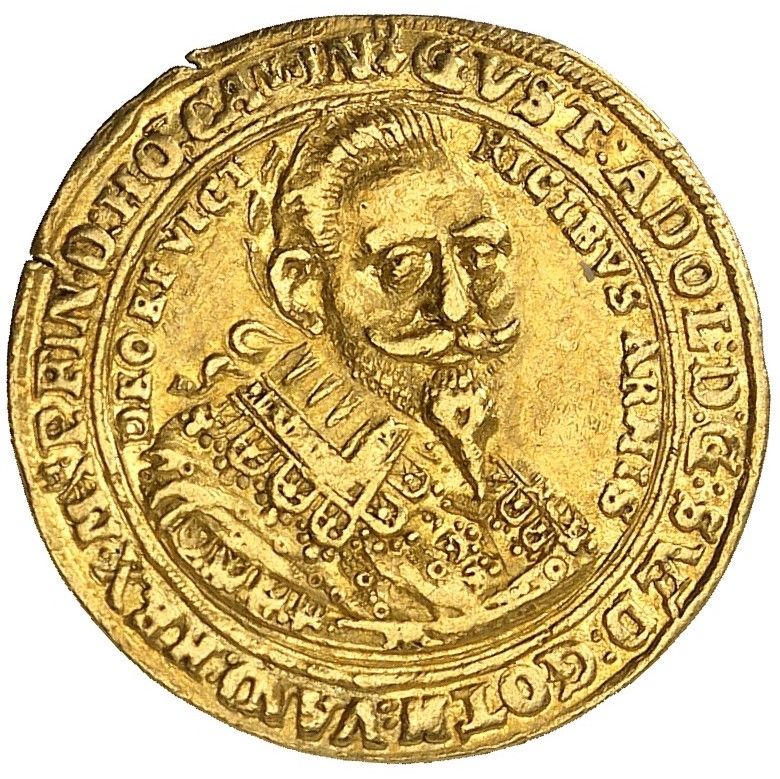 Obverse
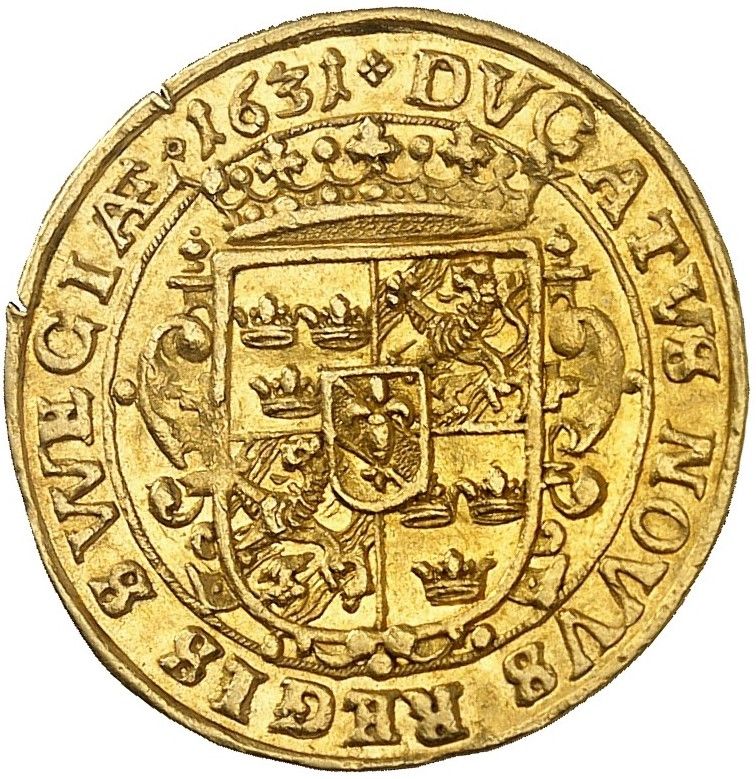 Reverse
Design Features
Obverse Design: The obverse of the 1 Ducat coin features a detailed bust of Gustavus Adolphus II. The portrait captures the king's regal demeanor, encapsulating his status as a formidable leader. The artistry reflects the sculptural style of the period, with particular attention to the intricate details of his attire and facial features, projecting an image of strength and authority. Reverse Design: On the reverse, the coin displays the crowned arms of the Archbishopric of Mainz. This emblem signifies the ecclesiastical power and autonomy of the region. The detailed heraldic design is a testament to the mint's craftsmanship, showcasing symbols that represent the archbishopric's jurisdiction and its political affiliations.
Technical Specifications
The 1 Ducat coin is composed of high-purity gold, with a composition of .986, indicative of the high standards of minting at the time. Weighing 3.50 grams, this coin exemplifies the traditional ducat specifications, a standard gold coinage weight and purity used widely in Europe during this period.
Collectible Value
The 1 Ducat coin of Gustavus Adolphus II is not only a historical artifact but also a valuable collectible. Its rarity is due to the limited minting period—only in the year 1631—which adds to its allure among collectors. The coin's value is further enhanced by its historical context, craftsmanship, and the reverence of Gustavus Adolphus II as a significant historical figure. As of the current market, such coins can command high prices at auctions and among private collectors, depending on their condition and provenance.
Conclusion
In summary, the 1 Ducat coin from the Archbishopric of Mainz, featuring Gustavus Adolphus II, is a remarkable piece of history and numismatics. Its intricate design, historical significance, and rarity make it a treasure for collectors and historians alike. This coin not only represents the economic and political intricacies of the 17th century but also stands as a testament to the enduring legacy of Gustavus Adolphus II. For collectors, it offers both a tangible connection to history and an investment in the rich tapestry of European numismatic heritage.

ScanMyCoin: AI Coin Recognition
Professional AI coin recognition and collection management platform. Identify, learn, and track your coin collection with advanced AI technology and a vast.