

Macedonia, Kingdom of Tetradrachm - Demetrius Poliorcetes (Salamis)
Description:
Tetradrachm Tetradrachm - Demetrius Poliorcetes (Salamis) coin from Macedonia, Kingdom of. Design, history & value.
[SEO TITLE]: Discover the Silver Tetradrachm of Demetrius Poliorcetes from Macedonia [SEO DESCRIPTION]: Explore the historical Tetradrachm coin of Demetrius Poliorcetes. [KEYWORDS]: Tetradrachm, Demetrius Poliorcetes, Macedonia coin, silver coin, ancient currency
Introduction
The Tetradrachm of Demetrius Poliorcetes stands as a monumental piece in the history of ancient currency, capturing the grandeur and strategic prowess of Macedonia's Kingdom. This silver coin, minted in Salamis, not only represents a significant era in the Hellenistic period but also showcases the artistic and cultural advancements of its time. Renowned for its detailed imagery and historical context, the Tetradrachm is a prized possession for numismatists and historians alike.
Historical Background
Demetrius Poliorcetes, known as "The Besieger," was a prominent figure in the Hellenistic world, ruling over Macedonia from 294 to 288 BC. His contributions to military strategy and naval warfare are legendary, and the Tetradrachm reflects his influence and the power of his reign. The coin's issuance from the Kingdom of Macedonia during a time of expansion and conflict underscores its historical importance. It was minted in Salamis, a crucial maritime city, highlighting the strategic emphasis on naval power and Demetrius's success in the region.
Coin Images
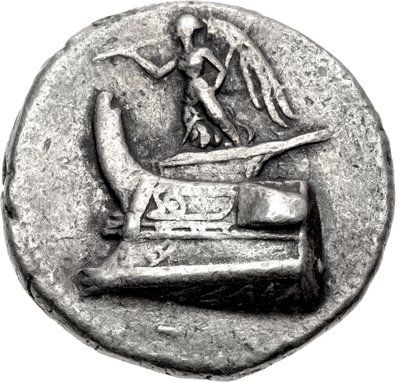 Obverse
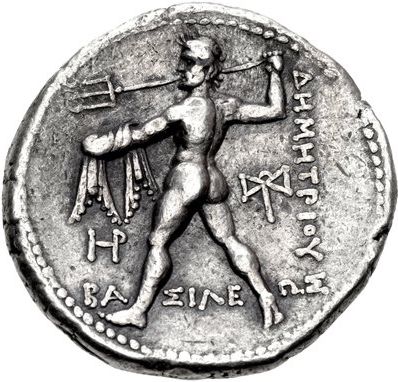 Reverse
Design Features
Obverse Design
The obverse of the Tetradrachm is a testament to the artistic genius of the era. It features Nike, the Greek goddess of victory, elegantly poised as she blows a trumpet and holds a stylis, standing left on the prow of a galley. This imagery symbolizes not only victory but also the naval supremacy that Demetrius sought to establish. The intricate detailing of the galley and Nike's dynamic posture reflect the exceptional craftsmanship of ancient Macedonian coinage.
Reverse Design
On the reverse, we find Poseidon Pelagaios, the god of the sea, depicted in a commanding stance, preparing to throw a trident. This portrayal is not merely decorative but serves as an emblem of maritime strength and divine favor. Accompanying Poseidon is an HP monogram to the left and a labrys, or double-headed axe, to the right, each symbol carrying its own historical and cultural significance. The labrys, in particular, is often associated with power and authority in Greek mythology.
Technical Specifications
The Tetradrachm of Demetrius Poliorcetes is a silver coin with a weight of 17.03 grams and a diameter of 28.00 millimeters. These specifications are typical for tetradrachms of the period, offering a substantial and impressive feel in hand. The coin's silver composition not only adds intrinsic value but also reflects the wealth and resources of the Macedonian Kingdom during Demetrius's reign.
Collectible Value
As a collectible, the Tetradrachm of Demetrius Poliorcetes holds significant value, both monetarily and historically. Its rarity and the story it tells of a bygone era make it a sought-after piece for collectors around the world. The market value of this coin can vary significantly based on its condition, provenance, and rarity. Coins in excellent condition or with a well-documented history of ownership can fetch high prices at auctions and among private collectors. The rarity of this coin, given its age and the tumultuous period in which it was minted, adds to its allure and collectible worth.
Conclusion
The Tetradrachm of Demetrius Poliorcetes is more than just a piece of ancient currency; it is a symbol of a powerful empire's legacy and the ruler's ambitions. Its exquisite design, rich history, and impressive craftsmanship make it an indispensable artifact for understanding the ancient world. For collectors and historians alike, this coin not only represents a tangible connection to the past but also embodies the cultural and historical significance of Macedonia's golden era. As such, it remains a cherished and valuable piece for any numismatic collection.

ScanMyCoin: AI Coin Recognition
Professional AI coin recognition and collection management platform. Identify, learn, and track your coin collection with advanced AI technology and a vast.