

Macedonia, Kingdom of Stater - Alexander III (Sardis)
Description:
Gold Stater Stater - Alexander III (Sardis) coin from Macedonia, Kingdom of. Design, history & value.
[SEO TITLE]: Discover the Gold Stater of Alexander III from Macedonia [SEO DESCRIPTION]: Explore the rare Gold Stater of Alexander the Great. [KEYWORDS]: Alexander the Great coin, Gold Stater, Macedonia coin, ancient coins, Greek coinage
Introduction
The Gold Stater of Alexander III, minted in Sardis, stands as a testament to the grandeur and influence of the Macedonian Kingdom under Alexander the Great. This coin is not only a piece of ancient currency but also a reflection of the artistic and cultural zenith that characterized Alexander's reign. Collectors and historians alike are captivated by its elegance and the stories it tells about a pivotal era in world history.
Historical Background
The Gold Stater was issued under the authority of the Macedonian Kingdom during the reign of Alexander III, more famously known as Alexander the Great. His reign from 336 to 323 BCE marked one of the most significant periods in ancient history, characterized by vast military conquests that extended the Macedonian Empire from Greece to Egypt and as far east as India. The minting of this coin in Sardis, an ancient city in modern-day Turkey, underscores the expansive reach of Alexander's empire and the integration of various cultures under his rule. Alexander's use of coinage was strategic, serving as a means to disseminate his image and influence across the territories he conquered. Coins like the Gold Stater were not only monetary instruments but also tools of propaganda, reinforcing his divine right to rule and the unity of his diverse empire.
Coin Images
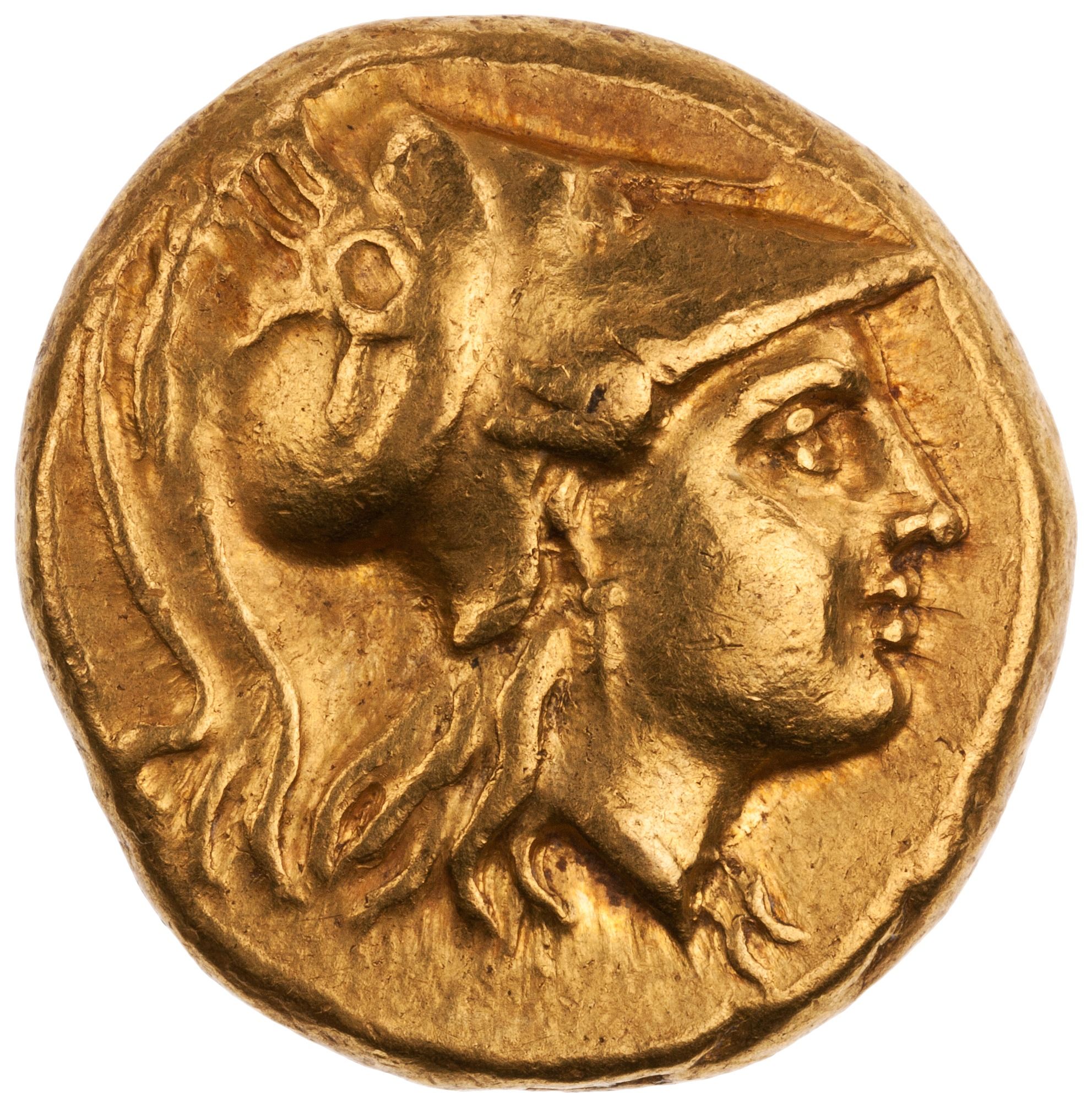 Obverse
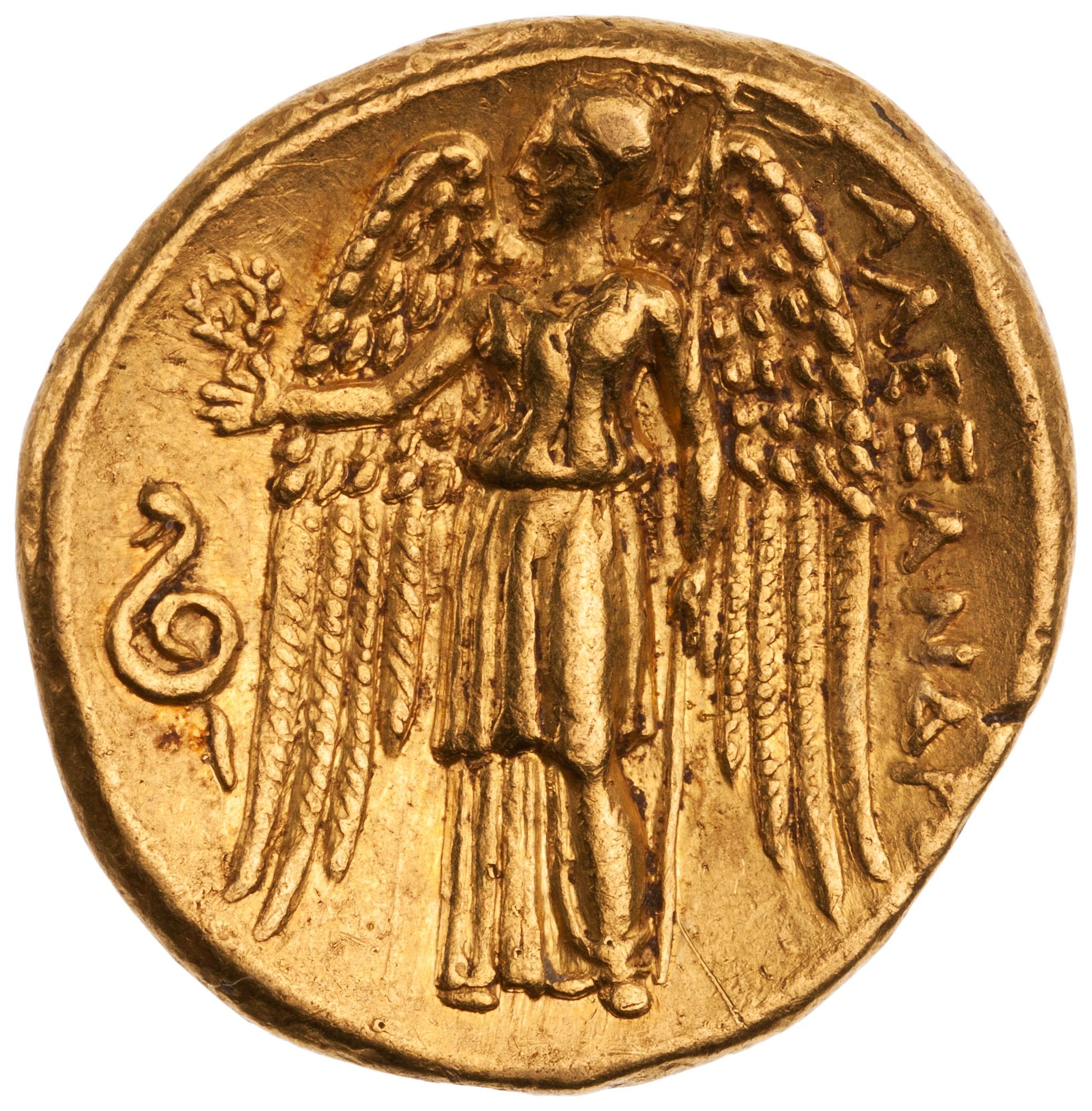 Reverse
Design Features
The Gold Stater of Alexander III is renowned for its exquisite design, reflecting the high artistic standards of the era. Obverse Design: The obverse of the coin features the head of Athena, the Greek goddess of wisdom and warfare, turned to the right. Athena is depicted wearing a Corinthian helmet adorned with a crest, symbolizing her martial prowess and strategic acumen, traits admired by Alexander himself. This choice of imagery aligns Alexander with the divine attributes of Athena, reinforcing his image as a god-like figure. Reverse Design: On the reverse, Nike, the winged goddess of victory, stands gracefully to the left. She holds a wreath in her right hand, a symbol of victory and triumph, while a stylis, representing maritime power, is held in her left. The presence of a snake in the left field is intriguing, often interpreted as a symbol of renewal and protection. The reverse design celebrates Alexander's numerous victories and his dominance over land and sea.
Technical Specifications
The Gold Stater is crafted from pure gold, weighing 8.60 grams with a diameter of 17.00 millimeters. Its composition and precise craftsmanship highlight the advanced metallurgical skills of the ancient Greeks. The coin's relatively small size belies its significant value and purchasing power in the ancient economy.
Collectible Value
The Gold Stater of Alexander III is a highly sought-after piece among numismatists and collectors of ancient coins. Its rarity and historical significance contribute to its high market value, often fetching substantial sums at auction. The coin's condition, provenance, and historical context play crucial roles in determining its price. As an artifact from one of history's most illustrious periods, the Gold Stater represents a tangible connection to the past, making it a prized addition to any collection.
Conclusion
In conclusion, the Gold Stater of Alexander III is more than just a piece of currency; it is a relic of human history that encapsulates the power and legacy of Alexander the Great. Its intricate design and historical backstory provide a window into the cultural and political landscape of the ancient world. For collectors and historians, this coin is a remarkable treasure that continues to inspire awe and fascination centuries after its creation.

ScanMyCoin: AI Coin Recognition
Professional AI coin recognition and collection management platform. Identify, learn, and track your coin collection with advanced AI technology and a vast.