

Germany (notgelds) Germany (notgelds) 5 pfennig, 1917
Description:
5 pfennig Germany (notgelds) 5 pfennig, 1917 coin from Germany (notgelds). Design, history & value.
Introduction
The Germany Notgelds 5 Pfennig coin, minted in 1917, holds historical significance as a municipal issuance during a crucial period. These coins, known as emergency money or notgelds, served local communities when traditional currency was scarce.
Historical Background
Issued by the municipalities of Obergrainau and Untergrainau between 1917 and 1922, this coin reflects the economic challenges faced during World War I. Notgelds were often issued by local authorities, businesses, or organizations to address currency shortages.
Coin Images
 Obverse
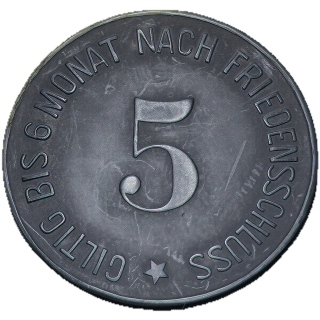 Reverse
Design Features
The obverse of the coin features the year "1917" with the inscription "GEMEINDEN OBER- & UNTERGRAINAU," denoting the issuing municipalities. On the reverse, the denomination "5" is displayed with the phrase "GILTIG BIS 6 MONAT NACH FRIEDENSSCHLUSS," indicating its validity until six months after the peace treaty.
Technical Specifications
- Denomination: 5 Pfennig
- Composition: Zinc
- Weight: 1.40g
- Diameter: 18.10mm
Collectible Value
The Germany Notgelds 5 Pfennig coin is a sought-after piece for collectors due to its historical context and unique design. Its scarcity and connection to a specific period make it a valuable addition to numismatic collections. The market value of such coins can vary based on condition and demand.
Conclusion
In conclusion, the Germany Notgelds 5 Pfennig coin of 1917 stands as a testament to the ingenuity of local communities in times of economic turmoil. Its distinctive design and historical importance make it a prized possession for coin enthusiasts and historians alike. Acquiring such a piece not only enriches a collection but also preserves a tangible piece of German history.

ScanMyCoin: AI Coin Recognition
Professional AI coin recognition and collection management platform. Identify, learn, and track your coin collection with advanced AI technology and a vast.