

German Empire German Empire 5 mark, 1902-1907
Description:
5 mark German Empire 5 mark, 1902-1907 coin from German Empire. Design, history & value.
Introduction
The German Empire 5 Mark coin minted between 1902 and 1907 under the reign of Friedrich Grosherzog von Baden holds a significant place in numismatic history. This silver coin not only showcases exquisite craftsmanship but also represents a pivotal era in German coinage.
Historical Background
Issued by the German Empire, this coin was part of the Baden series minted between 1871 and 1918. The reign of Friedrich Grosherzog von Baden marked a period of cultural and economic prosperity, reflected in the coins minted during his rule.
Coin Images
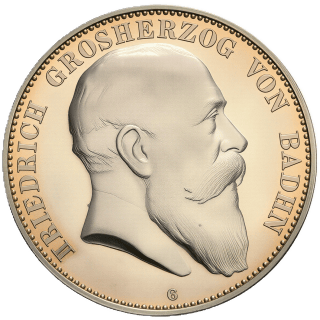 Obverse
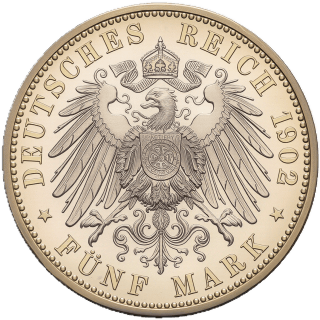 Reverse
Design Features
The obverse of the coin features the portrait of Friedrich Grosherzog von Baden, capturing his regal demeanor and attention to detail. The reverse bears the inscription "DEUTSCHES REICH" above "FÜNF MARK," surrounded by intricate design elements symbolic of the German Empire.
Technical Specifications
This 5 Mark coin is composed of 90% silver, weighing 27.77 grams with a diameter of 38.00mm. The use of high-quality silver and precise minting techniques contribute to the coin's overall appeal and durability.
Collectible Value
Due to its historical significance and limited mintage period, the German Empire 5 Mark 1902-1907 coin is highly sought after by collectors worldwide. Its silver composition adds to its intrinsic value, while the connection to Friedrich Grosherzog von Baden enhances its collectibility. The market value of this coin varies based on factors such as condition, rarity, and demand among collectors. Well-preserved specimens command higher prices, especially those with minimal wear and clear details.
Conclusion
In conclusion, the German Empire 5 Mark 1902-1907 coin is not just a numismatic artifact but a piece of history that embodies the grandeur of the German Empire under Friedrich Grosherzog von Baden. Its exquisite design, historical significance, and collectible value make it a prized addition to any coin collection, appealing to both enthusiasts and investors alike.

ScanMyCoin: AI Coin Recognition
Professional AI coin recognition and collection management platform. Identify, learn, and track your coin collection with advanced AI technology and a vast.