

German Empire German Empire 20 mark, 1910-1914
Description:
20 mark German Empire 20 mark, 1910-1914 coin from German Empire. Design, history & value.
Introduction
The German Empire 20 mark gold coin, minted between 1910 and 1914 under the authority of Saxe-Meiningen, holds a significant place in numismatic history. Known for its intricate design and historical importance, this coin attracts both collectors and enthusiasts alike.
Historical Background
During the early 20th century, the German Empire issued a series of gold coins with various regional designs, including the 20 mark denomination from Saxe-Meiningen. This period marked a time of political and economic change in Europe, making these coins a tangible link to a bygone era.
Coin Images
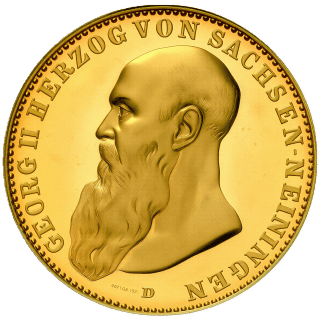 Obverse
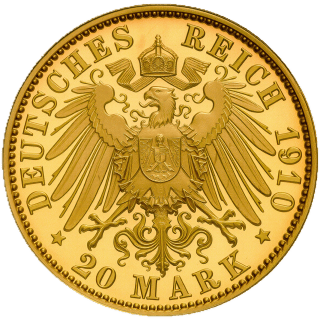 Reverse
Design Features
The obverse of the coin features a portrait of Duke Georg II of Saxe-Meiningen, with the inscription "GEORG II HERZOG VON SACHSEN-MEININGEN" around the edge. On the reverse side, the denomination "20 MARK" is displayed above the phrase "DEUTSCHES REICH," emphasizing its connection to the German Empire.
Technical Specifications
This 20 mark coin weighs 7.97 grams and has a diameter of 22.00mm. Crafted from 90% gold, this coin showcases both artistic beauty and precious metal value, making it a sought-after piece among collectors.
Collectible Value
Due to its limited mintage and historical significance, the German Empire 20 mark gold coin from Saxe-Meiningen holds a considerable collectible value. The rarity of this coin, combined with its gold content, contributes to its appeal among numismatists worldwide.
Conclusion
In conclusion, the German Empire 20 mark gold coin from Saxe-Meiningen is not just a piece of currency but a symbol of a bygone era. Its impeccable design, historical significance, and collectible value make it a prized possession for any coin collector. Whether for its beauty, rarity, or investment potential, this coin continues to captivate enthusiasts and remains a valuable asset in the world of numismatics.

ScanMyCoin: AI Coin Recognition
Professional AI coin recognition and collection management platform. Identify, learn, and track your coin collection with advanced AI technology and a vast.