
Commagene, Kingdom of Tetradrachm - Antiochus I (Official Imitation, Tigranes II)
Description:
Tetradrachm Tetradrachm - Antiochus I (Official Imitation, Tigranes II) coin from Commagene, Kingdom of. Design, history & value.
[SEO TITLE]: Commagene Tetradrachm: Antiochus I & Tigranes II Silver Coin [SEO DESCRIPTION]: Discover the Commagene Tetradrachm's rich history and design. [KEYWORDS]: Commagene, Tetradrachm, Antiochus I, Tigranes II, silver coin, ancient coin, numismatics
Main Content
Introduction
The Tetradrachm of Antiochus I, an official imitation under Tigranes II from the Kingdom of Commagene, stands as a testament to the rich cultural and historical tapestry of ancient civilizations. This silver coin not only symbolizes the economic prowess of its era but also reflects the intricate artistry and political dynamics that shaped the region. Collectors and historians alike find immense value in this coin, given its unique fusion of Hellenistic and local influences.
Historical Background
The Tetradrachm was issued during a period when the Kingdom of Commagene was under the influence of the larger Armenian Empire, ruled by Tigranes II. This era was marked by political alliances and conflicts that defined the power structures in the Near East. Antiochus I, known for his diplomatic acumen, was an influential figure in Commagene, and his depiction on the coin signifies his enduring legacy. Tigranes II's involvement suggests a period of collaboration and mutual respect between the two leaders. The coin symbolizes this historic symbiosis, capturing the essence of a time when cultural and political boundaries were both fluid and fiercely contested.
Coin Images
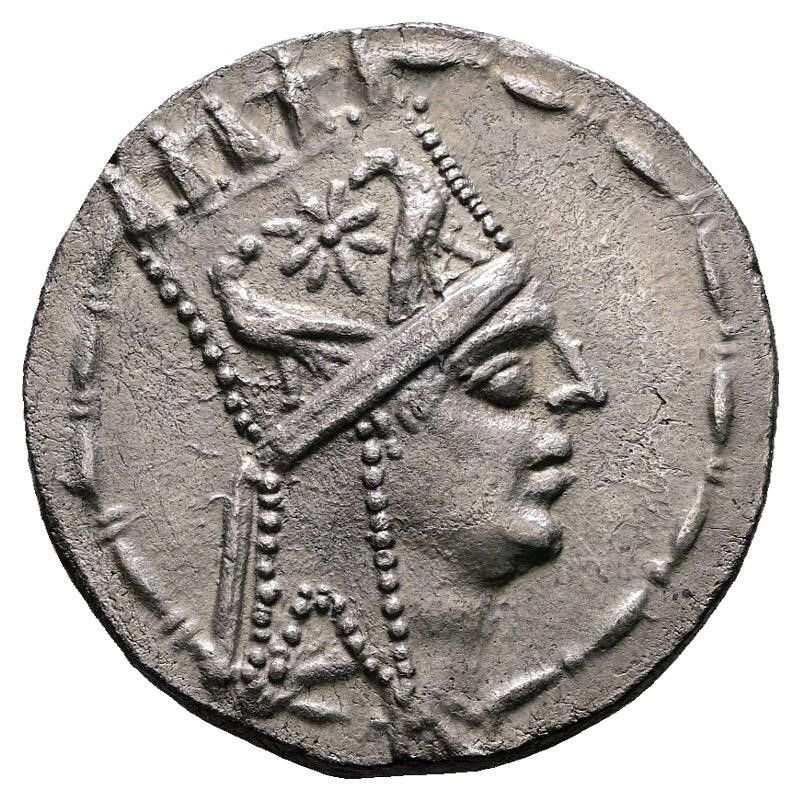 Obverse
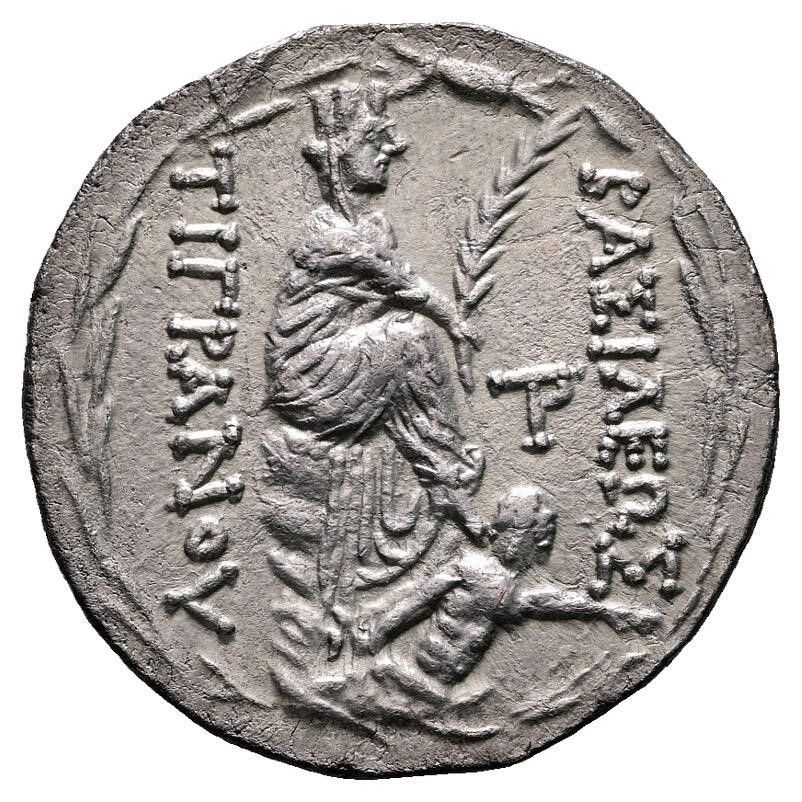 Reverse
Design Features
Obverse Design: The obverse of the Tetradrachm features a striking portrait of Antiochus I of Commagene, adorned with the crown of Tigranes II. This crown is intricately detailed, showcasing a panel with a star flanked by two majestic eagles. This imagery is not just decorative but rich in symbolism, reflecting the celestial power and divine protection believed to be bestowed upon rulers of the time. Reverse Design: The reverse depicts Tyche, the goddess of fortune, seated elegantly on a rock, holding a laurel branch—a symbol of victory and prosperity. Below her, the River God Orontes is shown swimming, a nod to the geographical and cultural importance of the Orontes River in the region. The surrounding inscriptions further authenticate the coin, providing valuable insights into the period's linguistic and artistic conventions.
Technical Specifications
The Tetradrachm of Antiochus I is composed of silver, weighing 15.51 grams and measuring 28.00 mm in diameter. These dimensions are typical of the period's coinage, reflecting both the economic standards and the minting technologies available. The silver composition underscores the coin's value and its role in trade and commerce, while the weight and diameter are indicators of the meticulous craftsmanship involved in its creation.
Collectible Value
From a numismatic perspective, the Tetradrachm is a highly prized item. Its historical context, combined with the exquisite artistry, makes it a sought-after piece for collectors. The coin's rarity is enhanced by its dual representation of Antiochus I and Tigranes II, offering a unique snapshot of the political landscape during its minting. Market value for such coins can vary significantly based on condition, provenance, and demand, but they consistently command a premium due to their historical and artistic significance.
Conclusion
In conclusion, the Tetradrachm of Antiochus I from the Kingdom of Commagene is not just a piece of currency but a rich artifact that offers insights into a pivotal era of ancient history. Its intricate design and historical connections make it a fascinating study for both collectors and historians. As it continues to be a central piece in numismatic collections, the coin remains a symbol of the artistic and political achievements of its time, highlighting the enduring legacy of the civilizations that once thrived in the region.

ScanMyCoin: AI Coin Recognition
Professional AI coin recognition and collection management platform. Identify, learn, and track your coin collection with advanced AI technology and a vast.