

Cilician Armenia 1 Denier - Leo V Lusignan
Description:
1 Denier 1 Denier - Leo V Lusignan coin from Cilician Armenia. Design, history & value.
Introduction
The 1 Denier coin minted under Leo V Lusignan in Cilician Armenia is a fascinating piece of numismatic history. This coin, with its intriguing design and historical significance, offers collectors and historians a glimpse into the medieval world of the late 14th century. Known for its distinct features and limited minting period between 1374 and 1375, this coin is a prized possession for those interested in the medieval Armenian kingdom and its rulers.
Historical Background
The 1 Denier coin was issued during the reign of Leo V Lusignan, the last king of the Armenian Kingdom of Cilicia. The Lusignan dynasty, originally from Cyprus, played a pivotal role in the region's history. Leo V ascended the throne in 1374, during a turbulent period marked by conflicts with neighboring powers and internal strife. Despite his brief reign, Leo V's coins serve as enduring artifacts from a time when the kingdom was a crossroads of cultures and a bastion of Christianity in the East. These coins not only represent economic transactions but also the political and cultural aspirations of the Lusignan rule.
Coin Images
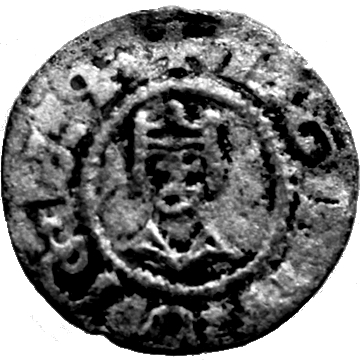 Obverse
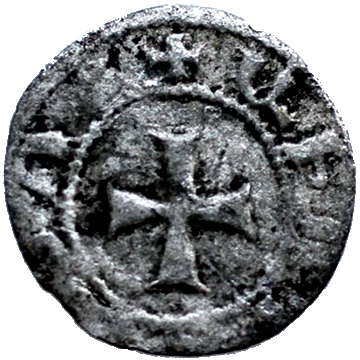 Reverse
Design Features
Obverse Design
The obverse of the 1 Denier coin features a crowned bust of King Leo V facing forward. This regal depiction symbolizes the king's authority and legitimacy. The intricately designed crown and facial details reflect the artistic capabilities of the time and serve as a testament to the artisans who crafted these coins. The legend surrounding the bust often included the king's name and titles, further emphasizing his royal status.
Reverse Design
On the reverse side, the coin displays a central cross, a powerful symbol of the Christian faith that was central to the identity of the Armenian Kingdom of Cilicia. The cross design represents not only the religious devotion of the period but also the kingdom's role as a Christian stronghold in a predominantly non-Christian region. The simplicity of the cross contrasts with the detailed obverse, highlighting the dual focus on spiritual and temporal power.
Technical Specifications
The 1 Denier coin is composed of billon, an alloy of silver and base metals, which was commonly used in medieval coinage to balance precious metal content with economic practicality. The coin weighs approximately 0.50 grams and has a diameter of 15.00 mm. These specifications reflect the economic conditions of the time, where smaller, lighter coins were necessary for daily transactions.
Collectible Value
The 1 Denier of Leo V Lusignan is a sought-after piece due to its historical context and limited mintage. Its rarity, combined with its connection to a significant historical figure and period, enhances its desirability among collectors. The coin's condition, provenance, and historical documentation can significantly influence its market value, making well-preserved specimens particularly valuable. Collectors treasure this coin not just for its monetary worth but for its ability to convey a rich tapestry of medieval history and culture.
Conclusion
In summary, the 1 Denier coin from the reign of Leo V Lusignan stands as a remarkable artifact from the waning days of the Armenian Kingdom of Cilicia. Its intricate designs, historical significance, and the story of its issuance during a pivotal era make it a valuable addition to any numismatic collection. As a tangible link to the past, this coin offers insights into the dynamics of medieval politics, religion, and economics, ensuring its continued allure for generations of collectors and historians alike.

ScanMyCoin: AI Coin Recognition
Professional AI coin recognition and collection management platform. Identify, learn, and track your coin collection with advanced AI technology and a vast.