
Castile and Leon, Kingdom of Denier - Urraca (Leon)
Description:
1 Denier Denier - Urraca (Leon) coin from Castile and Leon, Kingdom of. Design, history & value.
[SEO TITLE]: Discover the Denier of Urraca: A Rare Coin from Castile and Leon [SEO DESCRIPTION]: Explore the unique Denier of Urraca from Castile and Leon, 1109-1112. [KEYWORDS]: Denier, Urraca, Castile and Leon, medieval coin, billon, numismatics, collectible coin
Introduction
The Denier of Urraca stands as a testament to the rich numismatic history of medieval Europe, specifically within the Kingdom of Castile and Leon. Minted between 1109 and 1112, this coin is a remarkable artifact from the reign of Queen Urraca, one of the few female monarchs to rule in the Iberian Peninsula. This Denier not only offers insights into the economics and artistry of the time but also serves as a rare collectible for numismatists.
Historical Background
The coin was issued under the authority of the Kingdom of Castile and Leon, a pivotal region in medieval Spain that played a significant role in the Reconquista. Queen Urraca, who ascended to the throne in 1109, faced numerous challenges during her reign, including political instability and military conflicts. Despite these obstacles, her leadership marked a crucial era in the kingdom's history. The Denier minted during her reign reflects the economic conditions and the metallurgical practices of early 12th-century Spain. As one of the few coins attributed directly to a female monarch, it holds a unique place in the annals of numismatics.
Coin Images
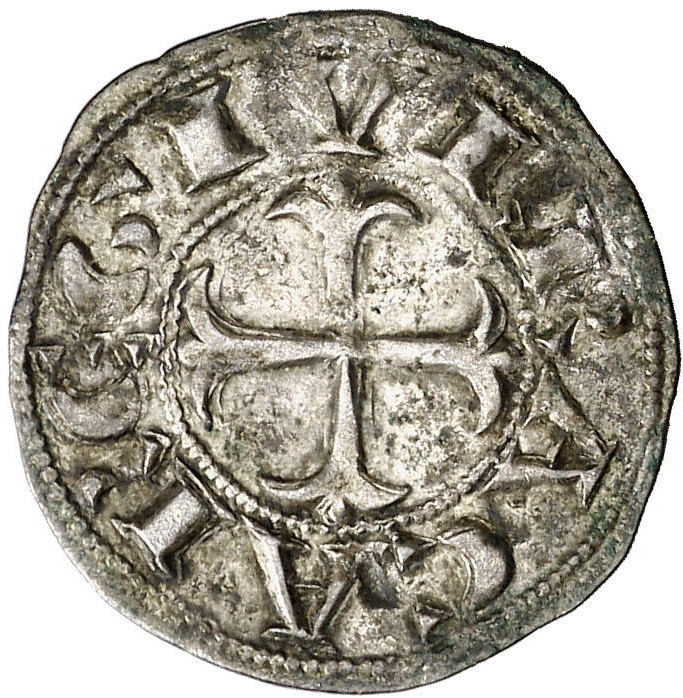 Obverse
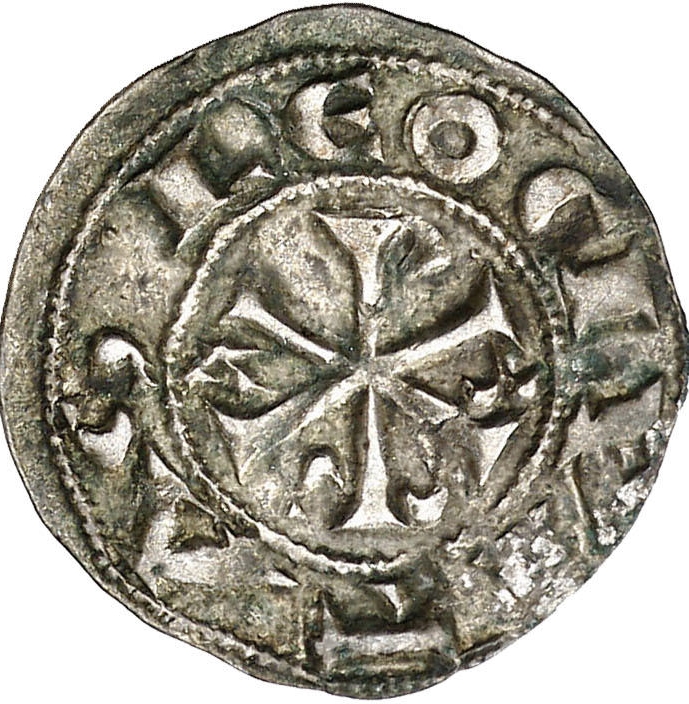 Reverse
Design Features
The Denier of Urraca is notable for its stark and symbolic design. The obverse features a simple yet powerful cross, a common motif in medieval coinage symbolizing both religious authority and protection. This design choice reflects the deep intertwining of religious and political power during Urraca's reign. On the reverse, the coin displays the Chi Rho symbol, one of the earliest forms of christogram representing Christ. This symbol underscores the religious significance embedded in the governance and societal structure of the time. The use of the Chi Rho also indicates the Christian identity of the kingdom during a period marked by religious conflict.
Technical Specifications
The Denier is composed of billon, a common alloy of silver and base metals, used extensively in medieval coinage. Weighing approximately 0.90 grams, this coin was relatively lightweight, reflecting the metallurgical practices of the period. The size of the coin is consistent with other Deniers of the time, making it a typical example of currency used for everyday transactions in the Kingdom of Castile and Leon.
Collectible Value
As a piece of medieval European coinage, the Denier of Urraca is highly sought after by collectors due to its rarity and historical significance. Coins from Urraca's reign are scarce, and those in good condition can fetch a premium in the numismatic market. The coin's appeal is further enhanced by its connection to one of the few reigning queens of the era, making it a valuable asset for collectors specializing in medieval or royal coinage.
Conclusion
The Denier of Urraca from the Kingdom of Castile and Leon is more than just a piece of currency; it is a window into a dynamic period of medieval history. With its distinctive design and historical significance, this coin captures the essence of an era marked by religious and political transformation. For collectors and historians alike, the Denier offers a tangible connection to the past, embodying the legacy of Queen Urraca and the rich heritage of medieval Spain. As a collectible, its rarity and historical narrative make it an exceptional addition to any numismatic collection.

ScanMyCoin: AI Coin Recognition
Professional AI coin recognition and collection management platform. Identify, learn, and track your coin collection with advanced AI technology and a vast.