

Castile and Leon, Kingdom of Denier - Alfonso VII (Toledo)
Description:
1 Denier Denier - Alfonso VII (Toledo) coin from Castile and Leon, Kingdom of. Design, history & value.
Introduction
The Denier of Alfonso VII from Toledo is an intriguing piece of medieval numismatics that captures the essence of a pivotal era in Spanish history. Minted in the Kingdom of Castile and Leon in 1130, this coin not only reflects the economic conditions of the time but also symbolizes the political power wielded by Alfonso VII. Collectors and historians alike cherish this billon Denier for its historical significance and its unique design, making it a prized addition to any collection.
Historical Background
In 1130, the Kingdom of Castile and Leon was a burgeoning realm under the rule of Alfonso VII, known as Alfonso the Emperor. His reign marked a period of consolidation and expansion, with ambitions to unify the various Iberian territories. The issuance of the Denier during this time was a testament to the kingdom's stability and Alfonso VII's authority. This coin circulated widely, facilitating trade and commerce across the region, and serves as a tangible link to the era's economic and political landscape.
Coin Images
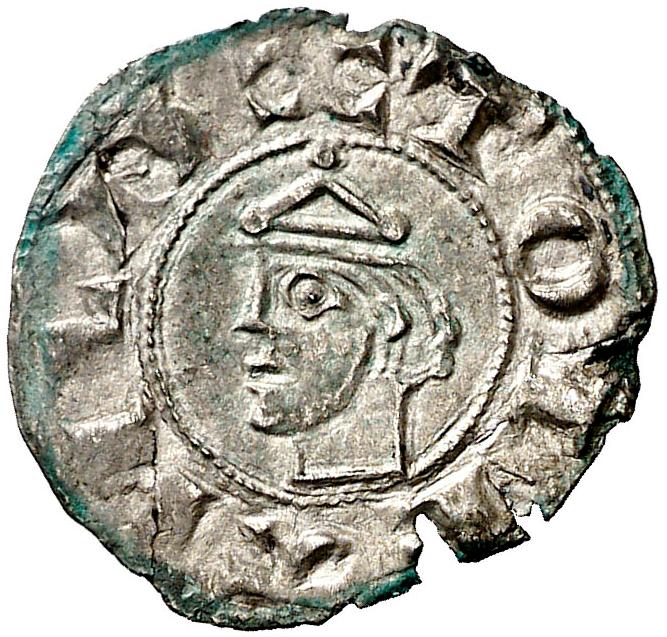 Obverse
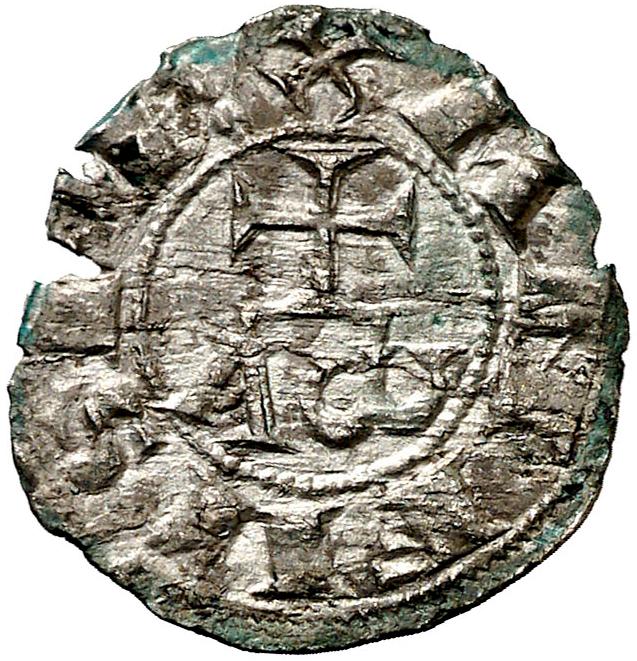 Reverse
Design Features
The design of the Denier of Alfonso VII is emblematic of its time. The obverse typically features a simplified portrait of Alfonso VII, often depicted with a crown, symbolizing his imperial status. While the detail may be rudimentary due to the limitations of the minting techniques of the period, the portrait exudes authority and power. The reverse side generally showcases a cross, a common motif in medieval coinage, reflecting the religious influences of the era and the kingdom's devotion to Christian ideals. This combination of imagery not only signifies the dual power of church and state but also serves as a reminder of the coin's historical roots.
Technical Specifications
The Denier is composed of billon, an alloy of silver and base metals, which was a common composition for coins of this period. It weighs approximately 1.00 gram, making it a lightweight yet durable currency unit. The use of billon indicates the coin's function as a practical medium of exchange, balancing the need for precious metals with economic feasibility. These technical attributes provide insight into the economic strategies employed by Alfonso VII's administration, aiming to sustain a robust and functional monetary system.
Collectible Value
The Denier of Alfonso VII holds significant value for collectors due to its rarity and historical importance. Coins from the medieval period, especially those from influential rulers like Alfonso VII, are sought after in the numismatic community. The market value of this coin can vary widely based on its condition and provenance, with well-preserved specimens fetching higher prices at auctions. Its rarity is further accentuated by the limited mintage and the passage of nearly nine centuries, making it a coveted piece for those passionate about medieval history and coin collecting.
Conclusion
In conclusion, the Denier of Alfonso VII from Toledo is more than just a piece of currency; it is a historical artifact that offers a glimpse into the past. Its unique design, coupled with its historical and economic context, makes it an invaluable item for collectors and historians alike. Owning such a coin not only enhances a collection but also connects the holder to an era of significant historical transitions in the Iberian Peninsula. The Denier of Alfonso VII stands as a testament to the enduring legacy of a ruler who sought to unify and strengthen his realm through both political and economic means.

ScanMyCoin: AI Coin Recognition
Professional AI coin recognition and collection management platform. Identify, learn, and track your coin collection with advanced AI technology and a vast.