
Castile and Leon, Kingdom of Denier - Alfonso VII (Toledo)
Description:
1 Denier Denier - Alfonso VII (Toledo) coin from Castile and Leon, Kingdom of. Design, history & value.
Introduction
The Denier of Alfonso VII from the Kingdom of Castile and Leon is a fascinating artifact from medieval Spain. This coin, minted between 1126 and 1157, offers a glimpse into the rich tapestry of European history. With its unique design and historical significance, the Denier is a prized piece among numismatists and history enthusiasts alike. Its composition of billon, a combination of silver and base metals, reflects the economic and metallurgical practices of the time.
Historical Background
Alfonso VII, often known as Alfonso the Emperor, reigned over the Kingdom of Castile and Leon during a period of reconsolidation and expansion. His rule marked a significant era in Spanish history, characterized by internal stability and external growth. The minting of the Denier in Toledo, one of the kingdom's prominent cities, underscores the economic resurgence and political power of the era. The coin served not only as currency but also as a symbol of Alfonso's authority and the unification of his realms under the imperial crown.
Coin Images
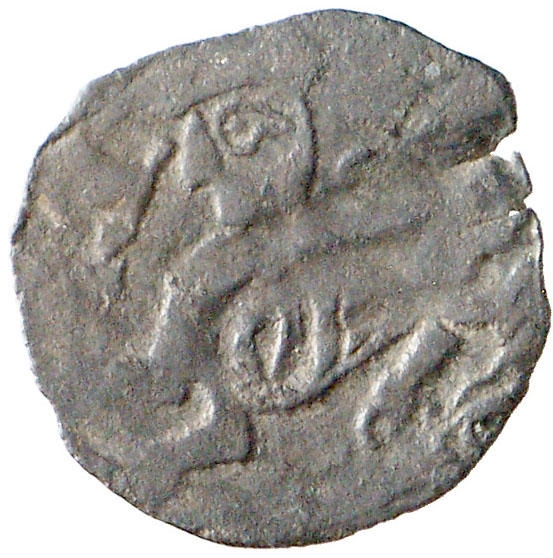 Obverse
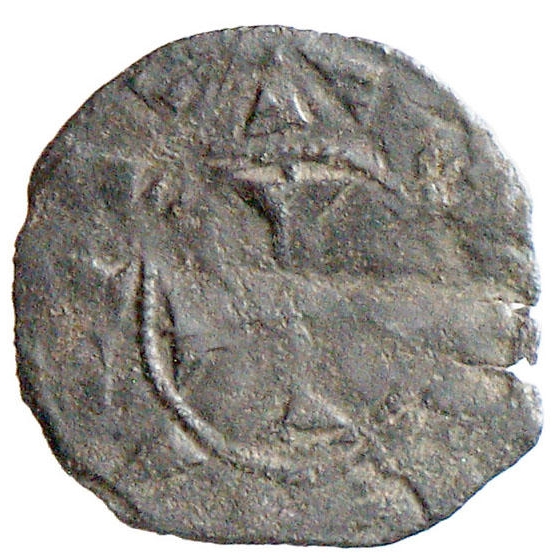 Reverse
Design Features
The Denier of Alfonso VII is renowned for its distinct and artistic design. On the obverse, the coin features a lion with a crowned human head facing left, a powerful emblem of royal authority and protection. This imagery was likely intended to convey the might and divinity of the king's rule. The reverse of the coin is equally symbolic, displaying a cross, a common motif in medieval European coins, representing the Christian faith and the church's influence within the kingdom. These designs are not only artistic representations but also serve as historical documents, providing insights into the political and religious milieu of the time.
Technical Specifications
The Denier is composed of billon, a metal that consists primarily of silver mixed with a significant amount of copper or other base metals. This composition was typical for lower denomination coins in medieval Europe, balancing the need for durability with economic constraints. Weighing approximately 1.00 gram, the coin is light yet robust, suitable for daily transactions of the time. Though the exact diameter is unspecified, coins of this era typically had a small and practical size, designed for ease of use.
Collectible Value
The collectible value of the Denier of Alfonso VII is substantial, driven by its historical significance and rarity. Coins from this period, especially those minted during Alfonso's reign, are highly sought after by collectors. The Denier's value is also augmented by its well-preserved design and the historical narratives it embodies. On the numismatic market, its rarity makes it a valuable piece, with prices varying based on condition and provenance. Collectors prize these coins not only for their monetary value but for their ability to transport holders back to a pivotal era in European history.
Conclusion
The Denier of Alfonso VII from the Kingdom of Castile and Leon is more than just a piece of medieval currency; it is a testament to a significant epoch in Spanish history. Its intricate designs and historical context offer a window into the past, revealing the complexities of political power, economic practices, and religious influences of the time. For collectors and historians alike, this coin represents a valuable piece of the medieval puzzle, providing insights and stories that continue to captivate and educate. As a collectible, its rarity and historical importance ensure that the Denier remains a cherished artifact for generations to come.

ScanMyCoin: AI Coin Recognition
Professional AI coin recognition and collection management platform. Identify, learn, and track your coin collection with advanced AI technology and a vast.