

British Palestine 10 Mils
Description:
10 Mils 10 Mils coin from British Palestine. Design, history & value.
[SEO TITLE]: British Palestine 10 Mils Coin: Historical Gem of 1927-1947 [SEO DESCRIPTION]: Discover the British Palestine 10 Mils coin's history and design. [KEYWORDS]: British Palestine coin, 10 Mils, copper-nickel coin, Palestine currency, numismatics
Introduction
The British Palestine 10 Mils coin represents a fascinating piece of numismatic history. Issued between 1927 and 1947, this coin offers a unique window into the past, reflecting the socio-political landscape of the region during British Mandate Palestine. As a copper-nickel coin, it not only served as a medium of exchange but also as a symbol of cultural integration, featuring inscriptions in Hebrew, English, and Arabic.
Historical Background
The British Palestine 10 Mils coin was issued during a transformative period in Middle Eastern history. With the British Mandate over Palestine in effect from 1920 to 1948, the coinage of this era, including the 10 Mils, was a crucial tool for facilitating trade and daily transactions. The coin's issuance from 1927 to 1947 spans two decades of significant historical events, including World War II and the lead-up to the establishment of the State of Israel. Under the British Mandate, the currency system was reformed to replace the Turkish currency previously in use. The introduction of the Palestine pound, subdivided into 1,000 mils, was a strategic move to establish a standardized monetary system that would stabilize the economy and facilitate trade. The 10 Mils coin played a pivotal role in everyday commerce and is now a cherished collectible that marks this historical transition.
Coin Images
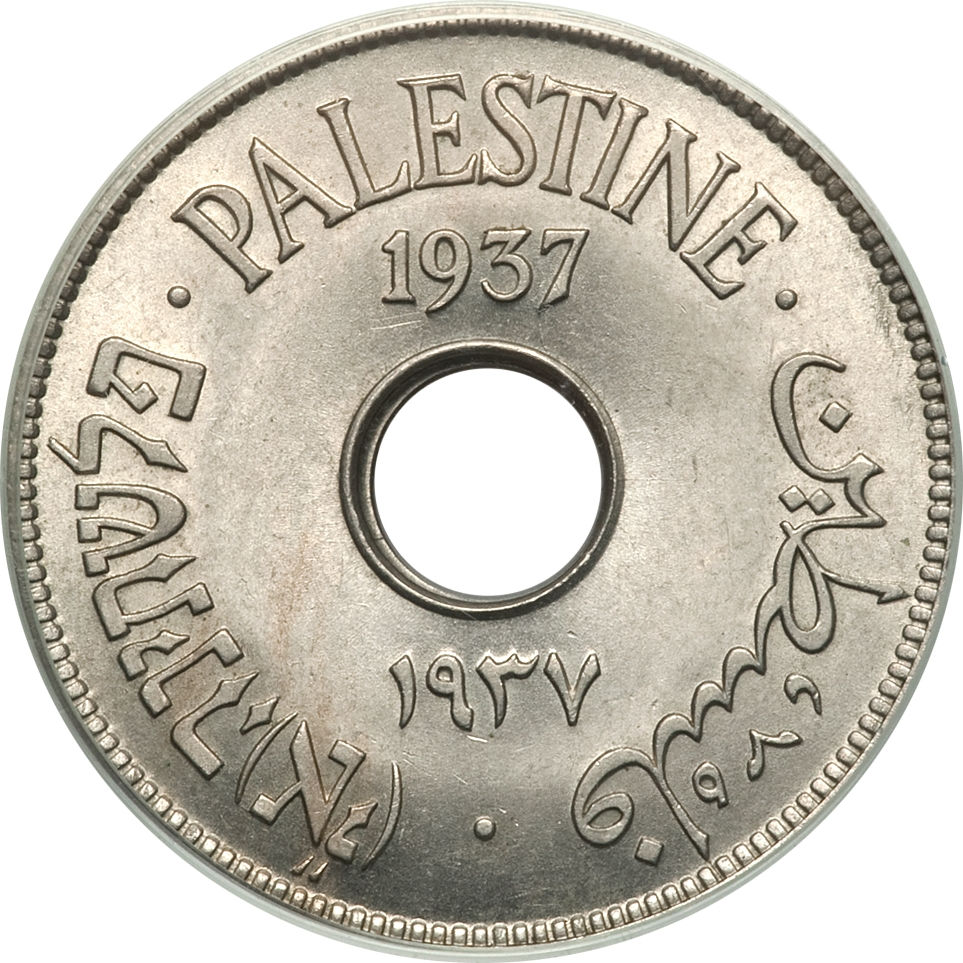 Obverse
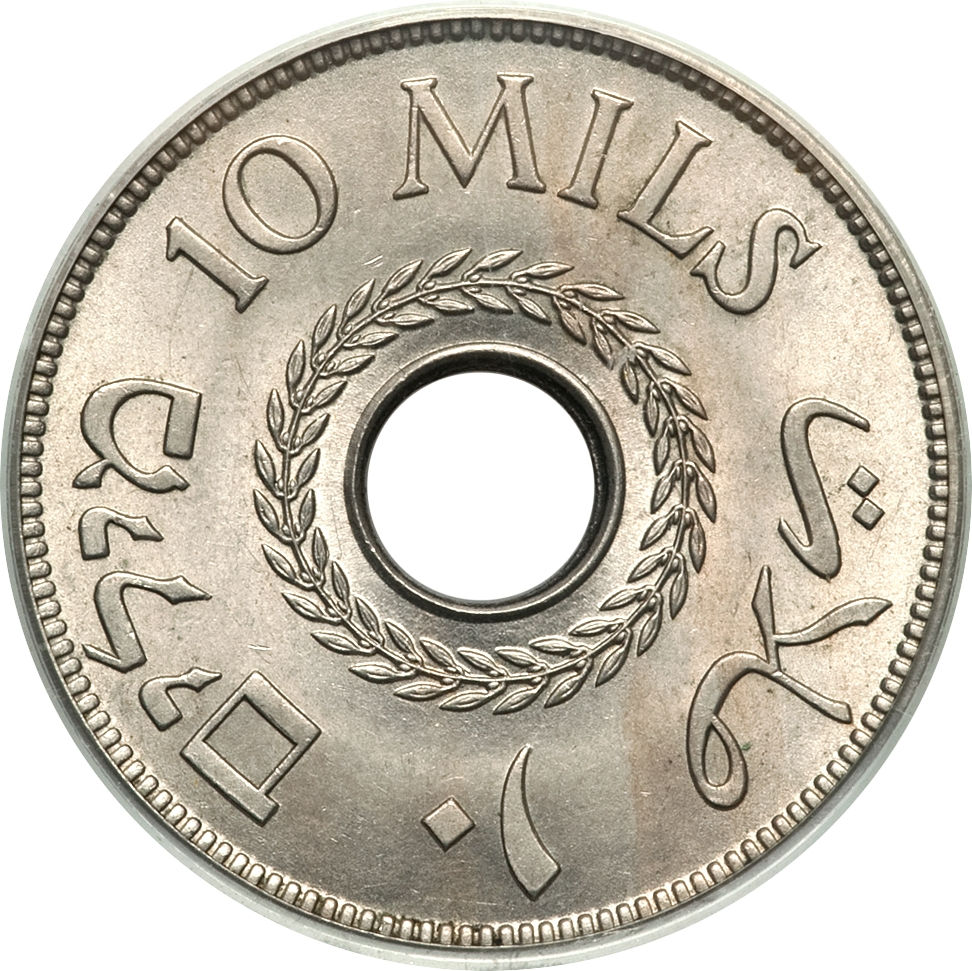 Reverse
Design Features
Obverse Design
The obverse of the 10 Mils coin is distinguished by its central hole, a design feature that set it apart from many contemporary coins. Encircling this hole is a stylized olive wreath, a motif symbolizing peace and prosperity in the region. Surrounding the wreath, the word "Palestine" is inscribed in Hebrew, English, and Arabic, highlighting the diverse cultural and linguistic heritage of the area. The date of mintage is displayed in English above and in Arabic below the central hole, providing a bilingual timeframe for the coin's origin.
Reverse Design
The reverse design continues the theme of linguistic diversity. The denomination "10 Mils" is prominently featured in Hebrew, English, and Arabic around the central hole. This trilingual presentation not only underscores the multicultural nature of British Mandate Palestine but also reflects the administrative policies of inclusivity during this period.
Technical Specifications
The British Palestine 10 Mils coin is composed of 75% copper and 25% nickel, a common alloy known for its durability and resistance to corrosion. The coin weighs 6.50 grams and has a diameter of 27.00 millimeters, making it a substantial piece for its denomination. These technical specifications ensured that the coin was practical for everyday use while maintaining a distinctive presence in the hands of its users.
Collectible Value
For numismatists and collectors, the 10 Mils coin is a valuable addition to any collection. Its historical significance, combined with its unique design features, makes it a sought-after item. The market value of the coin can vary depending on factors such as year of minting, condition, and rarity. Coins from earlier years or those in mint condition typically fetch higher prices. Additionally, variations in mint marks or errors can add to the coin's rarity and desirability among collectors.
Conclusion
The British Palestine 10 Mils coin is more than just a piece of metal; it is a tangible link to a pivotal era in Middle Eastern history. Its unique design, historical context, and cultural significance make it a fascinating study for coin collectors and history enthusiasts alike. As a collector's item, it embodies the complex tapestry of British Mandate Palestine, offering insights into the region's past while continuing to captivate the imagination of the present.

ScanMyCoin: AI Coin Recognition
Professional AI coin recognition and collection management platform. Identify, learn, and track your coin collection with advanced AI technology and a vast.