

Brazil 500 Réis (no dashes between stars)
Description:
500 Réis 500 Réis (no dashes between stars) coin from Brazil. Design, history & value.
Introduction
The 500 Réis coin from Brazil, minted in 1913, is a captivating piece of numismatic history that continues to enchant collectors with its rich design and historical significance. This coin, although produced for a brief period, reflects the cultural and political nuances of early 20th-century Brazil. Crafted from high-quality silver, it stands as a testament to the era's artistry and the country's evolving identity.
Historical Background
In the early 1900s, Brazil was navigating the complexities of modernization and political change. The 500 Réis coin, issued in 1913, emerged during this transformative period. As Brazil sought to establish a unified national identity, the coin's introduction signified the country's economic ambitions and its commitment to strengthening its currency's global stature. The issuance of this coin coincided with Brazil's efforts to industrialize and integrate into the global economy, making it a symbol of national pride and economic aspiration.
Coin Images
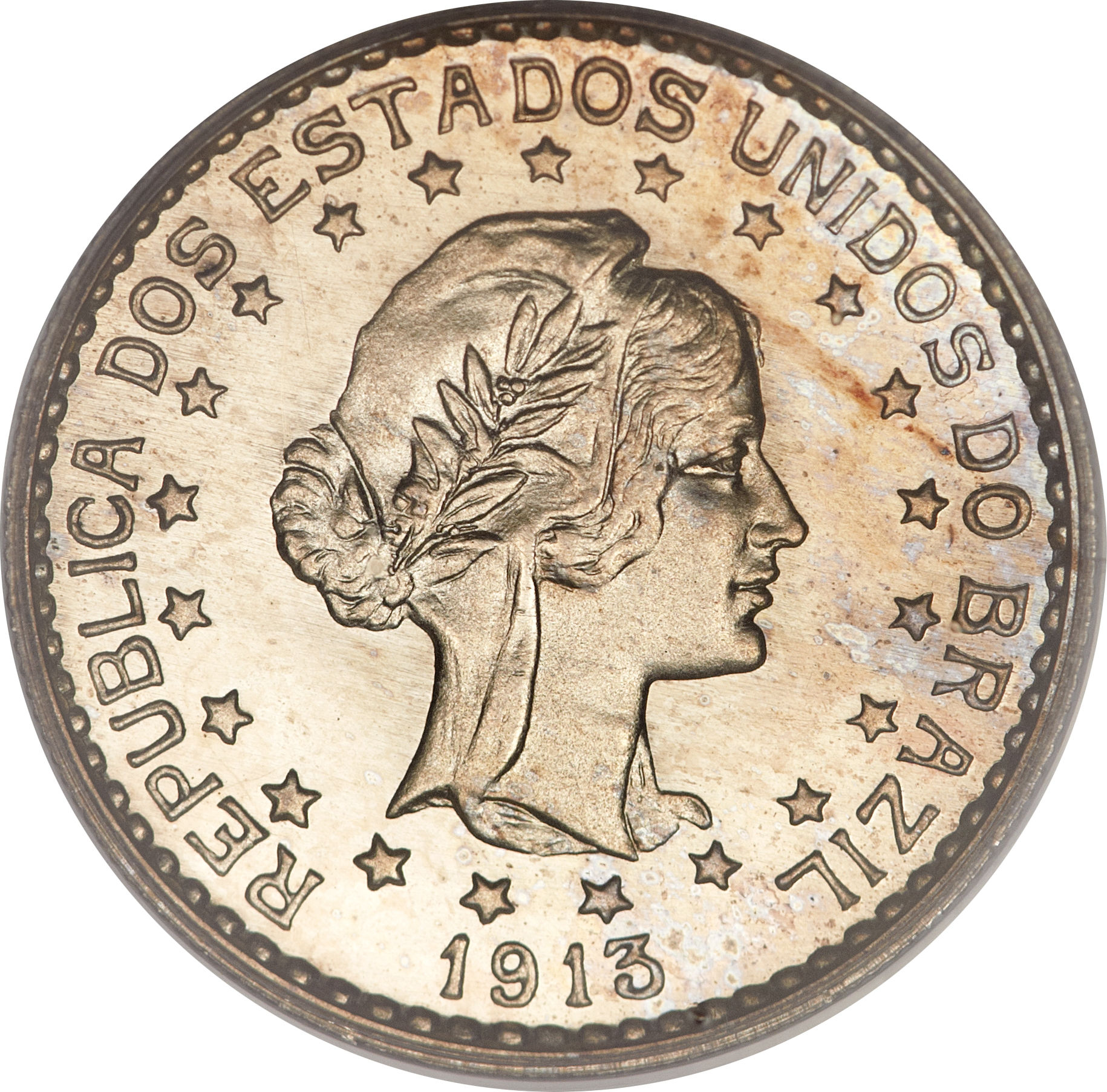 Obverse
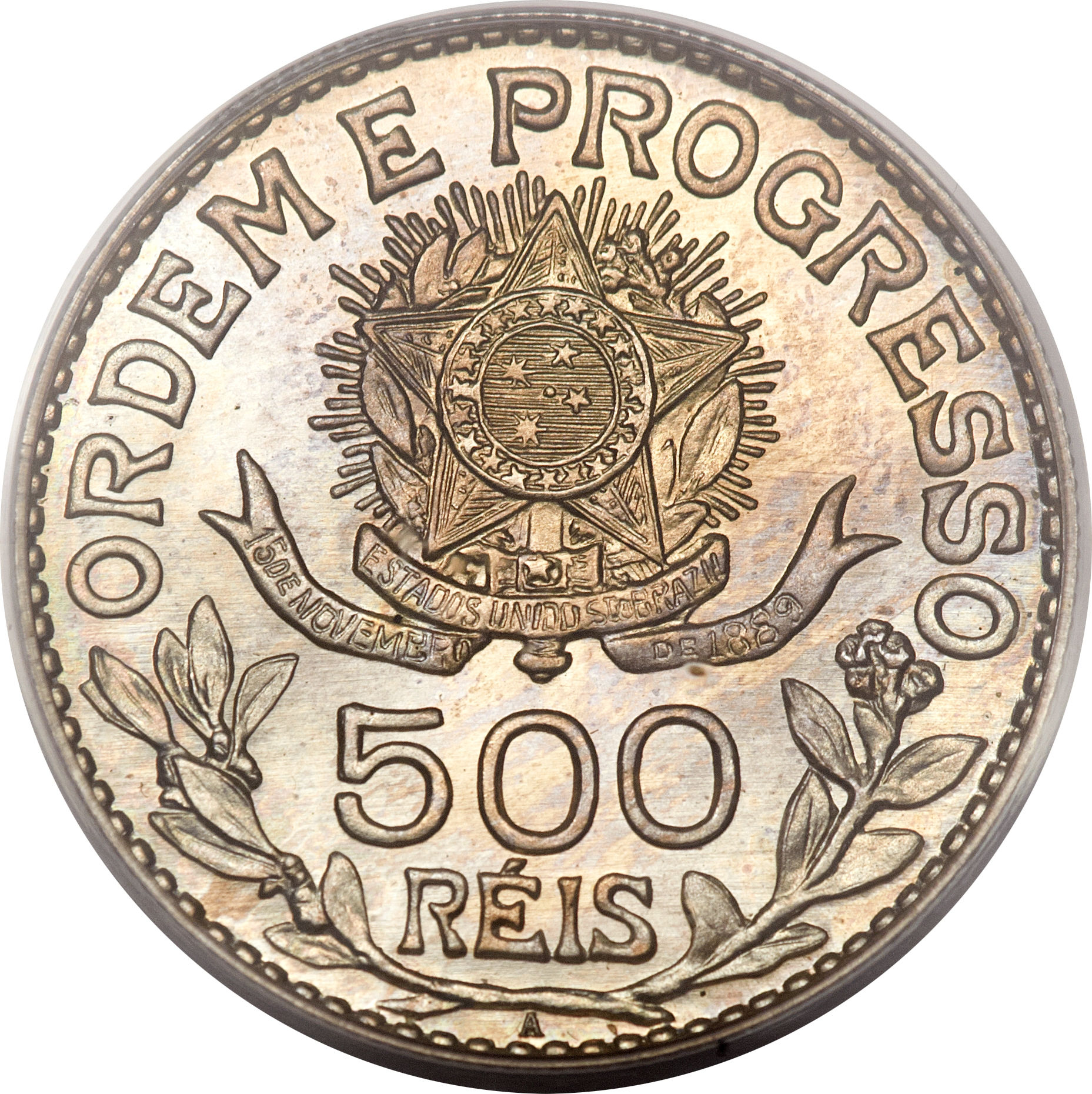 Reverse
Design Features
Obverse Design
The obverse side of the 500 Réis coin features a striking bust representing the Republic, embodying the spirit of progress and unity. Surrounding the bust are 21 stars, symbolizing the states of Brazil, and the inscription "ESTADOS UNIDOS DO BRAZIL." This design element underscores the idea of a federated nation, drawing inspiration from the United States, which Brazil aspired to emulate in its developmental goals.
Reverse Design
The reverse side of the coin is adorned with the coat of arms of the Republic of the United States of Brazil. Above the coat of arms, the positivist motto "Order and Progress" is inscribed, reflecting the nation's philosophical and political aspirations. Below this emblematic design, the coin's face value is gracefully positioned on branches, further enhancing its aesthetic appeal.
Technical Specifications
The 500 Réis coin is a carefully crafted piece, with precise technical specifications that contribute to its allure. It is composed of 90% silver, which not only adds to its intrinsic value but also ensures its durability and luster. The coin weighs 5.00 grams and has a diameter of 22.00 millimeters, making it a compact yet significant piece of Brazilian numismatic history. These specifications highlight the meticulous craftsmanship and attention to detail that went into its production.
Collectible Value
For numismatists and collectors, the 1913 500 Réis coin holds substantial value, both monetarily and historically. Its limited mintage makes it a sought-after item, with its rarity enhancing its desirability among collectors. The coin's market value can vary significantly based on its condition, with pristine examples commanding higher prices. As a piece of Brazilian heritage, it offers a glimpse into the country's past, making it an invaluable addition to any collection.
Conclusion
The 1913 500 Réis coin from Brazil is more than just a piece of currency; it is a symbol of a nation's journey towards modernization and unity. Its intricate design, historical context, and limited availability make it a prized possession for collectors and a fascinating subject for those interested in the history of Brazilian coinage. As a relic of a bygone era, it continues to captivate and inspire, preserving the legacy of Brazil's numismatic artistry for future generations.

ScanMyCoin: AI Coin Recognition
Professional AI coin recognition and collection management platform. Identify, learn, and track your coin collection with advanced AI technology and a vast.