

Boeotian League Drachm
Description:
Drachm Drachm coin from Boeotian League. Design, history & value.
Introduction
The Boeotian League Drachm stands as a remarkable testament to the ancient Boeotian League's economic and political influence. This silver coin, with its intricate designs and historical significance, continues to captivate numismatists and collectors worldwide.
Historical Background
The Boeotian League, a confederation of Boeotian city-states in ancient Greece, issued the Drachm coin around the 5th to 4th centuries BC. These coins played a vital role in facilitating trade and symbolizing the unity of the Boeotian cities under the league's authority.
Coin Images
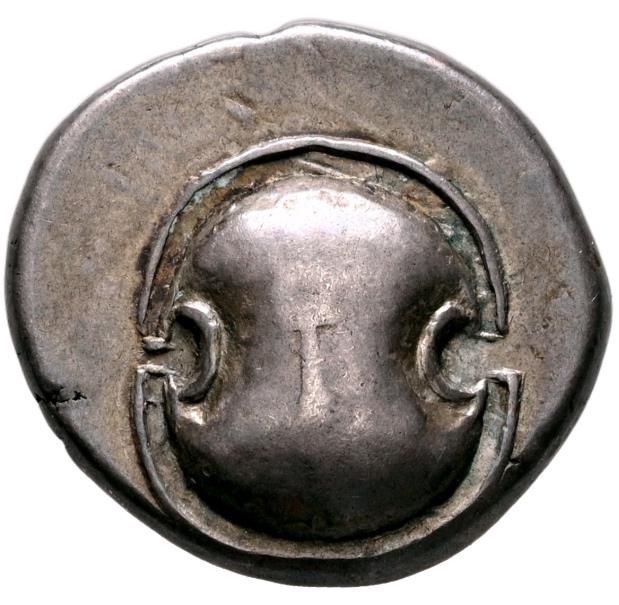 Obverse
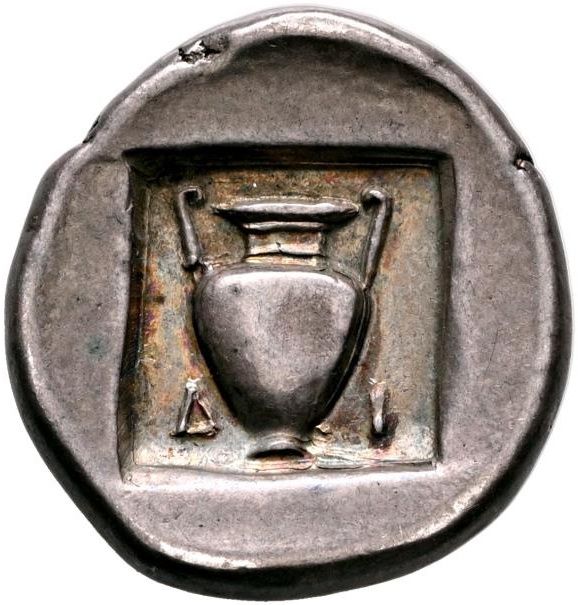 Reverse
Design Features
The obverse of the Boeotian League Drachm showcases a striking Boeotian shield adorned with a vertical kerykeion, a herald's staff symbolizing authority and power. On the reverse, an amphora enclosed within an incuse square adds a touch of elegance and symbolism to this ancient coin.
Technical Specifications
- Denomination: Drachm
- Composition: Silver
- Weight: 5.83g
- Diameter: 18.00mm
- Obverse Design: Boeotian shield with kerykeion
- Reverse Design: Amphora within incuse square
Collectible Value
The Boeotian League Drachm holds significant collectible value due to its historical importance and scarcity. These coins are sought after by collectors for their connection to ancient Greek history and the unique design elements that reflect the culture of the Boeotian League. The rarity of well-preserved specimens further enhances their desirability among numismatists. In the numismatic market, Boeotian League Drachms command respectable prices, with well-preserved examples fetching premium values at auctions and private sales. Collectors are often drawn to these coins not only for their monetary worth but also for the historical narratives they carry and the cultural insights they provide into ancient Greek civilization.
Conclusion
The Boeotian League Drachm stands as a prized possession for collectors and enthusiasts of ancient Greek coinage. Its intricate designs, historical significance, and scarcity make it a valuable addition to any collection. By owning a piece of this ancient coinage, one not only acquires a tangible link to the past but also becomes a custodian of a rich cultural heritage that continues to inspire awe and admiration centuries after its creation.

ScanMyCoin: AI Coin Recognition
Professional AI coin recognition and collection management platform. Identify, learn, and track your coin collection with advanced AI technology and a vast.