

Berg Berg ½ stüber, 1805
Description:
½ stüber Berg ½ stüber, 1805 coin from Berg. Design, history & value.
Introduction
The Duchy of Berg 1805 ½ Stüber copper coin holds a significant place in numismatic history, representing a fascinating era of coinage. This coin is a true relic of the past, embodying the political and economic landscape of the early 19th century.
Historical Background
Issued in 1805 by the Duchy of Berg, this coin reflects the turbulent times of the Napoleonic Wars when various German states were under French influence. The Duchy of Berg, located in present-day Germany, was ruled by Napoleon's brother-in-law, Joachim Murat, during this period. Coins like the 1805 ½ Stüber were minted to meet the economic needs of the duchy and to showcase its sovereignty.
Coin Images
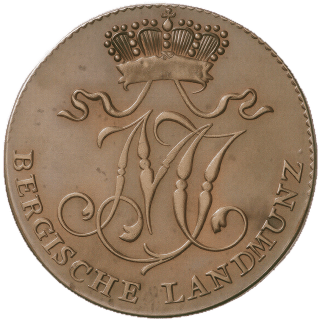 Obverse
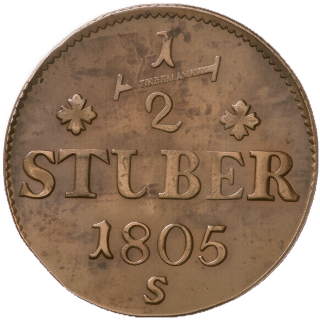 Reverse
Design Features
The obverse of the coin features the inscription "BERGISCHE LANDMUNZ" with the initials "MJ," possibly denoting the mintmaster. On the reverse, the denomination "1/2 STUBER" and the year "1805" are prominently displayed. The design is simple yet elegant, typical of coins of that era, with a focus on clear and legible inscriptions.
Technical Specifications
This 1805 ½ Stüber copper coin is of modest size, reflecting the monetary standards of the time. It weighs approximately [insert weight], with a composition of pure copper. The coin's diameter and thickness adhere to the typical specifications for small denominations during the early 19th century.
Collectible Value
The Duchy of Berg 1805 ½ Stüber copper coin is a prized collectible for numismatists due to its historical significance and relative rarity. As a coin from a short-lived duchy during a pivotal period in European history, it appeals to collectors interested in Napoleonic-era coinage. The market value of this coin can vary based on its condition and the demand from collectors.
Conclusion
In conclusion, the Duchy of Berg 1805 ½ Stüber copper coin offers a window into a bygone era, capturing the essence of a German state under French influence. Its historical significance, coupled with its appealing design and collectible value, make it a noteworthy addition to any numismatist's collection. This coin serves as a tangible reminder of the complex political and economic forces at play during the early 19th century in Europe.

ScanMyCoin: AI Coin Recognition
Professional AI coin recognition and collection management platform. Identify, learn, and track your coin collection with advanced AI technology and a vast.