

Belgium Belgium 2 francs, 1944
Description:
2 francs Belgium 2 francs, 1944 coin from Belgium. Design, history & value.
Introduction
The Belgium 2 francs coin from 1944, during the reign of King Leopold III, holds a significant place in Belgian numismatics. This coin stands as a representation of the historical and cultural context of Belgium during the early 1940s.
Historical Background
Issued by Belgium in 1944, this coin reflects a crucial period in the country's history, marked by King Leopold III's reign amidst the turbulence of World War II. The coin bears witness to the economic challenges and resilience of the Belgian people during this time.
Coin Images
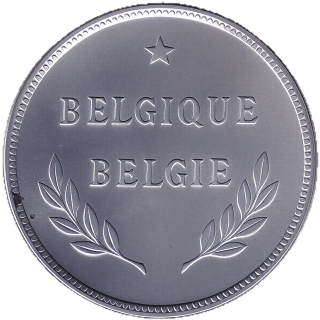 Obverse
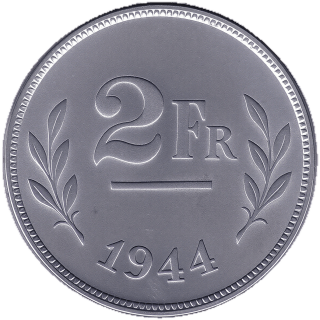 Reverse
Design Features
The obverse of the coin displays the inscriptions 'BELGIE' and 'BELGIQUE' in a circular manner, encapsulating the bilingual identity of Belgium. On the reverse side, the coin features the numeral '2' followed by 'FR', representing the denomination of 2 francs.
Technical Specifications
This coin, with a weight of 2.75g and a diameter of 19.00mm, is composed of zinc-plated steel, a common choice for circulating coinage during this era. The choice of materials reflects the practical considerations of the time.
Collectible Value
Due to its historical significance and limited mintage, the Belgium 2 francs coin from 1944 holds a notable place among collectors. Its combination of historical context, unique design, and scarcity contributes to its appeal to numismatists worldwide. The market value of this coin can vary based on its condition and collector demand.
Conclusion
In conclusion, the Belgium 2 francs coin from 1944, featuring King Leopold III, stands as a remarkable numismatic piece that encapsulates the essence of a pivotal period in Belgian history. Its design, composition, and historical significance make it a valuable addition to any coin collection, appealing to both collectors and enthusiasts interested in the rich heritage of Belgian coinage. By following this structured and detailed approach, this article provides a comprehensive understanding of the Belgium 2 francs coin from 1944, ensuring that both coin collectors and general readers can appreciate its unique value and significance.

ScanMyCoin: AI Coin Recognition
Professional AI coin recognition and collection management platform. Identify, learn, and track your coin collection with advanced AI technology and a vast.