

Roman Empire (27 BC - 395 AD) Aureus - Philippus I (ANNONA AVGG; Annona)
Description:
Aureus Aureus - Philippus I (ANNONA AVGG; Annona) coin from Roman Empire (27 BC - 395 AD). Design, history & value.
Introduction
The Aureus of Philippus I, also known as the Annona AVGG, stands as a remarkable testament to the wealth and artistry of the Roman Empire. Struck in gold, this coin exemplifies the opulence and intricate design characteristic of Roman numismatics. With its distinct imagery and historical significance, the Aureus of Philippus I is not only a fascinating piece for collectors but also a window into the era of the 3rd century Roman Empire.
Historical Background
Minted between 244 and 247 AD, the Aureus of Philippus I was issued during the reign of Philip the Arab, a time marked by both internal consolidation and external challenges for the Roman Empire. Philip I, born in what is now Syria, served as a Roman Emperor who sought to stabilize the empire during his reign. This coin was issued to commemorate the empire's prosperity and the annona, a concept representing the grain supply vital for Rome's population. The Annona AVGG inscription symbolizes the empire's commitment to ensuring the welfare and stability of its citizens through the provision of grain, a critical aspect of Roman economic and social policy.
Coin Images
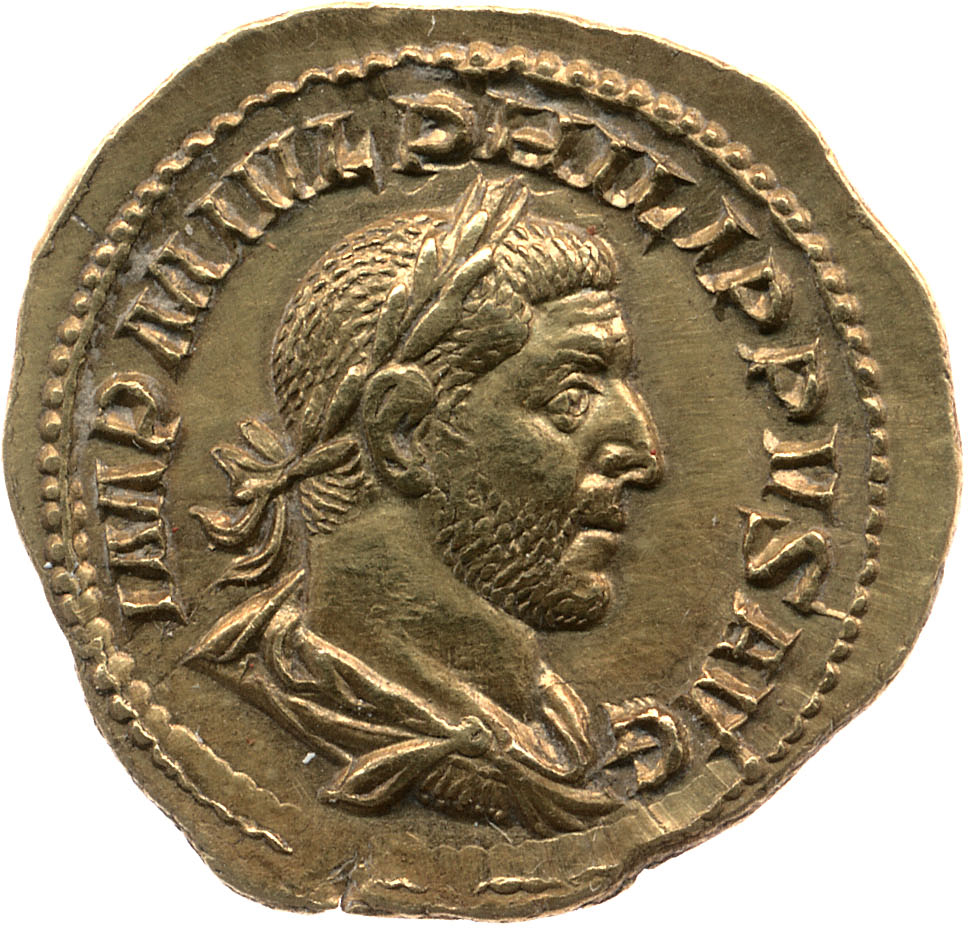 Obverse
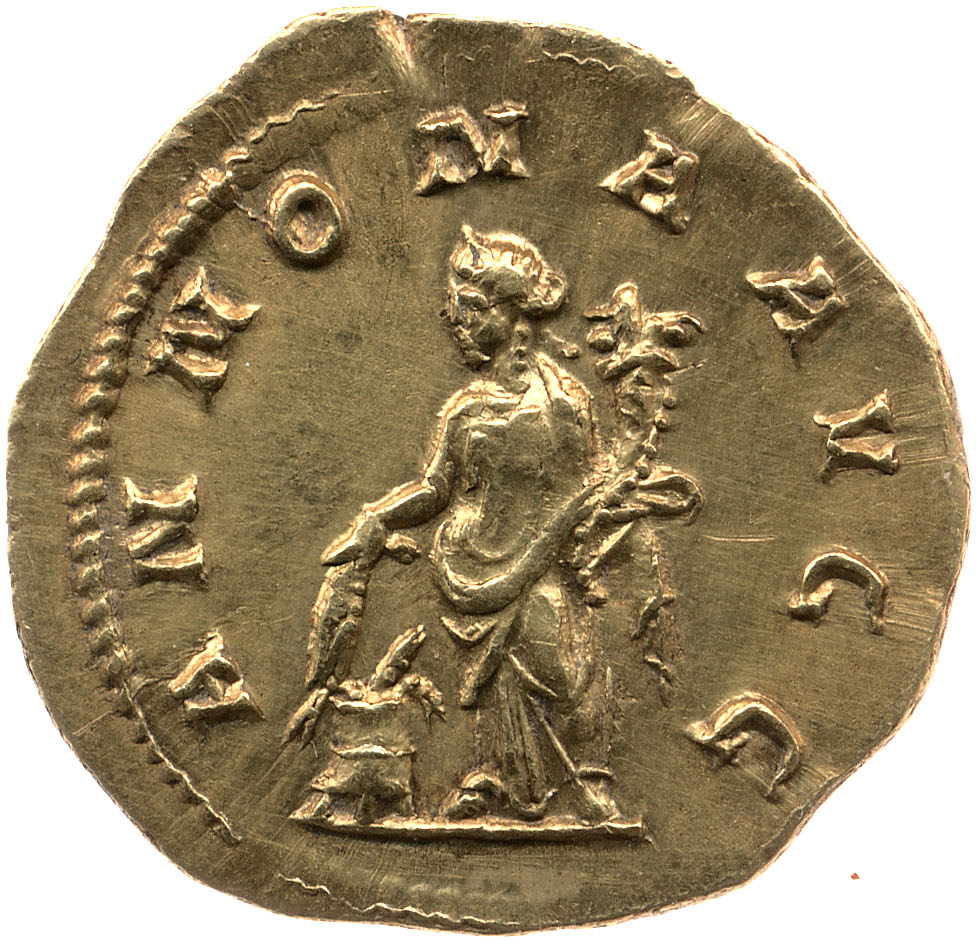 Reverse
Design Features
Obverse Design: The obverse of the Aureus features a detailed bust of Philip the Arab, depicted in a laureate, draped, and cuirassed manner, facing right. This representation not only showcases the emperor's power and authority but also highlights the Roman tradition of portraying emperors with divine attributes, as suggested by the laurel wreath. Reverse Design: On the reverse side, the coin illustrates Annona, draped and standing left, holding corn-ears in her right hand over a modius and a cornucopiae in her left hand. This design symbolizes abundance and prosperity, with the modius representing the measure of grain and the cornucopiae, or horn of plenty, signifying wealth and nourishment provided by the state.
Technical Specifications
The Aureus of Philippus I is crafted from gold, a common choice for high-value denominations in Roman coinage. Weighing approximately 4.30 grams and measuring 21.00 millimeters in diameter, this coin exemplifies the Roman Empire's precision in minting and its commitment to producing durable and aesthetically pleasing currency. The gold composition reflects the wealth of the empire and the importance of this denomination in the Roman monetary system.
Collectible Value
As a piece of ancient numismatic art, the Aureus of Philippus I holds significant value for collectors and historians alike. Its rarity and historical context make it a sought-after coin, with market values that can vary widely based on condition, provenance, and market demand. Coins from the Roman Empire, especially those in gold, are prized for their craftsmanship and the stories they tell about the empire's history and economy. As such, the Aureus of Philippus I is not only a collectible item but also a historical artifact that offers insight into the imperial era's socio-economic conditions.
Conclusion
In conclusion, the Aureus of Philippus I (ANNONA AVGG) is more than just a coin; it is a relic of the Roman Empire's grandeur and a symbol of its enduring legacy. This coin encapsulates the artistic, cultural, and economic achievements of its time, making it a valuable piece for any numismatist or enthusiast of ancient history. By owning or studying this coin, collectors and historians alike can appreciate a tangible link to the past, one that continues to intrigue and inspire admiration across the centuries.

ScanMyCoin: AI Coin Recognition
Professional AI coin recognition and collection management platform. Identify, learn, and track your coin collection with advanced AI technology and a vast.