

Macedonia, Kingdom of Stater - Philip III (In the name of Alexander III; Miletus)
Description:
Gold Stater Stater - Philip III (In the name of Alexander III; Miletus) coin from Macedonia, Kingdom of. Design, history & value.
[SEO TITLE]: Macedonia Gold Stater - Philip III Coin: A Numismatic Treasure [SEO DESCRIPTION]: Discover the Macedonia Gold Stater of Philip III, a collector's gem. [KEYWORDS]: Macedonia coin, Gold Stater, Philip III, Alexander III, numismatics, ancient coins, coin collecting
Introduction
The Gold Stater of Philip III, issued in the name of Alexander III from Miletus, is not just a piece of ancient currency but a fascinating artifact that bridges the world of antiquity with modern numismatics. This coin, minted in the Kingdom of Macedonia, is a testament to the rich history and cultural heritage of one of the most influential empires of the ancient world. Its significance extends beyond its intrinsic value as a gold coin, offering insights into the artistic and political landscape of its era.
Historical Background
The Gold Stater was minted during the reign of Philip III of Macedonia, who succeeded the legendary Alexander the Great. Although Philip III's reign was overshadowed by the achievements of his predecessor, coins like these played a crucial role in maintaining the legacy of the Macedonian empire. The period marked a transition from Alexander's expansive conquests to a time of consolidation and governance. These coins were not just currency but also a medium for spreading the iconography and authority of the Macedonian rulers across their territories.
Coin Images
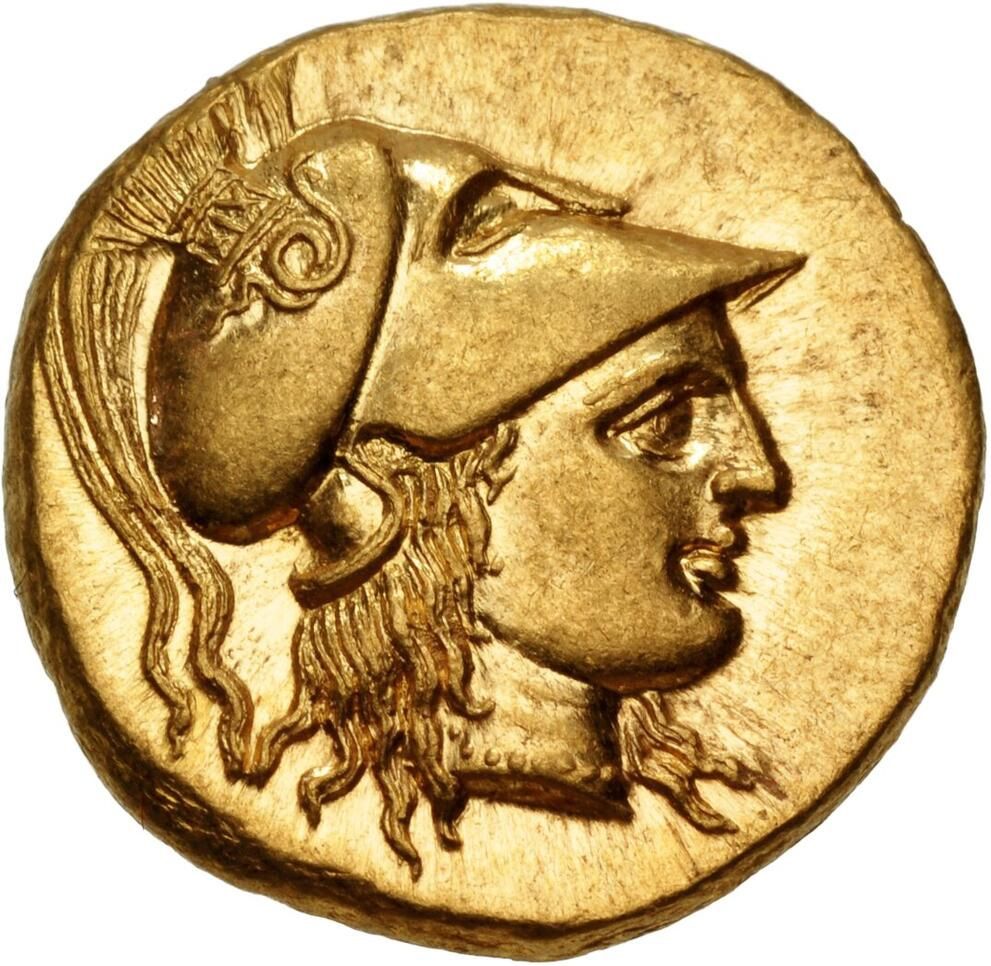 Obverse
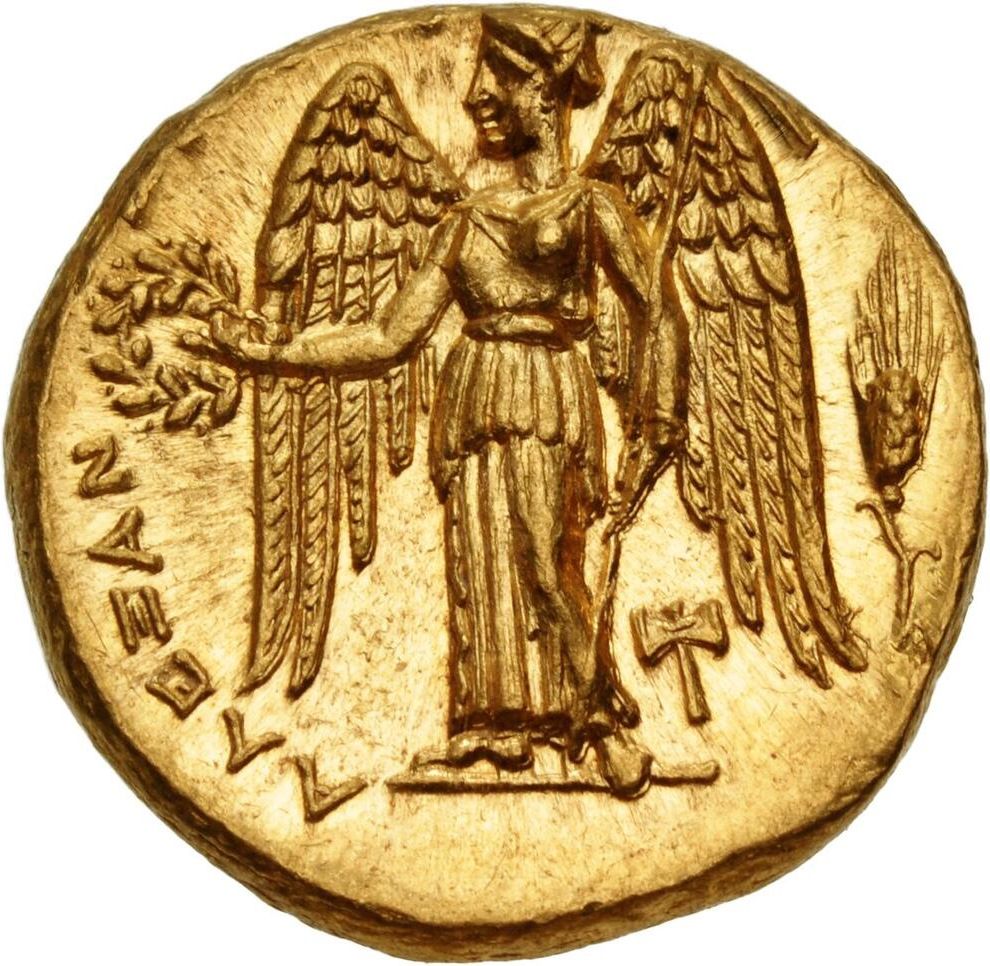 Reverse
Design Features
Obverse Design
The obverse of the Gold Stater features the head of Athena, one of the most revered deities in Greek mythology. She is depicted wearing a Corinthian helmet adorned with a crest, a symbol of her warrior aspect. The intricate detailing of Athena's helmet and her serene expression reflect the high level of craftsmanship and artistry characteristic of Macedonian coinage. This depiction of Athena not only emphasizes the cultural links between Macedonia and the broader Greek world but also symbolizes wisdom and strategic warfare.
Reverse Design
On the reverse side, the coin showcases Nike, the goddess of victory, standing gracefully to the left. In her right hand, she holds a wreath, a traditional symbol of victory, while a stylis is held in her left hand. The surrounding elements, including a corn-ear and a double-axe beneath her wing, add layers of symbolism and complexity to the design. These motifs are indicative of fertility, agriculture, and power, underscoring the prosperity and strength of the Macedonian kingdom during its zenith.
Technical Specifications
The Gold Stater is a coin of remarkable precision and standardization, weighing 8.62 grams with a diameter of 17.00 mm. Composed entirely of gold, its gleaming surface and substantial weight make it a prized possession among collectors. The uniformity in size and weight reflects the advanced minting techniques of the era and the emphasis on maintaining a stable and reliable currency system across the Macedonian empire.
Collectible Value
In the realm of numismatics, the Gold Stater of Philip III is regarded as a highly valuable and sought-after piece. Its rarity is enhanced by its historical context and the exquisite artistry of its design. Collectors prize these coins not only for their gold content but also for their connection to the era of Alexander the Great. The market value of such coins can vary significantly based on factors like condition, provenance, and market demand, often reaching substantial sums at auctions or private sales.
Conclusion
The Macedonia Gold Stater of Philip III is more than a simple piece of currency; it is a window into a pivotal era in ancient history. Its artistic beauty, coupled with its historical significance, makes it an indispensable item for any serious coin collector. As a numismatic treasure, it continues to captivate historians, collectors, and enthusiasts alike, preserving the legacy of a bygone empire through its enduring allure. Whether as an investment or a historical artifact, this Gold Stater remains a testament to the grandeur and sophistication of Macedonian coinage.

ScanMyCoin: AI Coin Recognition
Professional AI coin recognition and collection management platform. Identify, learn, and track your coin collection with advanced AI technology and a vast.