

Germany (notgelds) Germany (notgelds) 50 pfennig, 1921
Description:
50 pfennig Germany (notgelds) 50 pfennig, 1921 coin from Germany (notgelds). Design, history & value.
Introduction
The Germany Notgelds 50 Pfennig coin, minted in 1921, holds a significant place in numismatic history as a striking example of emergency money issued during a period of economic turmoil. This particular coin, originating from the City of Waldenburg, stands out for its porcelain composition and unique design elements that capture the essence of the era.
Historical Background
Amidst the chaos of post-World War I Germany, various municipalities and entities resorted to issuing Notgeld, emergency currency, to meet local transactional needs. The City of Waldenburg, facing economic challenges, introduced this 50 Pfennig coin in 1921 as a means of stabilizing local commerce. The inscription "DURCH-ARBEIT-ZUR-FREIHEIT" (Through Labor to Freedom) reflects the prevailing sentiment of the time, emphasizing the value of hard work in achieving economic independence.
Coin Images
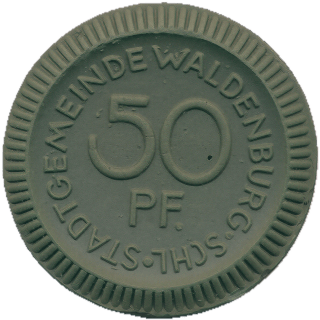 Obverse
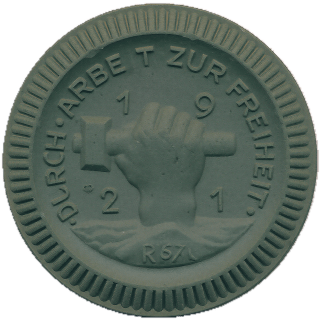 Reverse
Design Features
The obverse of the coin features the denomination "50 PF." above the inscription "STADTGEMEINDE WALDENBURG i SCHL," highlighting the issuing authority. On the reverse, the year "1921" is accompanied by the motto "DURCH-ARBEIT-ZUR-FREIHEIT" and the initials "KPM," denoting the Royal Porcelain Manufactory in Berlin. These design elements not only convey the coin's monetary value but also serve as a testament to the artistic and historical context of its creation.
Technical Specifications
Weighing 3.60 grams and measuring 24.50mm in diameter, this porcelain coin embodies a delicate yet durable form of emergency currency. The use of porcelain as a medium for this coin sets it apart from traditional metal coins, adding a unique aspect to its collectibility and historical significance.
Collectible Value
The Germany Notgelds 50 Pfennig 1921 coin from Waldenburg holds both numismatic and historical value for collectors. Its limited mintage, coupled with the intrinsic rarity of porcelain coins, contributes to its desirability among numismatists. The coin's connection to a specific time and place in German history further enhances its collectible appeal, making it a prized addition to any coin collection focused on emergency money or German Notgelds.
Conclusion
In conclusion, the Germany Notgelds 50 Pfennig 1921 coin from the City of Waldenburg stands as a testament to the ingenuity and resilience of communities during times of financial uncertainty. Its unique composition, coupled with intricate design elements and historical context, make it a valuable piece for both collectors and enthusiasts seeking to delve into the fascinating world of Notgeld and emergency coinage. Acquiring this coin not only adds a tangible piece of history to a collection but also opens a window into the economic challenges and triumphs of early 20th-century Germany.

ScanMyCoin: AI Coin Recognition
Professional AI coin recognition and collection management platform. Identify, learn, and track your coin collection with advanced AI technology and a vast.