

Germany (1871-1948) 25 Pfennigs - Wilhelm II (Pattern)
Description:
25 Pfennigs 25 Pfennigs - Wilhelm II (Pattern) coin from Germany (1871-1948). Design, history & value.
Introduction
The 25 Pfennigs - Wilhelm II (Pattern) coin from Germany is a fascinating piece of numismatic history. Minted in 1909, this coin is not only a representation of the economic framework of its time but also a beautiful artifact bearing the legacy of Emperor Wilhelm II. Crafted exclusively as a pattern coin, it offers collectors a glimpse into a rare and remarkable piece of German monetary history.
Historical Background
The 25 Pfennigs coin marks a significant period in German history, during the reign of Wilhelm II, the last German Emperor and King of Prussia, ruling from 1888 until his abdication in 1918. The coin was issued in 1909, a year that was part of a decade marked by rapid industrialization and social change in Germany. Though it was not widely circulated, this pattern coin was part of Germany's efforts to experiment with different denominations and coin compositions. The existence of such a coin reflects the economic strategies employed by the German Empire during an era of burgeoning global influence and internal transformation.
Coin Images
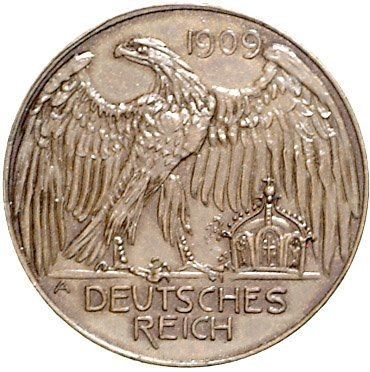 Obverse
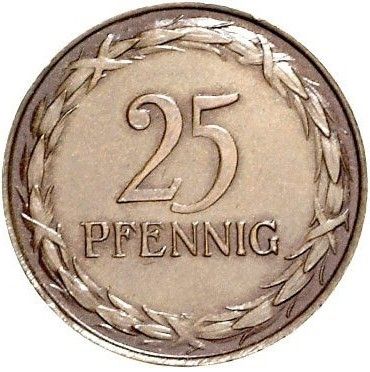 Reverse
Design Features
Obverse Design
The obverse of the 25 Pfennigs - Wilhelm II (Pattern) coin is adorned with the image of the Imperial German Eagle facing left. This powerful symbol showcases the strength and unity of the German Empire under Wilhelm II. The eagle, a traditional symbol of imperial power, is meticulously detailed, capturing the essence of the era's heraldic art.
Reverse Design
On the reverse, the coin displays its denomination and the year of issue, "1909." The simplicity of the reverse design, focusing on the numerical value and date, underscores the coin's function as a pattern prototype. This minimalist approach highlights the coin's experimental nature, distinguishing it from more ornate circulation coins of the period.
Technical Specifications
This coin is crafted from copper, with a diameter of 23.00 mm and a weight of 5.50 grams. These specifications reflect the typical characteristics of early 20th-century pattern coins, which were often made from base metals to test designs and compositions without the expense of precious metals. The choice of copper not only contributed to the coin's affordability in production but also ensured durability for handling during its assessment phase.
Collectible Value
The 25 Pfennigs - Wilhelm II (Pattern) coin holds significant value for collectors due to its rarity and historical importance. As a pattern coin, it was never intended for widespread circulation, making surviving examples particularly scarce. The coin's unique design and its connection to the last German Emperor enhance its collectible appeal. Numismatists prize such coins not only for their aesthetic and historical attributes but also for their limited availability, which can drive up market value significantly, depending on the coin's condition and provenance.
Conclusion
The 1909 25 Pfennigs - Wilhelm II (Pattern) coin is a remarkable artifact of German numismatic history. Its design and creation during a pivotal era under Emperor Wilhelm II offer collectors a window into a bygone era marked by transformation and innovation. For numismatists and history enthusiasts alike, this coin represents a tangible connection to the past and a unique opportunity to own a piece of German heritage. Whether viewed as an investment or a historical artifact, the 25 Pfennigs coin continues to captivate those who appreciate the rich tapestry of stories encapsulated in currency.

ScanMyCoin: AI Coin Recognition
Professional AI coin recognition and collection management platform. Identify, learn, and track your coin collection with advanced AI technology and a vast.