

England England ½ crown, 1666-1672
Description:
½ crown England ½ crown, 1666-1672 coin from England. Design, history & value.
1. Introduction
The England ½ crown coin, minted between 1666 and 1672 during the reign of King Charles II, stands as a remarkable piece of numismatic history. This coin holds significance not only for its exquisite craftsmanship but also for the historical context in which it was minted.
2. Historical Background
Issued in England, the ½ crown coin was part of King Charles II's efforts to stabilize the currency system following the turmoil of the English Civil War. The coinage reforms undertaken during his reign aimed to restore confidence in the monetary system.
3. Design Features
The obverse of the coin features the Latin inscription "CAROLVS II" (Charles II) and "DEI GRATIA" (By the Grace of God). On the reverse side, the coin displays "MAG BR FRA ET HIB REX" (King of Great Britain, France, and Ireland), highlighting the vast dominions under the rule of Charles II.
4. Technical Specifications
This ½ crown coin has a diameter of 34.00mm and is composed of silver with a purity of 0.925. Its weight, intricate detailing, and historical significance make it a sought-after piece among collectors and enthusiasts.
5. Collectible Value
Due to its historical importance and limited mintage period, the England ½ crown from 1666 to 1672 holds significant collectible value. Its rarity, coupled with its association with King Charles II, adds to its appeal among numismatists worldwide.
6. Conclusion
In conclusion, the England ½ crown coin from the era of King Charles II represents a tangible link to a pivotal period in British history. Its intricate design, historical significance, and collectible value make it a prized possession for collectors and a fascinating piece for all who appreciate the artistry and history of coinage. By delving into the intricate details and historical context of the England ½ crown coin minted between 1666 and 1672, one gains a deeper appreciation for the rich numismatic heritage it embodies.
Coin Images
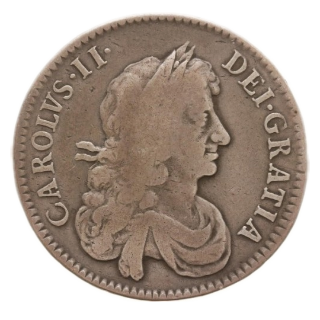 Obverse
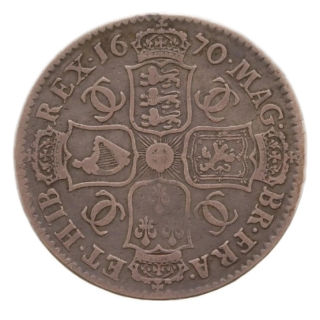 Reverse

ScanMyCoin: AI Coin Recognition
Professional AI coin recognition and collection management platform. Identify, learn, and track your coin collection with advanced AI technology and a vast.