

Demerara and Essequibo Demerara and Essequibo ⅛ gulden, 1832-1835
Description:
⅛ gulden Demerara and Essequibo ⅛ gulden, 1832-1835 coin from Demerara and Essequibo. Design, history & value.
1. Introduction
The Demerara and Essequibo 1/8 gulden coin minted between 1832 and 1835 holds a significant place in numismatic history. This rare British colony currency reflects a time of colonial influence and economic development in the region.
2. Historical Background
The issuing authority of this coin, Demerara and Essequibo, were British colonies located in present-day Guyana. The period between 1808 and 1835 marked a crucial phase in their history, characterized by British control and the establishment of a unified currency system.
3. Design Features
The obverse of the coin features the inscription "GULIEMUS IIII D: G:" surrounding the bust of King William IV. On the reverse, the design showcases "1/8" above the phrase "UNITED COLONY OF DEMERARY & ESSEQUIBO," symbolizing the unity of the two territories.
4. Technical Specifications
This 1/8 gulden coin is composed of silver with a purity of 0.817. It weighs 0.97g and has a diameter of 13.00mm, making it a small yet intricately crafted piece of colonial currency.
5. Collectible Value
Due to its limited mintage and historical significance, the Demerara and Essequibo 1/8 gulden coin is highly sought after by collectors of British colonial coinage. Its rarity and unique design contribute to its value in the numismatic market, with well-preserved specimens commanding high prices at auctions and among enthusiasts.
6. Conclusion
In conclusion, the Demerara and Essequibo 1/8 gulden silver coin of 1832-1835 stands as a testament to the colonial legacy of the British Empire in the Caribbean. Its intricate design, historical context, and collectible value make it a prized possession for numismatists and a window into the past for all who appreciate the artistry and history of coinage. By delving into the details of this unique coin, collectors and enthusiasts alike can uncover a piece of British colonial history and add a rare gem to their numismatic collections.
Coin Images
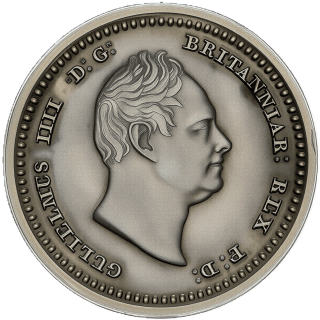 Obverse
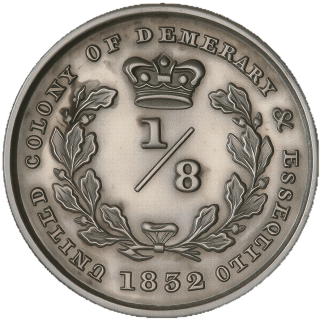 Reverse

ScanMyCoin: AI Coin Recognition
Professional AI coin recognition and collection management platform. Identify, learn, and track your coin collection with advanced AI technology and a vast.