

Cologne Cologne 1 ducat, 1742
Description:
1 ducat Cologne 1 ducat, 1742 coin from Cologne. Design, history & value.
Introduction
The Cologne 1 ducat gold coin minted in 1742 holds a special place in numismatic history for its intricate design, historical significance, and rarity. This coin, issued by the city of Cologne, represents a blend of artistry, craftsmanship, and historical context that makes it a sought-after piece for collectors worldwide.
Historical Background
The city of Cologne, known for its rich cultural heritage, issued this 1 ducat gold coin in 1742 during a period when it enjoyed significant economic prosperity and political influence. The coinage from Cologne between 1693 and 1793 reflects the city's autonomy and distinctive numismatic tradition.
Coin Images
 Obverse
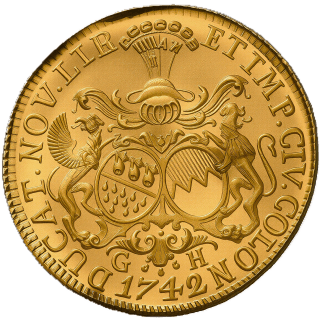 Reverse
Design Features
The obverse of the coin features the inscription "DUCAT NOV LIR ET IMP CIV COLON," highlighting its denomination and connection to the city of Cologne. On the reverse side, you will find the inscription "CAR VII D G ROM IMP SEMP AVG," referencing the reigning emperor, Charles VII. The design intricacies and Latin inscriptions add to the coin's aesthetic appeal and historical significance.
Technical Specifications
This 1 ducat gold coin from Cologne, minted in 1742, weighs 3.50g with a diameter of 21.00mm. Composed of 98.6% pure gold, this coin exemplifies the fine craftsmanship and quality associated with coins from this era.
Collectible Value
Due to its historical significance, exquisite design, and limited mintage, the 1742 Cologne 1 ducat gold coin holds significant collectible value. Numismatists and collectors covet this rare coin for its beauty and historical context. The market value of this coin reflects its rarity and desirability among enthusiasts.
Conclusion
In conclusion, the 1742 Cologne 1 ducat gold coin stands as a testament to the artistry, history, and cultural significance of numismatics. Its unique design, historical background, and collectible value make it a prized possession for collectors and a valuable piece of history. Acquiring this rare coin not only adds a valuable asset to a collection but also connects the collector to a bygone era of prosperity and cultural richness.

ScanMyCoin: AI Coin Recognition
Professional AI coin recognition and collection management platform. Identify, learn, and track your coin collection with advanced AI technology and a vast.