
Castile and Leon, Kingdom of Denier - Alfonso VII (Toledo)
Description:
1 Denier Denier - Alfonso VII (Toledo) coin from Castile and Leon, Kingdom of. Design, history & value.
[SEO TITLE]: Denier Coin of Castile and Leon: Alfonso VII's Legacy [SEO DESCRIPTION]: Discover the Denier of Alfonso VII from Castile and Leon. [KEYWORDS]: Denier, Alfonso VII, Castile and Leon, medieval coin, numismatics, Toledo coin, billon coin
Introduction
The Denier of Alfonso VII, minted in Toledo during the Kingdom of Castile and Leon, stands as a testament to the complex and rich history of medieval Spain. This coin, with its modest denomination of 1 Denier, offers a glimpse into the economic and political landscape of the 12th century. Collectors and historians alike value it for its unique design and historical significance, making it a prized piece in any numismatic collection.
Historical Background
The Denier was issued between 1135 and 1157 under the rule of Alfonso VII, a period marked by significant territorial expansion and consolidation of power within the Kingdom of Castile and Leon. Alfonso VII, known as the Emperor of All Spain, played a pivotal role in the reconquest and unification efforts of the Iberian Peninsula. His coinage not only facilitated trade but also reinforced his authority across the realm. The choice of Toledo as the minting location is notable. Once a major center of Islamic culture, Toledo became the heart of Christian Spain's resurgence under Alfonso VII. The issuance of the Denier in this city symbolized the melding of diverse cultural influences, which is reflected in the coin's iconography.
Coin Images
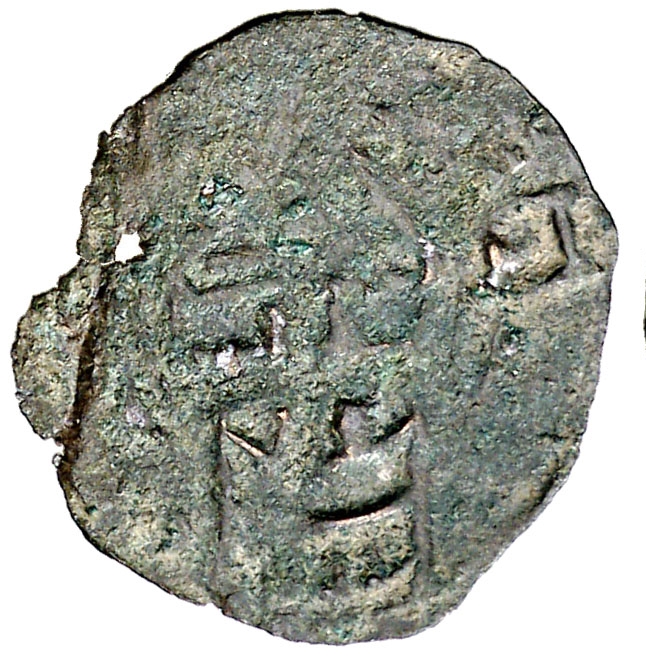 Obverse
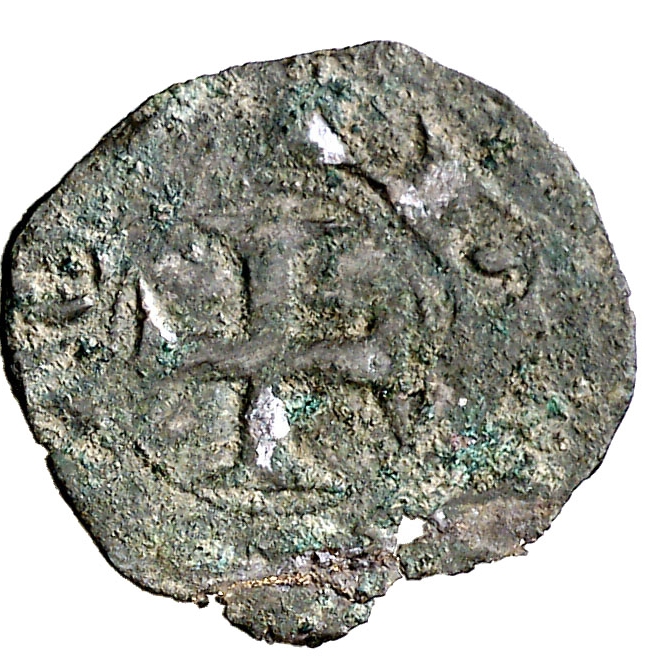 Reverse
Design Features
Obverse Design
The obverse of the Denier features a mitre, a traditional headgear worn by bishops, symbolizing the religious authority and the close ties between the church and the monarchy during Alfonso VII's reign. This design choice underscores the importance of ecclesiastical endorsement in legitimizing royal power.
Reverse Design
On the reverse side, a cross is prominently displayed. The cross is not only a Christian symbol but also signifies the ongoing Reconquista, the series of campaigns by Christian states to recapture territory from the Moors. This emblem reinforced the notion of Alfonso VII as a Christian ruler destined to reclaim and unify Spain under a single faith.
Technical Specifications
The Denier is composed of billon, a metal alloy consisting primarily of silver and a significant amount of base metal, such as copper. This composition reflects the economic conditions of medieval Spain, where precious metals were scarce but necessary for coinage. Weighing approximately 1.00 gram, the Denier is relatively light, which was typical for coins of small denomination during this period.
Collectible Value
The Denier of Alfonso VII is highly sought after by collectors due to its historical significance and rarity. The coin's condition, provenance, and historical context significantly influence its market value. Coins in excellent condition with a clear strike are particularly valuable. As with many medieval coins, the Denier is a window into a past era, making it not only a collectible but also a conversation piece that connects collectors to the rich history of medieval Spain.
Conclusion
In summary, the Denier of Alfonso VII is more than just a piece of currency; it is a relic of a transformative period in Spanish history. Its unique design elements, historical background, and the technical intricacies of its composition make it a fascinating subject for both collectors and historians. As a symbol of Alfonso VII's reign, it continues to captivate those interested in the numismatic world, serving as a reminder of the enduring legacy of the Kingdom of Castile and Leon.

ScanMyCoin: AI Coin Recognition
Professional AI coin recognition and collection management platform. Identify, learn, and track your coin collection with advanced AI technology and a vast.