

Bremen-Verden, Duchy under Swedish possession of 10 Ducats - Christina
Description:
10 Ducats 10 Ducats - Christina coin from Bremen-Verden, Duchy under Swedish possession of. Design, history & value.
Introduction
The 10 Ducats coin from the Duchy of Bremen-Verden, issued under Swedish possession in 1650, is a remarkable piece of numismatic history. This coin, featuring the likeness of Christina, embodies the rich history and intricate artistry of its time. Its limited issuance and exquisite gold composition make it a treasured find for collectors and historians alike. This article delves into the unique attributes, historical context, and collectible significance of this exquisite coin.
Historical Background
The 10 Ducats coin was minted in 1650, a pivotal year for the Duchy of Bremen-Verden, which was under Swedish control during this period. The coin's issuance is linked to Queen Christina of Sweden, a monarch known for her patronage of the arts and sciences. Her reign marked a significant era in Swedish history, often characterized by political and cultural advancements. The Duchy itself was a strategic region, and the production of such a coin highlighted the wealth and influence Sweden wielded over its territories. The coin not only served as a medium of exchange but also as a political statement of Swedish dominance and Christina's regal presence.
Coin Images
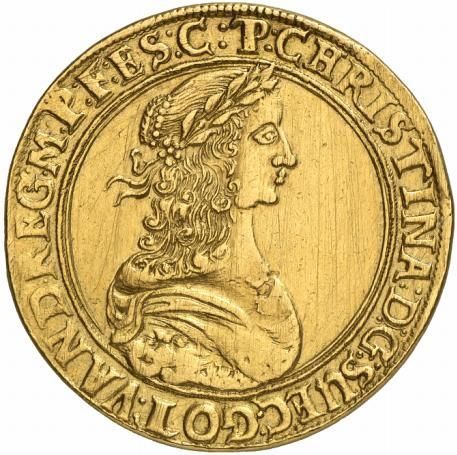 Obverse
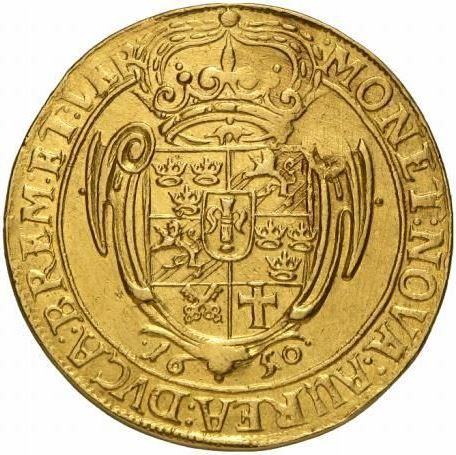 Reverse
Design Features
Obverse Design: The obverse of the coin showcases a laureate bust of Christina, facing right, encircled within an inner circle. The craftsmanship depicts her in regal attire, symbolizing sovereignty and grace. The laureate crown, a common symbol of victory and honor, further emphasizes her status and the coin's commemorative purpose. Reverse Design: The reverse side of the coin features crowned arms within an inner circle, with the date "1650" elegantly positioned below. This design element is not only a testament to the era's heraldic artistry but also serves as a marker of the coin's origination. The crowned arms represent the authoritative power of the Duchy under Swedish rule, encapsulating the political climate of the time.
Technical Specifications
The 10 Ducats coin is composed of .986 fine gold, indicating its high purity and value. Weighing 35.00 grams, this coin is a substantial representation of wealth and craftsmanship. The choice of gold as a medium reflects the economic prosperity and the prominence of gold coinage during the 17th century. Such specifications not only enhance the coin's intrinsic value but also its appeal to collectors who seek high-quality historical pieces.
Collectible Value
In the numismatic market, the 10 Ducats coin is considered a rare and valuable collectible. Its limited production run in 1650 and the historical significance attached to Christina's reign contribute to its desirability. Coins from this era, especially those from regions with complex political histories like Bremen-Verden, are sought after for their historical narratives and artistic merit. Collectors value these coins not only for their gold content but for the stories they tell and their place in the broader tapestry of European history. The rarity and condition of each piece can significantly influence its market value, making it a prized possession for both seasoned numismatists and new collectors.
Conclusion
The 1650 Bremen-Verden 10 Ducats coin is a remarkable artifact that captures the essence of a dynamic historical period. Its association with Queen Christina, combined with its exquisite design and gold composition, make it an exceptional piece within the numismatic community. This coin not only serves as a tangible link to the past but also as a testament to the artistry and political narratives of 17th-century Europe. For collectors and history enthusiasts alike, the 10 Ducats coin is more than just a piece of currency; it is a window into a bygone era, offering insights into the cultural and political landscapes that shaped modern Europe.

ScanMyCoin: AI Coin Recognition
Professional AI coin recognition and collection management platform. Identify, learn, and track your coin collection with advanced AI technology and a vast.