

Austrian Empire 3 Kreuzers - Ferdinand I
Description:
3 Kreuzer 3 Kreuzers - Ferdinand I coin from Austrian Empire. Design, history & value.
Introduction
The 3 Kreuzers coin, issued under the reign of Ferdinand I in the Austrian Empire, stands as a noteworthy piece in numismatic collections. Minted between 1835 and 1836, this coin combines historical significance with unique design features, capturing the essence of early 19th-century Austrian currency. With its distinctive billon composition and intricate artistry, the 3 Kreuzers coin offers a glimpse into the period's economic and cultural milieu.
Historical Background
The 3 Kreuzers coin emerged during a transformative period in the Austrian Empire, a time marked by significant political and economic shifts. Ferdinand I, known as Ferdinand the Benign, ascended to the throne in 1835. His reign, albeit short, was characterized by an era of conservatism and stability. The issuance of this coin reflects the empire's need to circulate a stable currency to support its growing economy and facilitate trade within its vast territories. The denomination of the 3 Kreuzers was part of a broader monetary system, which included various denominations aimed at simplifying and unifying transactions across the empire. This coin, therefore, not only represents a fiscal tool but also a symbol of the empire's efforts to maintain economic coherence amidst the diverse regions under its rule.
Coin Images
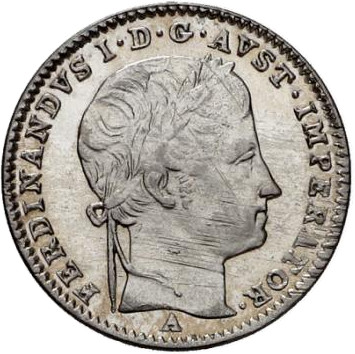 Obverse
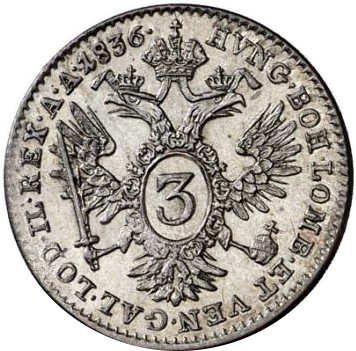 Reverse
Design Features
The artistic detail on the 3 Kreuzers coin is a testament to the craftsmanship of the period.
Obverse Design
The obverse side features a laureate head of Ferdinand I facing right. This design choice highlights the emperor's regal presence and affirms his authority. The laureate crown, a symbol of victory and honor, underscores Ferdinand's status and the dignity of the empire.
Reverse Design
On the reverse, the coin showcases a crowned double-headed imperial eagle, a heraldic emblem of the Austrian Empire. This powerful symbol, with its wings spread majestically, conveys the might and unity of the empire. At the center of the eagle rests the coin's face value, 3 Kreuzers, surrounded by a legend that begins at the 1 o'clock position, further emphasizing the coin's official status.
Technical Specifications
Understanding the technical specifications of the 3 Kreuzers coin is crucial for collectors and enthusiasts:
- Composition: Made from billon, an alloy containing 34.6% silver, the coin strikes a balance between affordability and valuable metal content.
- Weight: Weighing 1.70 grams, the coin is lightweight yet substantial enough to withstand circulation.
- Diameter: At 18.00 millimeters, the coin is compact, making it easy to handle and store. These attributes contribute to the coin's practicality and aesthetic appeal, enhancing its desirability among collectors.
Collectible Value
The collectible value of the 3 Kreuzers coin is influenced by several factors. Its historical context, limited mintage period (1835-1836), and distinct design elements make it a sought-after piece among numismatists. The coin's condition, rarity, and provenance can significantly impact its market value, with well-preserved specimens fetching higher prices at auctions. For collectors, the 3 Kreuzers coin represents not just a piece of history but also an opportunity to own a tangible link to the Austrian Empire's rich legacy. Its blend of historical intrigue and artistic merit ensures its place as a cherished item in any collection.
Conclusion
In summary, the 3 Kreuzers coin from the Austrian Empire during Ferdinand I's reign encapsulates both historical and numismatic significance. Its unique blend of design, composition, and historical context makes it a valuable asset for coin collectors and history enthusiasts alike. As a representation of early 19th-century Austrian currency, this coin offers insight into the economic and cultural dynamics of the time, making it a prized addition to any collection. Whether for its historical narrative or its aesthetic allure, the 3 Kreuzers coin remains a remarkable testament to the legacy of the Austrian Empire.

ScanMyCoin: AI Coin Recognition
Professional AI coin recognition and collection management platform. Identify, learn, and track your coin collection with advanced AI technology and a vast.