

Austrian Empire 10 Kreuzers - Ferdinand I
Description:
10 Kreuzers 10 Kreuzers - Ferdinand I coin from Austrian Empire. Design, history & value.
[SEO TITLE]: Explore the Austrian Empire's 10 Kreuzers Coin: Ferdinand I Era [SEO DESCRIPTION]: Discover the 10 Kreuzers coin from the Austrian Empire, rich in history. [KEYWORDS]: 10 Kreuzers, Austrian Empire coin, Ferdinand I, silver coin, numismatics, coin collecting, historical coins
Introduction
The 10 Kreuzers coin from the Austrian Empire, minted during the reign of Ferdinand I, stands as a remarkable piece of numismatic history. Struck between 1837 and 1848, this coin not only represents a pivotal era in Austrian history but also showcases intricate artistry and craftsmanship. Collectors and enthusiasts are drawn to its rich historical context and the elegance of its design, making it a coveted piece in any numismatic collection.
Historical Background
The issuance of the 10 Kreuzers coin coincided with a time of significant change and development within the Austrian Empire. Ferdinand I, often remembered as "Ferdinand the Benign," ascended the throne in 1835 and ruled during a period marked by political upheaval and reformative movements. These years were critical, as the empire navigated the complexities of nationalism and modernization. The coin's introduction in 1837 was part of a broader monetary reform aimed at stabilizing the Empire's currency system. This period was characterized by a blend of traditionalism and a cautious embrace of modernity, reflected in both the governance and the currency. The 10 Kreuzers is an emblem of these transformative years, offering a glimpse into the socio-economic backdrop of the time.
Coin Images
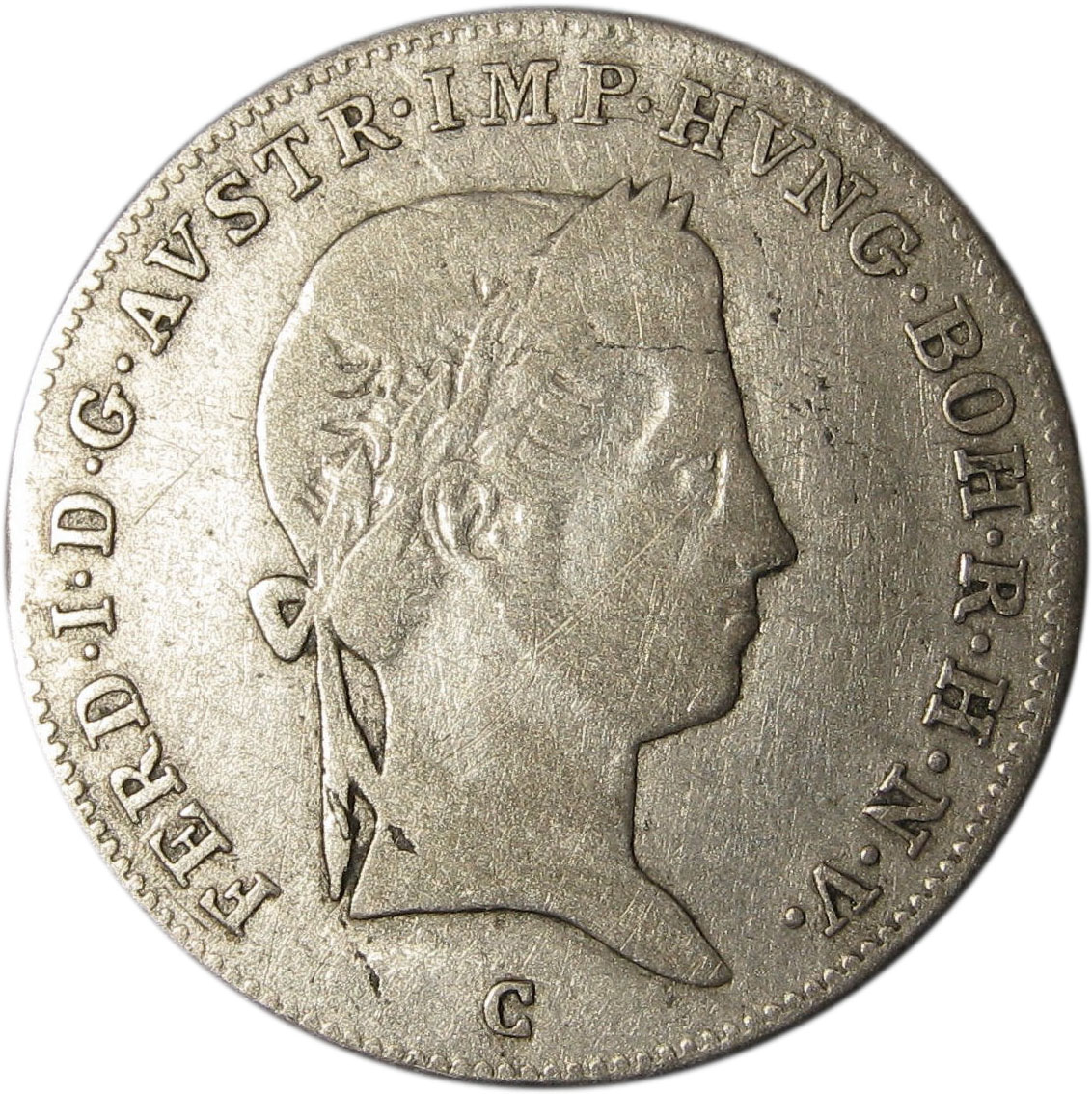 Obverse
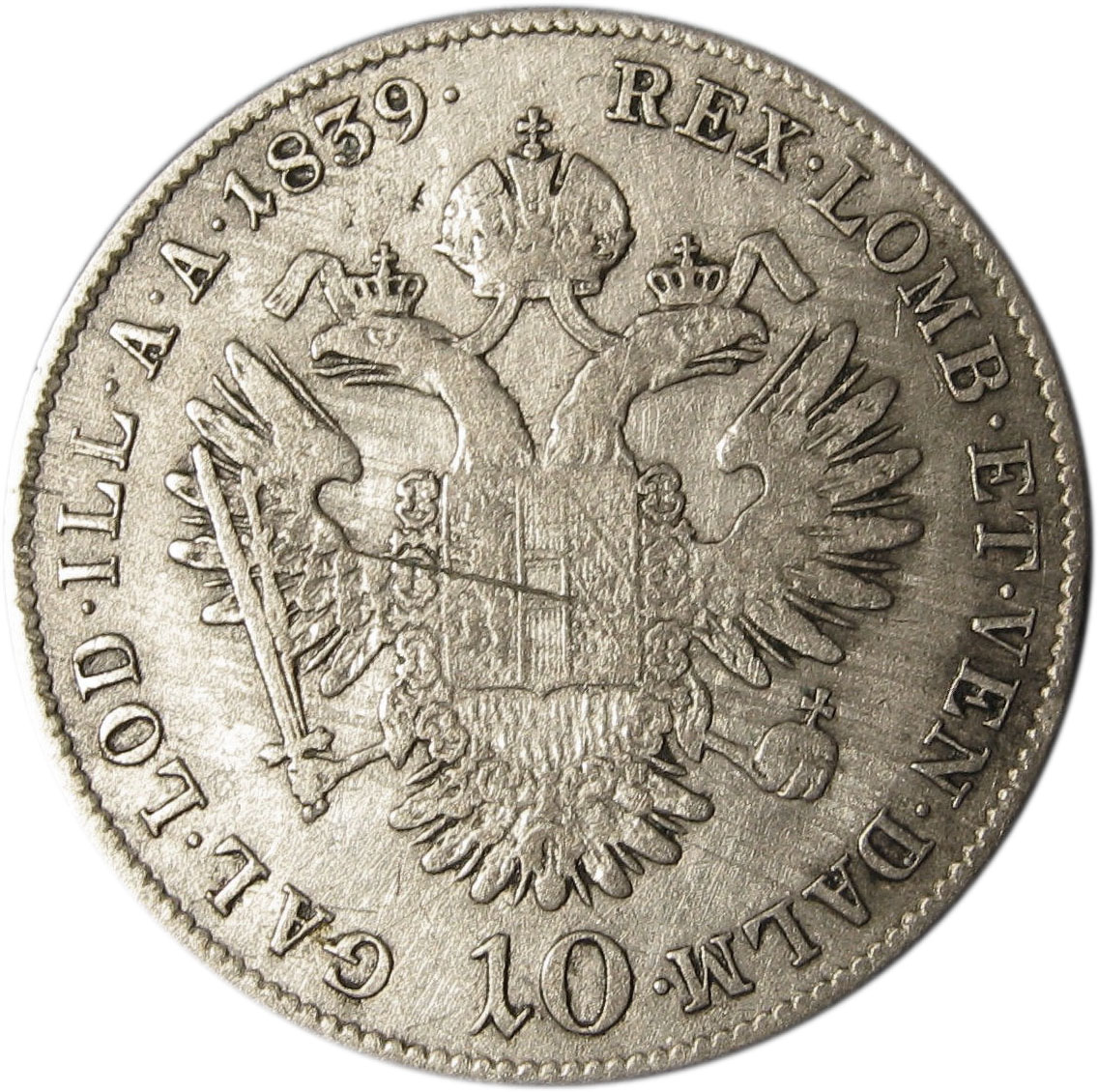 Reverse
Design Features
The obverse design of the 10 Kreuzers coin is a testament to the artistic elegance of the era. It features a laureate portrait of Ferdinand I, facing right. The detailed depiction is surrounded by a legend that reads "F. Dei Gratia Austriae Imperator Hungariae Bohemiae Rex Hujus Nominis Quintus," which translates to "Ferdinand, by the Grace of God, Emperor of Austria, King of Hungary and Bohemia, the Fifth of this Name." This intricate design not only highlights the sovereign's image but also his expansive titles, emphasizing the power and reach of the Austrian monarchy. On the reverse side, a crowned double-headed imperial eagle is prominently displayed, symbolizing the might and unity of the Empire. The eagle holds a prominent place in heraldry, representing imperial strength and vigilance. The legend encircling the eagle reads "Rex Lombardiae et Venetiae Dalmatiae Galiciae Lodomeriae Illyriae, Archidux Austriae," underscoring the diverse regions under the Austrian crown. At the center, the coin's denomination is clearly marked, integrating functionality with artistry.
Technical Specifications
The 10 Kreuzers coin is crafted from silver with a composition of .500 fineness, reflecting the precious metal's value and significance at the time. Weighing 3.89 grams and with a diameter of 22.70 mm, the coin is both substantial and manageable, fitting comfortably into the standards of the period's currency. These specifications not only ensured the coin's utility in everyday transactions but also its appeal to collectors due to its tangible link to the past.
Collectible Value
As a collectible, the 10 Kreuzers coin is highly esteemed for its historical and aesthetic merits. Its market value can vary, depending largely on its condition, rarity, and demand among collectors. Coins in mint or near-mint condition fetch higher prices, while those with historical provenance or unique minting errors may also command premium values. Its limited minting period adds to its rarity, making it a sought-after piece for numismatists interested in the Austrian Empire or 19th-century European coinage.
Conclusion
The 10 Kreuzers coin from the Ferdinand I era is more than just a piece of currency; it is a tangible artifact of a dynamic period in Austrian history. Its intricate design and historical significance make it a prized possession for collectors and historians alike. Whether you're captivated by its artistic details or its place in the broader narrative of the Austrian Empire, this coin offers a fascinating window into the past, making it an invaluable addition to any numismatic collection.

ScanMyCoin: AI Coin Recognition
Professional AI coin recognition and collection management platform. Identify, learn, and track your coin collection with advanced AI technology and a vast.