

Afghanistan Afghanistan 50 pul, 1952-1955
Description:
50 pul Afghanistan 50 pul, 1952-1955 coin from Afghanistan. Design, history & value.
Introduction
The Afghanistan 50 pul coin from the period 1952-1955 holds a special place in numismatic history, showcasing the cultural and historical significance of Afghanistan's coinage. This nickel-plated steel coin offers a glimpse into the country's past and its monetary heritage.
Historical Background
Issued by Afghanistan, this coin belongs to the First Afghani category, which spanned from 1925 to 2002. During this period, Afghanistan underwent various economic and political changes, reflected in its coinage. The 50 pul denomination was a crucial part of everyday transactions and played a role in the country's monetary system.
Coin Images
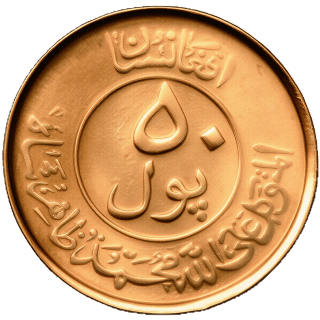 Obverse
 Reverse
Design Features
The obverse of the coin features the denomination "٥٠" and "پول" in Persian script, denoting 50 pul. The reverse side displays the word "افغانستان" (Afghanistan) in the center, encapsulating the national identity of the country. The simplicity and elegance of the designs make this coin a noteworthy piece for collectors.
Technical Specifications
This coin has a weight of 5.00g and a diameter of 22.30mm, making it a compact yet substantial piece. Crafted from nickel-plated steel, it combines durability with aesthetic appeal. The intricate detailing on both sides adds to its numismatic charm.
Collectible Value
The Afghanistan 50 pul coin, with its historical significance and unique design, holds value for both collectors and enthusiasts. Its limited mintage period from 1952 to 1955 adds to its rarity, making it a sought-after piece in numismatic circles. Collectors often appreciate the coin for its cultural relevance and aesthetic appeal.
Conclusion
In conclusion, the Afghanistan 50 pul 1952-1955 coin stands as a testament to Afghanistan's rich numismatic heritage. Its blend of historical significance, intricate design, and collectible value make it a prized possession for those passionate about coins. Whether for its beauty or its historical context, this coin is a valuable addition to any collection.

ScanMyCoin: AI Coin Recognition
Professional AI coin recognition and collection management platform. Identify, learn, and track your coin collection with advanced AI technology and a vast.